
Regenerative soy farming is a holistic agricultural management system designed to restore soil health while producing soybeans. Unlike conventional methods that often degrade land, regenerative practices—such as no-till planting, multi-species cover cropping, and livestock integration—aim to sequester carbon, enhance biodiversity, and improve the water cycle, ultimately reducing reliance on synthetic fertilizers and herbicides.
What is Regenerative Soy Farming?
Soybeans are one of the most widely cultivated crops globally, serving as a staple for human consumption, animal feed, and industrial applications. However, the conventional monoculture approach to soy production has historically contributed to soil erosion, nutrient depletion, and deforestation. Regenerative soy farming emerges as a transformative solution, shifting the paradigm from extraction to restoration.
At its core, regenerative soy farming is not defined by a single checklist but by a set of principles focused on outcomes: specifically, the improvement of soil organic matter (SOM) and ecosystem function. While organic farming focuses on what you cannot use (synthetic chemicals), regenerative farming focuses on what you can build (soil health). Consequently, regenerative soy can be practiced within both organic and conventional systems, though the ultimate goal is often to minimize chemical intervention.
The philosophy rests on mimicking natural systems. In nature, soil is rarely bare, and monocultures do not exist. Regenerative soy farmers attempt to replicate this by ensuring the soil is always covered with living roots and by introducing diversity into the crop rotation.
The Environmental Impact: Conventional vs. Regenerative
The environmental stakes of soy production are incredibly high. Conventional tillage releases stored carbon dioxide into the atmosphere and breaks the fungal networks necessary for healthy soil structure. In contrast, regenerative soy farming acts as a climate solution.
Soil Health and Carbon Sequestration
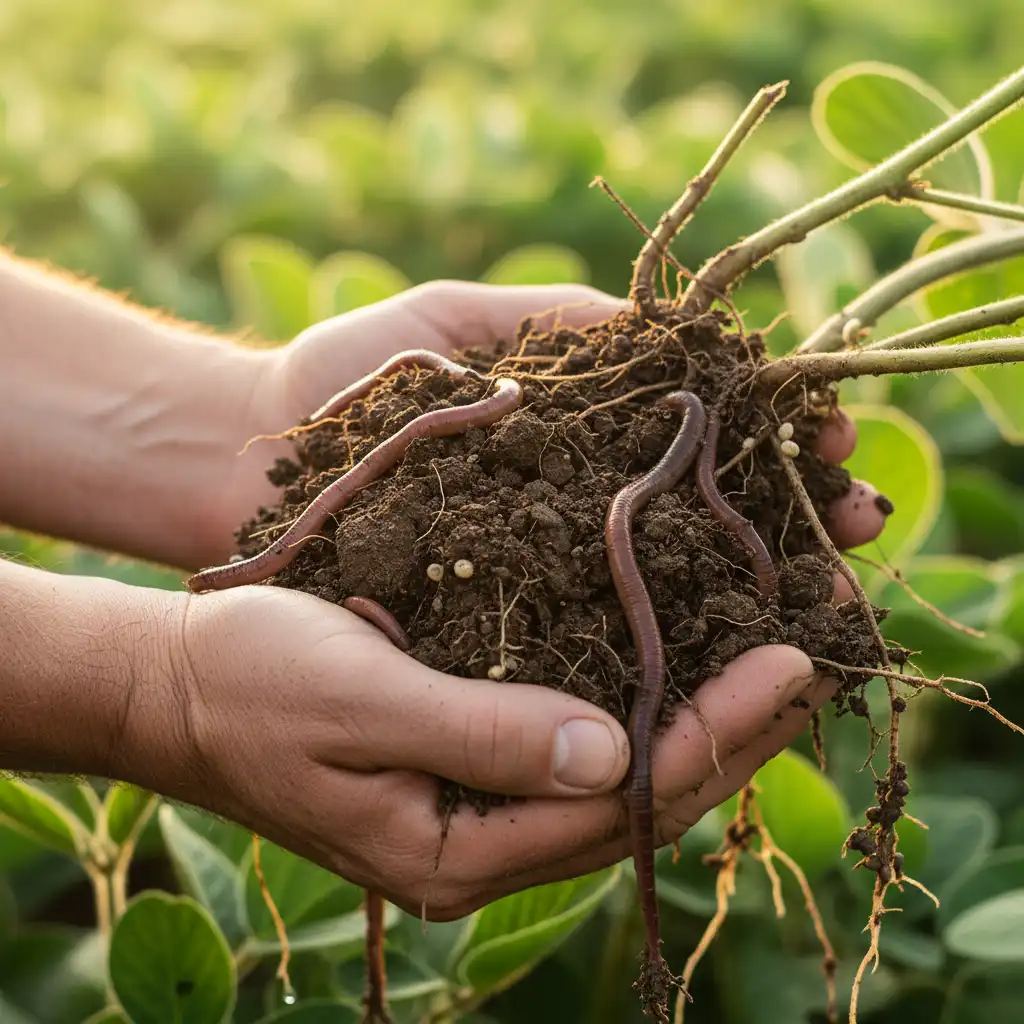
Healthy soil is a living ecosystem. Regenerative practices increase the population of beneficial microbes, fungi, and earthworms. This biological activity creates soil aggregates—clumps of soil particles held together by organic matter—which improves soil structure. The most significant benefit is carbon sequestration. Through photosynthesis, cover crops capture atmospheric CO2 and pump it into the soil via root exudates, feeding soil biology. Over time, this stabilizes as humus, effectively locking carbon underground.
Water Retention and Runoff Prevention
One of the most immediate benefits farmers notice is improved water infiltration. In conventional fields with compacted soil, heavy rains lead to runoff, carrying topsoil and fertilizers into local waterways. This contributes to issues like the hypoxic zone in the Gulf of Mexico. Regenerative fields act like sponges. The deep root systems of cover crops create channels for water to penetrate, while the surface residue prevents evaporation. This resilience is crucial during drought years, where regenerative soy often outperforms conventional soy due to better moisture availability.
According to the USDA Natural Resources Conservation Service (NRCS), increasing soil organic matter by just 1% can increase the soil’s water-holding capacity by roughly 20,000 gallons per acre. This metric underscores the critical importance of regenerative techniques in an era of unpredictable climate patterns.
Core Practices in Regenerative Soybean Production
Transitioning to regenerative soy requires a systemic change in farm management. It is not simply about swapping one input for another; it is about managing an ecosystem. The following practices are the pillars of this approach.
1. No-Till and Reduced Tillage
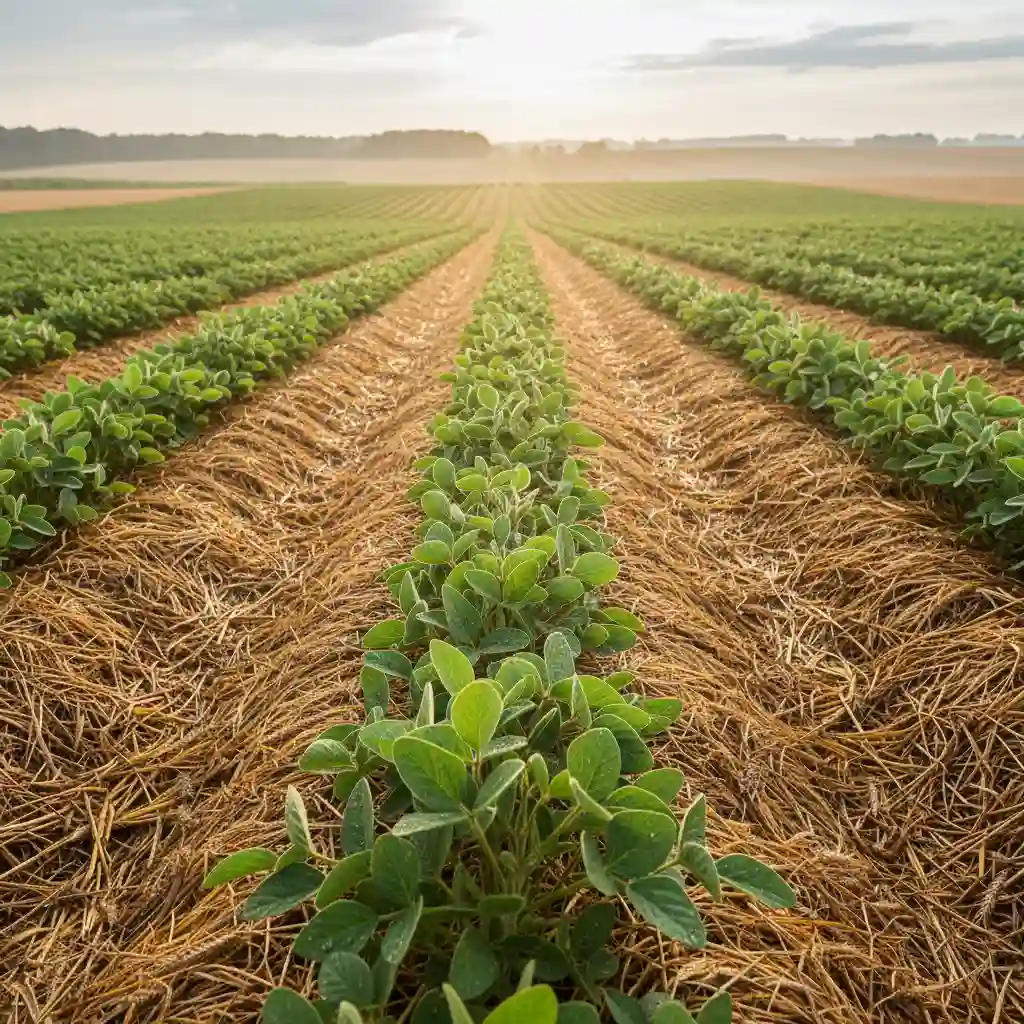
Tillage is the mechanical agitation of soil. While it prepares a seedbed and kills weeds, it destroys soil structure and exposes organic matter to oxidation. Regenerative soy farmers utilize no-till drills or planters to insert seeds directly into the soil through the residue of the previous crop. This keeps the soil armor intact, prevents erosion, and preserves the habitat for soil organisms.
2. Cover Cropping Strategies
Cover crops are perhaps the most vital tool in the regenerative toolbox. For soybeans, cereal rye is the most common companion. Farmers plant cereal rye in the fall after the harvest of the previous crop (often corn). The rye grows through the winter and spring, keeping living roots in the ground.
Farmers then “plant green,” meaning they drill the soybeans into the living rye before terminating the cover crop. The rye provides several benefits:
- Weed Suppression: Cereal rye has an allelopathic effect, releasing chemicals that inhibit the germination of small-seeded weeds like waterhemp and marestail.
- Biomass Production: Once terminated (via roller-crimper or herbicide), the rye forms a thick mat of mulch that suppresses weeds and retains moisture.
- Nitrogen Scavenging: The rye scavenges residual nitrogen from the soil, preventing leaching, and releases it slowly as it decomposes.
3. Crop Rotation and Diversity
A strict corn-soy rotation is common but biologically simplistic. Regenerative farmers often expand rotations to include wheat, oats, alfalfa, or diverse forage mixes. This breaks pest cycles and stimulates different soil microbes. Some advanced practitioners use “relay cropping,” where soybeans are planted into a standing crop of wheat before the wheat is harvested, allowing two crops to be harvested from the same acre in one season.
4. Livestock Integration
The “golden standard” of regenerative agriculture involves reintegrating animals. Grazing cattle or sheep on cover crops stimulates plant growth through pruning and inoculates the soil with biology via manure and urine. This mimics the historical grazing patterns of bison on prairies. While logistically challenging for some row-crop farmers, livestock integration accelerates soil health improvements significantly.
The Economics: Yields, Inputs, and Profitability
The primary hesitation for farmers adopting regenerative soy is the fear of “yield drag”—a temporary reduction in crop yield during the transition period. While it is true that yields may dip slightly as the soil biology re-establishes itself, the economic lens must shift from “yield per acre” to “profit per acre.”
Input Reduction
Regenerative soy farming drastically reduces input costs. By using cover crops to suppress weeds, farmers can reduce herbicide applications. By building soil health, they reduce the need for synthetic fertilizers (though soybeans are legumes and fix their own nitrogen, they still require phosphorus and potassium). No-till systems also reduce fuel consumption and equipment wear and tear, as fewer passes over the field are required.
Premium Markets
There is a growing market demand for sustainably sourced soy. Food giants and supply chain aggregators are increasingly offering premiums for low-carbon or regenerative soy. Furthermore, the emerging carbon credit markets offer a potential revenue stream for farmers who can verify carbon sequestration, although this market is still maturing and stabilizing.
Challenges and Barriers to Adoption
Despite the benefits, regenerative soy farming is not without its hurdles. It requires a steep learning curve and a higher level of management intensity compared to conventional systems.
Weed Management
In conventional no-till, farmers rely heavily on herbicides to terminate cover crops and control weeds. For organic regenerative farmers, weed control is the single biggest challenge. Without tillage and without synthetic herbicides, they must rely entirely on the roller-crimper (a device that snaps the stem of the cover crop to kill it) and the mulch layer to suppress weeds. If the cover crop stand is thin, weeds will break through, potentially choking the soybeans.
The Transition Period
Biological systems take time to repair. The “transition period” (typically years 1-3) can be financially risky. The soil microbes are not yet fully active, and the farmer is still learning how to manage cover crops. This is where financial incentives and crop insurance reform are critical to support farmers.
Equipment Costs
While long-term equipment costs may decrease, the initial transition often requires new machinery, such as no-till drills or roller-crimpers. This capital expenditure can be a barrier for small to mid-sized operations operating on thin margins.
Certifications and the Future of Supply Chains
As “regenerative” becomes a buzzword, the industry faces the risk of greenwashing. To combat this, rigorous certifications are emerging. The Regenerative Organic Certified (ROC) standard, overseen by the Rodale Institute and others, is currently the highest bar. It requires USDA Organic certification as a baseline and adds strict requirements for soil health, animal welfare, and social fairness.
Major corporations are also setting ambitious targets. Companies like Danone, Cargill, and General Mills have pledged to advance regenerative agriculture on millions of acres. This corporate interest is driving the development of supply chains that can trace soybeans back to specific regenerative farms, ensuring transparency for the consumer.
The future of soy farming lies in this intersection of ecology and technology. Satellite monitoring, soil sensors, and blockchain traceability are making it easier to verify regenerative practices. As consumer awareness grows, regenerative soy will likely move from a niche market to the industry standard, essential for ensuring food security in a changing climate.
Frequently Asked Questions
What is the difference between organic and regenerative soy?
Organic soy farming prohibits synthetic pesticides and fertilizers but may still use heavy tillage, which degrades soil. Regenerative soy focuses on soil health outcomes like carbon sequestration and biodiversity, often using no-till and cover crops. A farm can be regenerative without being organic, or it can be both (Regenerative Organic).
Do regenerative soy farmers use pesticides?
It depends. Regenerative Organic farmers do not use synthetic pesticides. However, “conventional” regenerative farmers may use herbicides to terminate cover crops or control weeds, though the goal is to significantly reduce chemical use over time by relying on biological suppression.
Does regenerative farming lower soybean yields?
During the initial transition period (1-3 years), yields can sometimes decrease as the soil ecosystem restores itself. However, long-term studies show that regenerative yields often match or exceed conventional yields, especially during drought years, while profitability increases due to lower input costs.
What cover crops are best for regenerative soybeans?
Cereal rye is the most popular cover crop to plant before soybeans. It survives the winter, produces high biomass to suppress weeds, and scavenges nitrogen. Other options include wheat, triticale, or barley.
How does regenerative soy help climate change?
Regenerative soy helps climate change by sequestering atmospheric carbon dioxide into the soil. Through photosynthesis and root exudates, plants move carbon underground, where it is stored as stable soil organic matter, acting as a carbon sink rather than a source.
Is regenerative soy more expensive to buy?
Currently, products labeled as regenerative or Regenerative Organic often command a price premium. This reflects the specialized management required by farmers and the higher costs associated with identity-preserved supply chains and certification.