
The Truth About Deforestation: Unmasking Real Drivers and the NZ Context
Deforestation is the purposeful and permanent clearing of forested land, primarily to convert the area for non-forest uses such as agriculture, urbanization, or mining. While often associated with logging for timber, the overwhelming majority of deforestation is driven by the demand for agricultural land to produce commodities like beef, soy, and palm oil, significantly impacting global carbon cycles and biodiversity.
What is Deforestation Really?
To understand the truth about deforestation, one must first distinguish between deforestation and forest degradation. While degradation involves a thinning of the canopy and a reduction in the quality of the forest—often due to selective logging or climate stress—deforestation is the total removal of the forest cover. This distinction is vital for policymakers and consumers alike because the drivers for each are distinct.
Forests currently cover approximately 31% of the global land area, yet we are losing them at an alarming rate. According to the Food and Agriculture Organization (FAO), the world lost 10 million hectares of forest per year between 2015 and 2020. This is not merely an aesthetic loss; forests are the lungs of the planet, sequestering carbon dioxide and housing nearly 80% of the world’s terrestrial biodiversity. When trees are felled and burned, that stored carbon is released back into the atmosphere, accelerating global warming.
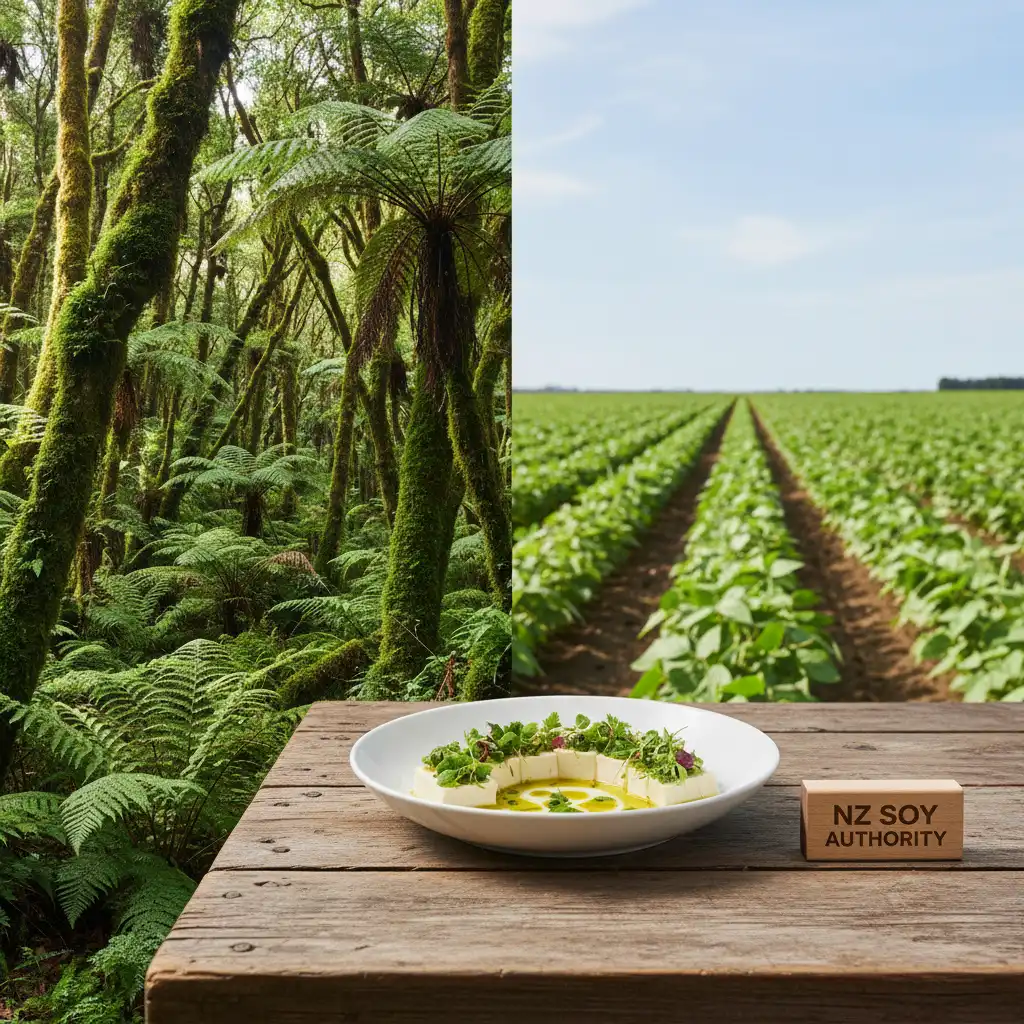
The narrative often pushed in popular media focuses heavily on timber and paper production. While these industries play a role, the World Resources Institute indicates that agricultural expansion is responsible for nearly 90% of global deforestation. This shift in understanding is crucial for the New Zealand market, where agricultural efficiency is a point of national pride, yet global supply chains complicate the picture.
The Primary Drivers: Beef, Soy, and Palm
When analyzing the data, three commodities emerge as the primary engines of forest loss: cattle (beef), soybeans, and palm oil. Understanding the hierarchy of these drivers is essential for dispelling common myths surrounding plant-based diets and culinary choices.
The Cattle Industry
Cattle ranching is, by a significant margin, the largest driver of deforestation worldwide, particularly in the Amazon rainforest. Vast tracts of land are cleared to create pasture for beef cattle. This is an inefficient use of land compared to crop production, requiring exponentially more hectares to produce the same amount of calories or protein. For the culinary enthusiast, this raises difficult questions about the sustainability of red meat consumption, regardless of origin, due to the global market pressure it creates.
The Palm Oil Dilemma
Palm oil is ubiquitous in processed foods, from biscuits to margarine. Its production has decimated the rainforests of Southeast Asia, particularly in Indonesia and Malaysia. While efforts like the RSPO (Roundtable on Sustainable Palm Oil) exist, the traceability of palm oil remains a challenge for food manufacturers.
The Great Soy Myth: Tofu vs. Cattle Feed
Within the culinary and health sectors, specifically for the NZ Soy Authority niche, a pervasive myth exists: that vegetarians and vegans eating tofu are responsible for burning down the Amazon. This is factually incorrect and represents one of the biggest misunderstandings in the deforestation debate.
The truth about soy is found in the supply chain allocation. Approximately 77% to 80% of the world’s soybean crop is crushed into meal and oil. The vast majority of this meal is fed to livestock—poultry, pigs, and dairy cows—not humans. Only about 7% of global soy is used directly for human food products like tofu, tempeh, soy milk, and edamame. The remainder is used for industrial purposes like biodiesel.
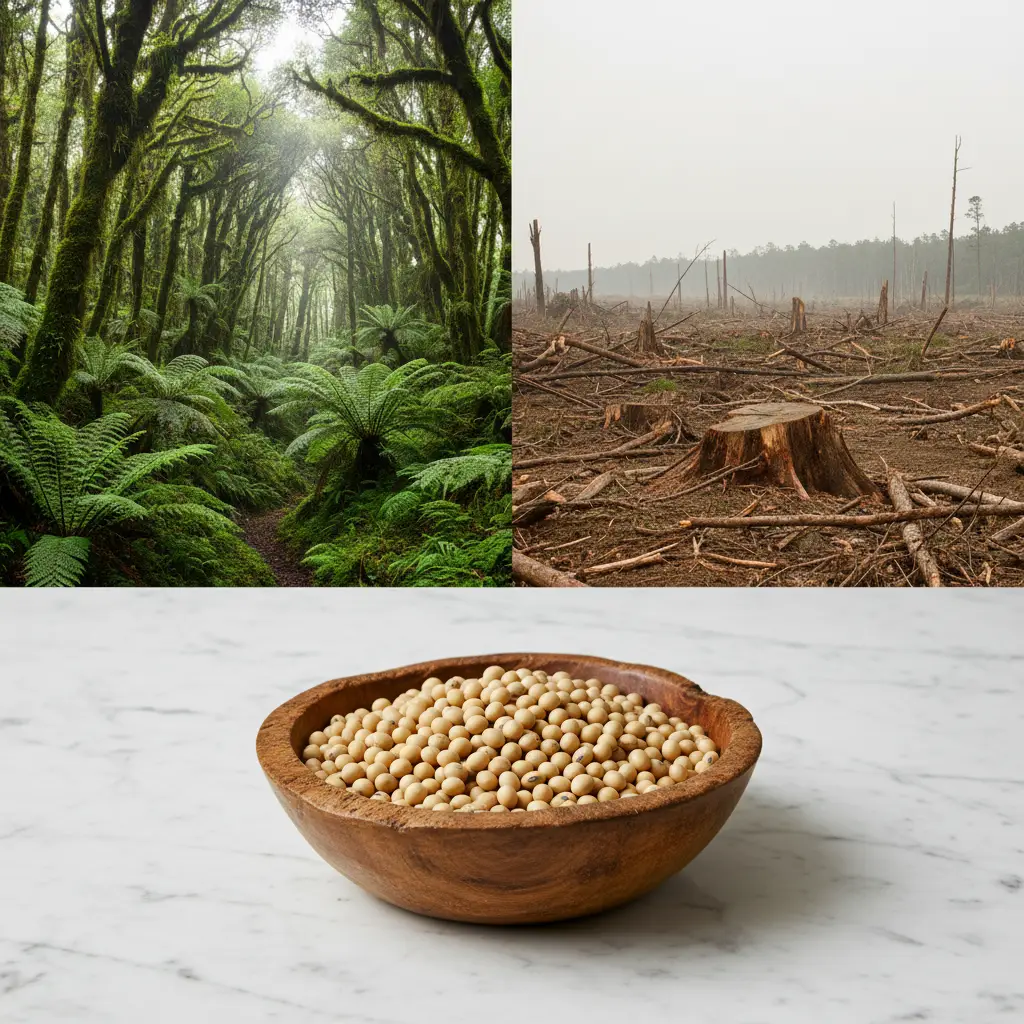
Therefore, the expansion of soy plantations into the Brazilian Cerrado and the Amazon is driven principally by the demand for meat and dairy, not the demand for plant-based alternatives. When a consumer eats a steak, they are effectively consuming the vast amount of soy that the animal ate during its life. Conversely, consuming soy directly is highly land-efficient. A hectare of land used to grow soy for human consumption produces vastly more protein than using that same land (or the crops from it) to feed animals. For the New Zealand consumer, this distinction is vital: choosing soy-based foods is an act of forest conservation, provided the soy is not linked to recent deforestation.
New Zealand’s Connection: The Imported Footprint
New Zealand markets itself globally with a “Clean, Green” image. However, the truth about deforestation in Aotearoa is nuanced. While we are not burning down native bush to plant soy domestically, our agricultural sector is heavily reliant on imported feeds that carry a high deforestation risk.
The PKE and Soy Imports
The New Zealand dairy industry is a massive importer of Palm Kernel Expeller (PKE), a byproduct of the palm oil industry, and soybean meal. These supplements are used to feed the national dairy herd, especially when grass growth is insufficient. In doing so, New Zealand essentially “offshores” its environmental footprint. We may have green pastures here, but the milk solids produced may rely on land cleared in Indonesia or Brazil.
This creates a complex ethical landscape for the NZ culinary lifestyle. A chef sourcing local NZ butter must consider that the cows may have been fed soy from deforested regions in South America. This “embodied deforestation” is a concept that is gaining traction among sustainability experts. It challenges the notion that “buying local” is automatically synonymous with “sustainable” if the inputs for that local product are part of a destructive global supply chain.
The Environmental Impact on Culinary Ecosystems
Deforestation does not happen in a vacuum; it creates a ripple effect that threatens the very ingredients culinary professionals and home cooks rely on. The removal of forests disrupts the water cycle, leading to altered rainfall patterns. In South America, the loss of the Amazon’s transpiration is leading to droughts in agricultural zones further south. In New Zealand, changing climate patterns linked to global carbon emissions threaten the viability of sensitive crops like Pinot Noir grapes and avocados.
Furthermore, the loss of biodiversity means a loss of potential culinary discoveries. Thousands of plant species with potential culinary or medicinal uses are lost annually before they can even be cataloged. For the NZ Soy Authority, this emphasizes the need to champion ingredients that are not only versatile but also historically and ecologically sound.
Sustainable Sourcing for the Kiwi Kitchen
How does one navigate this complex landscape? For those in the culinary lifestyle niche, the answer lies in rigorous sourcing and a shift in dietary focus.
1. Direct Soy Consumption
Embrace soy as a primary protein source. As established, eating soy directly bypasses the inefficient animal conversion ratio. Look for soy products that are certified organic or sourced from regions with strict non-deforestation protocols (such as soy grown in North America or certified deforestation-free zones in Brazil).
2. Certification Labels
When purchasing products that contain palm oil or soy, or when buying meat, look for credible certifications. The RTRS (Roundtable on Responsible Soy) and ProTerra are standards that ensure soy production has not taken place on recently deforested land. For palm oil, RSPO Certified Sustainable Palm Oil is the minimum standard.
3. The Plant-Forward Shift
Reducing the overall consumption of industrially produced meat is the single most effective way an individual can reduce their deforestation footprint. This does not necessarily mean strict veganism, but rather a “flexitarian” approach where meat is a garnish rather than the centerpiece, and plant proteins like soy, lentils, and chickpeas take precedence.
Future Outlook: Can We Reverse the Damage?
The truth about deforestation is grim, but not hopeless. Global initiatives like the EU Deforestation Regulation (EUDR) are forcing supply chains to become transparent. If implemented strictly, these regulations will ban the import of commodities linked to deforestation. New Zealand is watching these regulations closely, as they will likely influence future trade agreements.
For the soy industry, the future lies in traceability. Satellite monitoring and blockchain technology are making it increasingly difficult for growers to hide illegal clearing. As consumers demand “clean” food—not just in terms of additives, but in terms of ecological footprint—the market will shift. The NZ culinary scene is well-positioned to lead this charge by championing transparency and celebrating low-impact ingredients.
Frequently Asked Questions
1. Does eating tofu cause deforestation?
Generally, no. The vast majority (over 77%) of global soy production is used for animal feed. Only a small fraction is used for human food. Most soy used for tofu and soy milk is grown in areas with lower deforestation risks or is certified organic, making it a much more sustainable choice than meat.
2. How does New Zealand contribute to global deforestation?
While New Zealand protects its own native forests, it contributes to global deforestation through the importation of animal feed. The dairy industry imports large quantities of Palm Kernel Expeller (PKE) and soybean meal, which drives demand for land clearing in Southeast Asia and South America.
3. What is the difference between deforestation and forest degradation?
Deforestation is the complete removal of forest cover to convert the land to another use (like a farm). Forest degradation is a reduction in the density or health of the forest, often caused by logging or climate change, but the forest structure remains partially intact.
4. Which industry is the biggest cause of deforestation?
The beef cattle industry is the single largest driver of deforestation globally, responsible for converting millions of hectares of rainforest into pasture, particularly in the Amazon basin.
5. Are there sustainable certifications for soy?
Yes. Look for certifications such as the Round Table on Responsible Soy (RTRS) or ProTerra. These organizations certify that the soy was cultivated without clearing native forests and with respect for labor rights.
6. Why is the Amazon rainforest important for the global climate?
The Amazon acts as a massive carbon sink, absorbing billions of tons of carbon dioxide. It also regulates global weather patterns and the water cycle. Its destruction releases stored carbon, accelerating global warming and disrupting rainfall patterns as far away as North America and Europe.