
In the New Zealand market, the average soy milk price NZ shoppers encounter ranges from $2.30 to $3.80 per litre for standard UHT varieties. This price point consistently positions soy milk as a more affordable staple compared to premium oat and pea milk alternatives, which frequently retail between $4.50 and $6.00 per litre depending on the brand and fortification levels.
Current Soy Milk Prices at Woolworths, Pak’nSave, & New World
As the cost of living continues to dominate headlines across Aotearoa, the supermarket aisle has become a battleground for budget-conscious consumers. For those shifting away from dairy or simply looking to diversify their fridge staples, tracking the price fluctuations of plant-based milks is essential. While dairy prices fluctuate with the global milk solids payout, plant milks are influenced by different supply chain factors, including crop yields and import costs.
When analyzing the soy milk price NZ landscape, the “big three” retailers—Woolworths (formerly Countdown), Pak’nSave, and New World—offer distinct pricing structures that can significantly impact your weekly grocery bill.
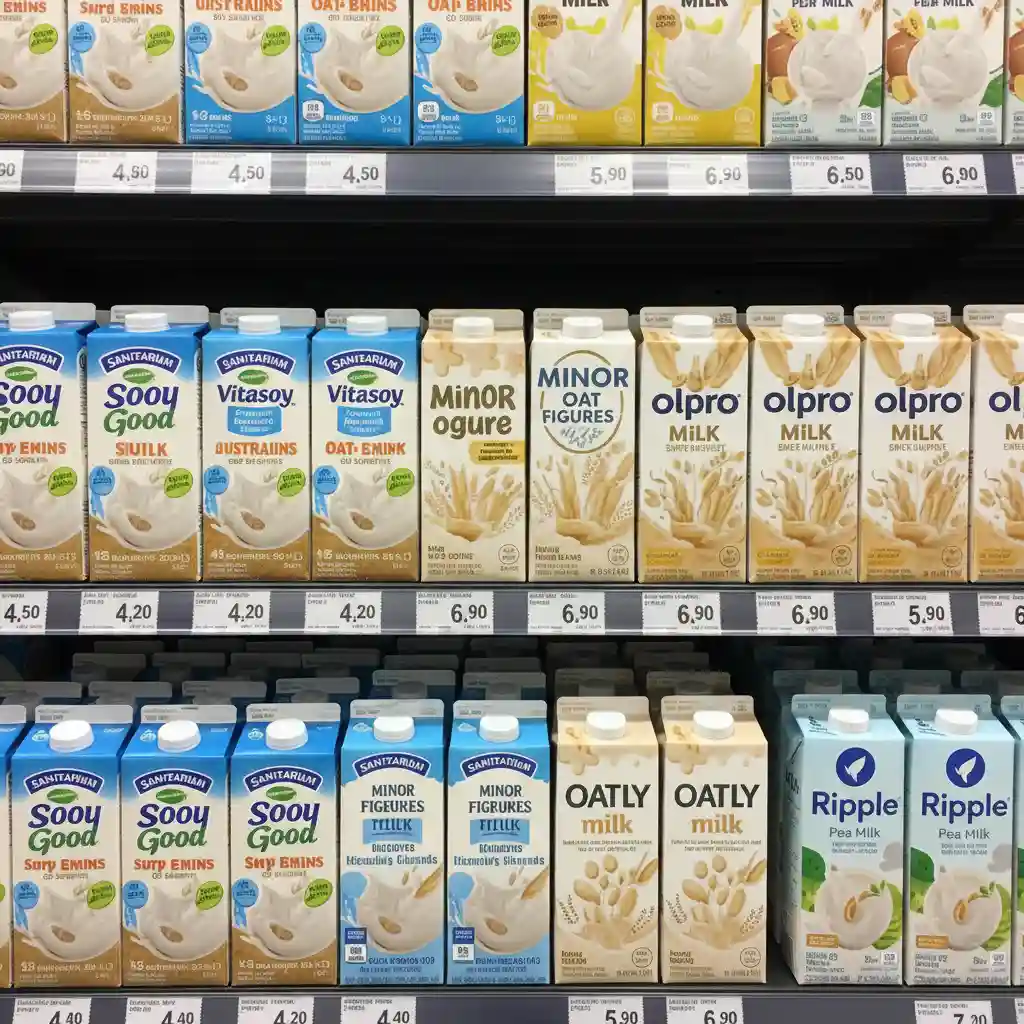
Pak’nSave: The Bulk Buyer’s Champion
Pak’nSave consistently retains its reputation as the lowest-price retailer for shelf-stable (UHT) soy milks. Their business model, which minimizes overheads, allows them to offer aggressive pricing on staple goods. Currently, generic or house brands like Pams often sit at the entry-level price floor, sometimes dipping as low as $2.10 to $2.30 per litre during “Extra Low” promotions.
For branded products like Sanitarium So Good or Vitasoy, Pak’nSave usually undercuts competitors by 20 to 50 cents per unit. However, the trade-off is often the shopping experience and the necessity to buy in larger volumes to maximize savings.
Woolworths (Countdown): The Convenience Middle-Ground
Woolworths NZ offers a balance between variety and price. Their Macro Organic range is a key player here, offering a mid-range price point for consumers seeking non-GMO or organic soybeans without the premium markup of boutique health stores. The Macro brand typically fluctuates between $2.80 and $3.20.
Woolworths frequently utilizes “Onecard” (now Everyday Rewards) pricing to bring branded soy milks down to competitive levels. Without a loyalty card, you may find yourself paying a “convenience tax” of roughly 10-15% more than at Pak’nSave.
New World: Premium Experience, Premium Pricing?
New World stores are owner-operated, meaning pricing can vary slightly from region to region (e.g., Wellington City vs. rural South Island). Generally, New World carries a higher shelf price for standard soy milks. However, their “Clubcard” specials can be aggressive. It is not uncommon to see multi-buy deals (e.g., “2 for $7”) that bring the unit price down significantly, making it competitive with Woolworths.
New World also tends to stock a wider variety of chilled, premium soy options which naturally command a higher price point, skewing the perceived average cost upwards.
Why Soy Milk Offers Better Value per Serve
Price per litre is the most obvious metric, but “value” is a more complex equation involving nutritional density, satiety, and culinary versatility. When pitting soy against the rising stars of the plant-based world—oat and pea milk—soy maintains a distinct economic advantage.
The Supply Chain Advantage
Soy milk has been a staple in Western supermarkets for decades. The supply chains for sourcing soybeans, processing them, and distributing the final product are mature and highly optimized. In contrast, the explosion of oat milk (driven by brands like Otis and Oatly) and pea milk (like Sproud) is relatively recent.
These newer entrants are often still recouping heavy marketing and R&D investments. Furthermore, the processing required to turn oats into a creamy, stable liquid often involves enzymatic treatment that adds to production costs. Soy production is more direct, contributing to its lower shelf price.
Cost Per Serving Analysis
If we assume a standard serving size of 250ml:
- Standard Soy Milk: At $2.50/litre, one serving costs $0.62.
- Premium Oat Milk: At $5.00/litre (typical for barista blends), one serving costs $1.25.
- Pea Milk: At $5.50/litre, one serving costs $1.37.
For a family of four consuming one litre a day, switching from a premium oat brand to a standard soy brand saves approximately $912.50 NZD per year. This is a substantial saving that highlights why soy remains the king of budget-friendly dairy alternatives.
Comparing Top Brands: Anchor, Sanitarium vs. Otis, Boring
The New Zealand market is a mix of heritage brands and disruptive newcomers. Understanding who owns what can help explain the price disparities.
The Incumbents: Sanitarium & Vitasoy
Sanitarium (So Good) is arguably the market leader in New Zealand. Produced locally and in Australia, their scale allows them to dictate the price floor for branded soy milk. They offer regular, lite, and barista versions. Because they produce in massive volumes, they can keep prices relatively stable even during inflationary periods.
Vitasoy operates similarly. These brands are the “Toyotas” of the plant milk world—reliable, widely available, and affordable. They typically use whole soybeans and have established fortification processes (adding Calcium, B12, and D) that are cost-efficient.
The Challengers: Otis, Boring, & The Oat Wave
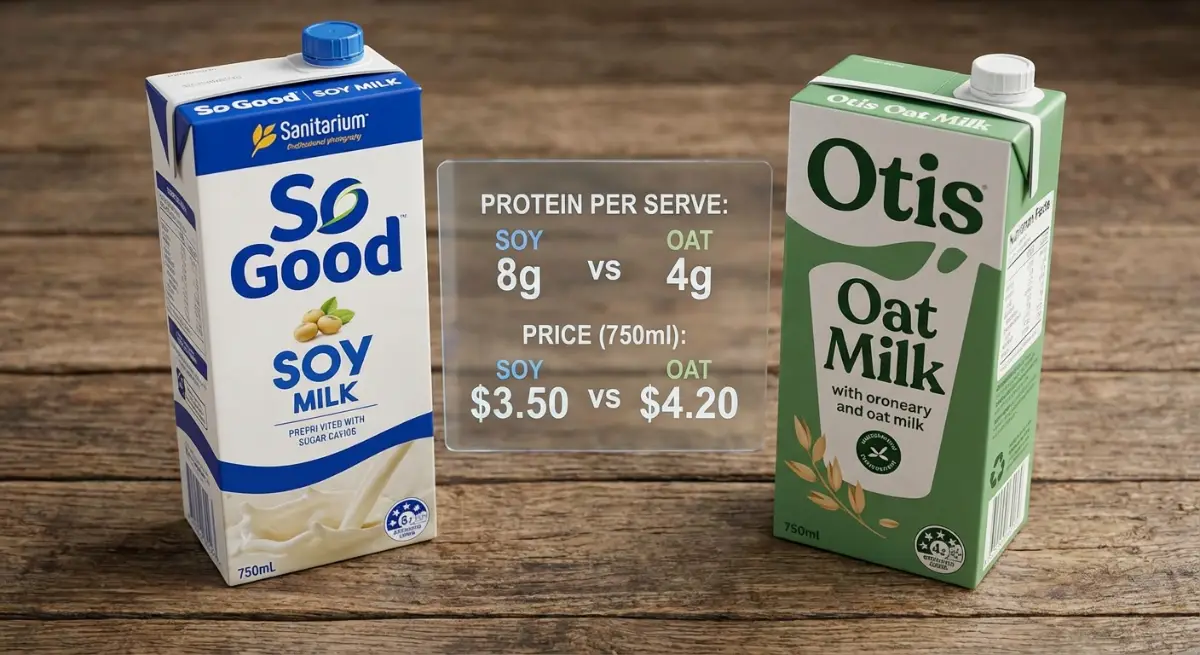
Otis Oat Milk is a proud New Zealand brand using Kiwi oats. While their branding is slick and the product is high quality, the economics of local oat milk production currently result in a higher price point, often hovering around the $4.50 – $5.20 mark. Boring Oat Milk, another NZ favorite, competes in this same premium bracket.
While these brands appeal to the “support local” sentiment and environmental concerns regarding food miles, purely from a soy milk price NZ comparison perspective, they cannot compete with mass-market soy. Consumers paying for Otis or Boring are paying for the brand ethos, the specific oat flavor profile, and the texture, rather than raw caloric value per dollar.
The Niche: Pea Milk
Pea milk is the newest contender, boasting high protein and low environmental impact. However, in New Zealand, it is still a niche product. Brands are often imported or produced on a smaller scale, leading to the highest prices in the category. Until pea milk achieves the ubiquity of soy, it will likely remain a premium option for those with specific dietary requirements (like soy allergies) rather than a budget staple.
Nutritional Economics: Protein Per Dollar
When assessing value, one must consider what they are buying. Are you buying flavored water, or a nutritional powerhouse? This is where soy milk dominates the “Nutritional Economics” calculation.
Soy milk is the only plant-based milk that is naturally comparable to cow’s milk in terms of protein content. A standard glass of soy milk contains roughly 8-9 grams of protein. In comparison:
- Oat Milk: Typically 1-3 grams of protein (mostly carbohydrates).
- Almond Milk: Typically 1 gram of protein (mostly water).
To get the same amount of protein from oat milk that you get from one litre of soy milk, you might need to drink three litres of oat milk. When you adjust the price for grams of protein per dollar, soy milk becomes exponentially cheaper than its competitors.
For athletes, growing children, or the elderly, soy milk provides the most cost-effective non-dairy nutrition. According to Consumer NZ, checking the nutritional panel is vital, as many cheaper plant milks are essentially water with thickeners. Soy consistently ranks highest for nutrient density among the affordable options.
Tips for Saving Money on Plant-Based Milks
Even with soy being the cheaper option, prices are rising. Here are strategic ways to lower your grocery bill further while sticking to plant-based nutrition.
1. The “Ambient” Aisle is Your Friend
There is a significant price difference between “Chilled” soy milk (found in the fridge next to dairy) and “Ambient” or UHT soy milk (found in the aisles). Chilled milk incurs higher transport and storage costs (refrigeration), which are passed on to you. UHT milk is chemically identical but processed at a higher temperature for shelf stability. Switching to UHT can save you $1.00 – $1.50 per litre.
2. Bulk Buying at Wholesalers
If you have access to Gilmours, Trents, or Costco Auckland, buying soy milk by the carton (usually 6 or 12 packs) can reduce the unit price to under $2.00. Even without a wholesale membership, look for “bulk saver” weeks at Pak’nSave where buying 6 cartons triggers a discount.
3. Embrace the Store Brand
Woolworths’ Macro and Pak’nSave’s Pams brands are often produced by the same manufacturers as the big brands, just with different labeling. Compare the nutritional panel; if the protein and calcium levels are similar, the generic brand is a smart swap.
4. DIY Soy Milk
For the ultra-frugal, making soy milk at home is incredibly cheap. A 1kg bag of dried soybeans costs roughly $6.00 and can produce 10-12 litres of milk. That brings the cost down to roughly $0.50 per litre. While it requires labor and a blender (or a dedicated soy milk maker), the savings are unbeatable.
The Future of Plant Milk Pricing in NZ
As New Zealand continues to adapt to global economic pressures, the gap between dairy and plant-based pricing is narrowing. Interestingly, while dairy prices have seen sharp spikes due to farmgate costs, soy has remained relatively more stable due to the global commodity nature of soybeans.
We expect to see continued diversification. However, for the next 12-24 months, soy will likely remain the entry-level price leader. The “oat hype” may cool, leading to price corrections, but the established infrastructure of soy processing ensures it retains the crown for value.
For more detailed data on food price indices, Stats NZ provides monthly updates that track the basket of goods, including milk and alternatives, helping consumers stay informed about macro trends.