
The Ultimate Tempeh Preparation Guide
Mastering the art of how to cook tempeh through science, tradition, and professional culinary techniques.
Understanding Tempeh: A Fermented Wonder
Tempeh is a traditional Indonesian soy product that has captured the attention of health-conscious diners and professional chefs globally. Unlike tofu, which is made from the coagulation of soy milk, tempeh is produced through a natural culturing and controlled fermentation process that binds whole soybeans into a firm, cake-like form. The primary agent in this transformation is a fungus known as Rhizopus oligosporus. This mycelium not only creates the structure of the tempeh but also pre-digests many of the proteins and carbohydrates, making tempeh a nutritional powerhouse that is significantly easier on the digestive system than unfermented soy products.
The flavor profile of tempeh is distinct: it is earthy, nutty, and slightly mushroom-like. Because it utilizes the entire soybean, the texture is chunky and substantial, providing a satisfying mouthfeel that acts as a robust meat alternative in everything from tacos to stir-frys. When you are learning how to cook tempeh, it is essential to appreciate its density. This density allows it to hold up under high heat, making it much more versatile than many other plant-based proteins. In the following sections, we will explore the nuances of preparation that turn this humble fermented block into a gourmet centerpiece.

Pre-Cooking Secrets: Steaming and Cutting
One of the most common complaints about tempeh is a lingering bitterness. This bitterness is a natural byproduct of the fermentation process, but it can easily be mitigated. The secret used by professional chefs is steaming before any other cooking step. Steaming the tempeh for 10 to 12 minutes accomplishes two major goals: it removes the bitter notes and it opens up the pores of the soy, allowing it to absorb marinades much more effectively.
Effective Cutting Techniques
How you cut your tempeh dictates the final texture and how it interacts with heat. For those looking for maximum crunch, thin slices (about 1/4 inch thick) are ideal. If you are preparing a hearty stew or a bowl, 1-inch cubes provide a satisfying, meaty bite. For salads or breakfast hashes, crumbling the tempeh by hand creates irregular shapes that catch sauce and develop crispy edges. Understanding these geometries is the first step in mastering how to cook tempeh for specific culinary applications.
The Science of the Perfect Marinade
Tempeh is like a dry sponge. While its natural flavor is pleasant, its true strength lies in its ability to carry other flavors. A successful tempeh marinade requires a balance of four elements: Fat (oil), Acid (vinegar or citrus), Salt (soy sauce or sea salt), and Sweetness (maple syrup or agave). The fat helps the flavors penetrate the dense bean structure, while the acid breaks down some of the surface proteins to allow for deeper seasoning.
The ‘Golden Ratio’ Marinade
- 3 Parts Liquid Aminos or Soy Sauce (Salt)
- 2 Parts Apple Cider Vinegar or Lime Juice (Acid)
- 1 Part Toasted Sesame Oil (Fat)
- 1 Part Maple Syrup (Sweet)
- Aromatics: Minced garlic, grated ginger, and a pinch of smoked paprika.
For the best results, allow the tempeh to marinate for at least 30 minutes. If you have the time, an overnight soak in the refrigerator will transform the flavor profile entirely, pushing the seasonings into the very center of the soybeans. This is particularly important when learning how to cook tempeh for meat-centric dishes like ‘tempeh bacon’ or ‘tempeh ribs’.

Core Cooking Methods: Pan-Fry to Air-Fry
1. Pan-Frying (The Classic)
Pan-frying is the most popular way to cook tempeh. Use a cast-iron skillet for the best heat retention. Heat 2 tablespoons of oil over medium-high heat. Place your slices or cubes in a single layer and cook for 3-5 minutes per side until deeply golden brown. This method creates a Maillard reaction that enhances the nutty notes of the soy.
2. Oven Roasting (The Hands-Off)
Roasting is perfect for meal prep. Toss marinated tempeh on a parchment-lined baking sheet and bake at 400°F (200°C) for 20-25 minutes. Flip the pieces halfway through. This dries out the exterior slightly, creating a firm, chewy texture that is excellent in wraps and sandwiches.
3. Air-Frying (The Modern)
The air-fryer is perhaps the best tool for how to cook tempeh without excessive oil. Air-fry at 375°F for 12-15 minutes, shaking the basket frequently. The result is an incredibly crispy exterior that rivals deep-frying but with a fraction of the calories.
4. Grilling (The Smoky)
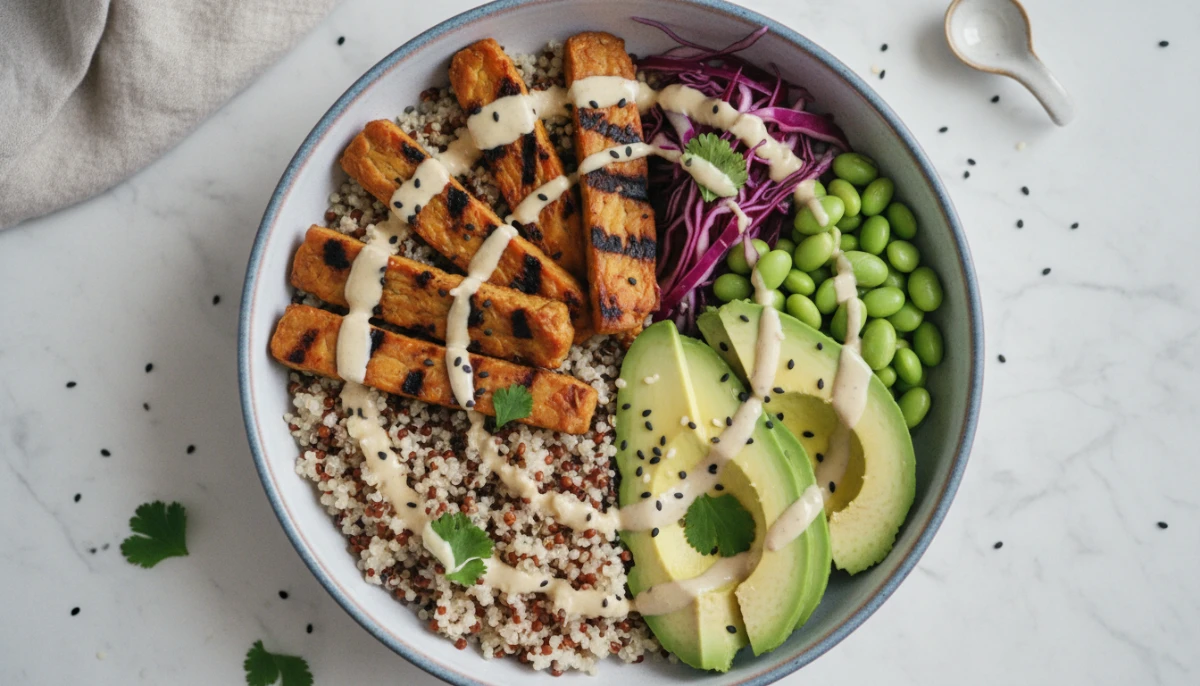
Because tempeh is firm, it is perfect for the grill. Brush with BBQ sauce or a smoky marinade and grill over direct heat for 4 minutes per side. The mycelium chars beautifully, adding a complex smoky dimension to the flavor.
Each of these methods offers a different sensory experience. If you are a beginner, start with pan-frying to get a feel for how the tempeh browns. As you become more comfortable, the air-fryer will likely become your go-to for its speed and consistent results. The key to all these methods is heat management; tempeh has low moisture, so it can burn quickly if left unattended. Always look for that ‘golden-amber’ hue as your signal of perfection.

Nutritional Profile and Health Benefits
Tempeh is often cited as the king of plant proteins, and for good reason. A standard 3-ounce serving contains roughly 16-20 grams of protein. But the benefits extend far beyond just macros. Because it is a fermented product, tempeh contains probiotics, although most are neutralized during high-heat cooking. However, the fermentation process leaves behind ‘paraprobiotics’ and beneficial bioactive peptides that support gut health and immune function.
Tempeh is also a significant source of manganese, phosphorus, and magnesium. Manganese is crucial for bone health and blood sugar regulation, while phosphorus plays a vital role in cellular repair. Furthermore, the fermentation process reduces the levels of phytic acid, an ‘anti-nutrient’ found in soy that can inhibit the absorption of minerals like iron and zinc. This makes the nutrients in tempeh more ‘bioavailable’ than those found in unfermented soy products like soy milk or edamame.
For those monitoring their heart health, tempeh is naturally cholesterol-free and contains soy isoflavones, which have been studied for their potential to lower LDL (bad) cholesterol levels. When you consider the high fiber content—about 7 grams per serving—it becomes clear why tempeh is a staple for longevity-focused diets. It provides the satiety of meat with the digestive benefits of a high-fiber vegetable.
Frequently Asked Questions (FAQ)
Is tempeh better for you than tofu?
Both are healthy, but tempeh is generally higher in protein and fiber. It is also less processed and fermented, which can be better for digestion. If you want a more whole-food option, tempeh is the winner.
Can you eat tempeh raw?
While most commercial tempeh is pasteurized and safe to eat raw, the flavor and texture are much improved by cooking. Raw tempeh can be quite bland and firm; cooking softens the beans and develops the nutty aroma.
What are the black spots on my tempeh?
Don’t worry! Those small black or grey spots are a natural part of the fermentation process (sporulation). They do not indicate spoilage and are perfectly safe to eat. However, if the tempeh feels slimy or smells like ammonia, it has gone bad.
How long does cooked tempeh last?
Once cooked, tempeh can be stored in an airtight container in the refrigerator for up to 5 days. It also freezes exceptionally well for up to 3 months.
Start Your Tempeh Journey Today
Now that you know how to cook tempeh like a pro, it’s time to get into the kitchen. Experiment with different marinades and cooking times to find the texture that suits your palate. Whether you’re a long-time vegan or a curious meat-eater, tempeh offers a world of culinary possibilities that are as nutritious as they are delicious.