
Soy vs. Dairy Farming in NZ: A Carbon Footprint Comparison
An in-depth analysis of the environmental impact, carbon metrics, and sustainability profiles of New Zealand’s dairy industry compared to the rising soy alternative sector.
Table of Contents
- 1. Introduction: The Agricultural Landscape of Aotearoa
- 2. Dairy Farming: The Backbone and the Burden
- 3. Soy Production: Global Import vs. Local Potential
- 4. Comparative Analysis: Carbon Footprint Metrics
- 5. Beyond Carbon: Water, Soil, and Biodiversity
- 6. Technological Innovations and Mitigation
- 7. Conclusion: Navigating a Sustainable Future
- 8. Frequently Asked Questions (FAQ)
Introduction: The Agricultural Landscape of Aotearoa
New Zealand occupies a unique position in the global agricultural market. As an island nation with a temperate climate, its economy has long been anchored by pastoral farming. However, as the global climate crisis intensifies, the scrutiny on the “soy vs dairy environmental impact nz” has reached a fever pitch. In New Zealand, agriculture accounts for approximately 48% of total greenhouse gas emissions, a stark contrast to most developed nations where energy or transport leads the carbon profile. The debate is no longer just about economic output but about the biological reality of methane versus carbon dioxide, and the land-use efficiency of animal-based proteins compared to plant-based alternatives like soy.
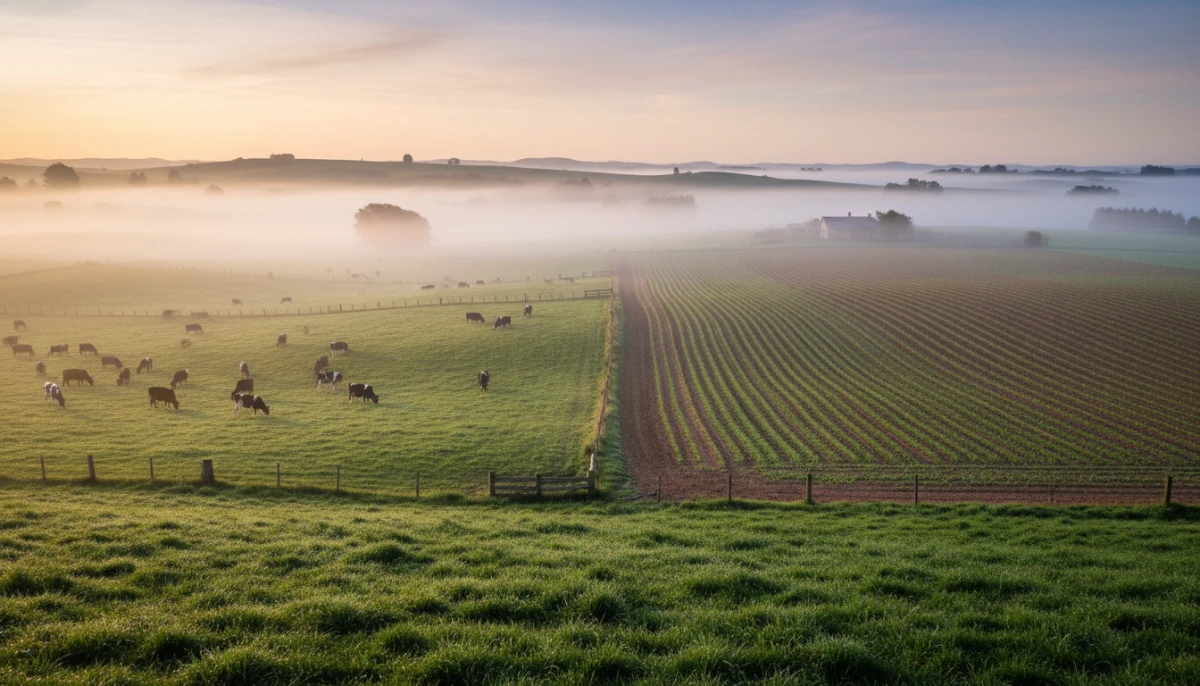
This comparison requires a nuanced understanding of Lifecycle Assessments (LCA). While dairy is a significant export earner, soy is often viewed through the lens of an alternative milk source or a supplemental feed. To truly understand the carbon footprint, we must look beyond the farm gate and examine the entire supply chain, including international imports of soy-based feed and the biological methane emitted by New Zealand’s six million dairy cows.
Dairy Farming: The Backbone and the Burden
New Zealand’s dairy sector is one of the most efficient in the world on a “per kilo of milk solid” basis. Because NZ cows are primarily pasture-fed rather than kept in barns, their carbon footprint is lower than many of their international counterparts in Europe or North America. However, the sheer scale of the industry means its cumulative impact is massive.
The Methane Factor
The primary greenhouse gas associated with dairy is methane (CH4), produced via enteric fermentation. While methane is a short-lived climate pollutant, lasting only about 12 years in the atmosphere, its warming potential is significantly higher than CO2 over a 20-year period. In New Zealand, the agricultural sector’s contribution to methane emissions is the primary hurdle in meeting the targets set by the Zero Carbon Act.
Nitrous Oxide and Land Use
Beyond methane, dairy farming contributes nitrous oxide (N2O) through urine patches and the application of nitrogen-based fertilizers. This gas has a warming potential nearly 300 times that of CO2 and stays in the atmosphere for over a century. The intensification of dairy farming over the last two decades has led to increased nitrogen leaching into NZ’s waterways, adding an ecological layer to the carbon-focused debate.
Soy Production: Global Import vs. Local Potential
When discussing soy in New Zealand, it is vital to distinguish between soy grown for human consumption (like soy milk) and soy imported as animal feed. Currently, New Zealand produces very little soy domestically; the majority is imported from South America and the United States.

The Carbon Cost of Imports
The environmental impact of soy often includes the carbon cost of deforestation in the Amazon and the emissions from international shipping. When NZ dairy farmers use Palm Kernel Expeller (PKE) or soy meal as supplementary feed, they are effectively “importing” the carbon footprint of those offshore industries. However, if we look specifically at soy milk produced for human consumption, the efficiency of converting land directly to protein is much higher than using land to grow feed for a cow to produce milk.
Arable Land Potential in NZ
Research into growing soy in the Canterbury and Waikato regions is ongoing. Proponents argue that shifting a portion of dairy land to soy or other plant proteins could drastically reduce the nation’s methane output while maintaining high-value exports. Soy is a nitrogen-fixing legume, meaning it requires less synthetic fertilizer than the intensive rye-grass pastures used in dairying, which further lowers its carbon profile.
Comparative Analysis: Carbon Footprint Metrics
To understand the “soy vs dairy environmental impact nz”, we must look at the CO2 equivalent (CO2e) per liter of product. While figures vary by study, a generalized comparison in the New Zealand context reveals a clear disparity:
Dairy Milk (NZ Average)
0.74 – 0.95 kg CO2e / Litre
Includes methane, nitrous oxide, and on-farm energy. Does not include land-use change from imported feed.
Soy Milk (Global Avg/NZ Import)
0.20 – 0.35 kg CO2e / Litre
Includes processing, shipping, and cultivation. Even with transport, the impact remains significantly lower.
The primary reason for this gap is the biological efficiency of plants. A cow acts as a middleman that requires significant energy and water to maintain its own biological functions before producing milk. Soy bypasses this metabolic overhead, converting sunlight and soil nutrients directly into human-consumable protein and fat.
Beyond Carbon: Water and Soil Health
Carbon is only one metric of environmental impact. In New Zealand, the health of our “freshwater assets” is a top priority. Dairy farming is water-intensive, requiring large volumes for both irrigation and hygiene in the milking shed. Furthermore, the concentrated nitrogen from cow urine is a primary driver of nitrate contamination in aquifers.
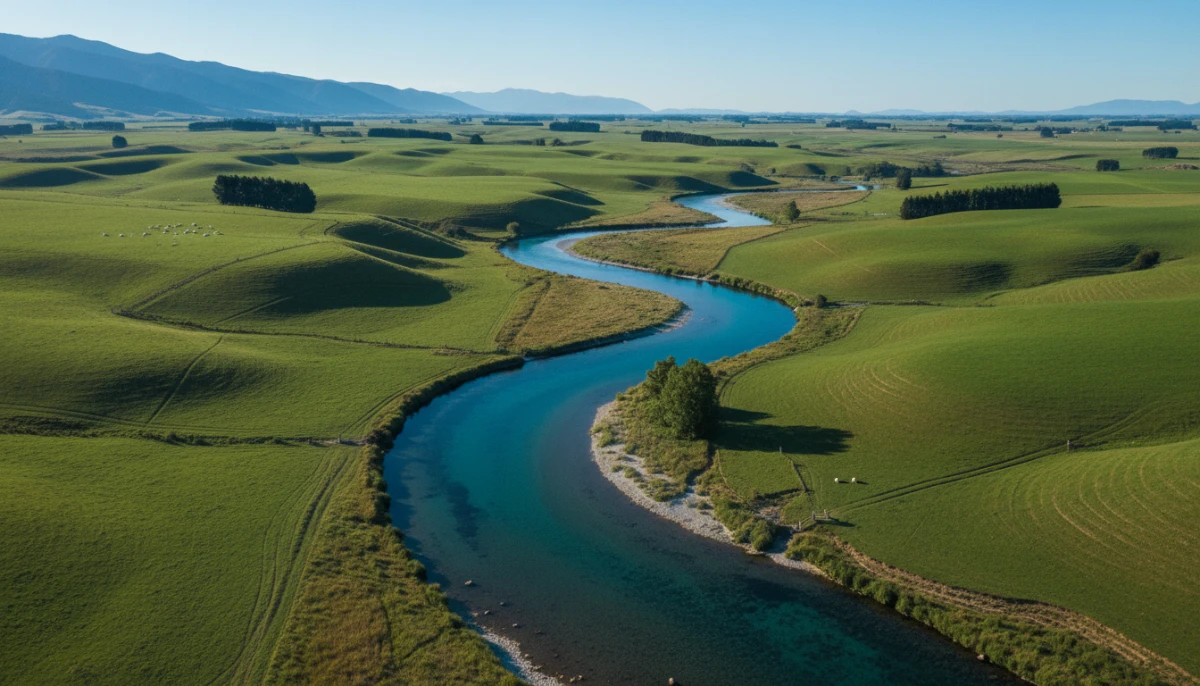
Soy, while requiring irrigation in drier regions like Canterbury, does not produce the same level of concentrated nitrogen waste. As a legume, it can actually improve soil structure and nitrogen levels naturally. However, large-scale monoculture soy farming carries its own risks, such as soil erosion and the use of herbicides, which must be managed to avoid replacing one environmental problem with another.
Technological Innovations and Mitigation
The New Zealand dairy industry is not standing still. Significant investments are being made in methane inhibitors (like 3-NOP) and selective breeding for “low-methane” cows. If these technologies are successfully scaled, the carbon footprint of NZ dairy could drop by 20-30% in the coming decade.
On the soy side, the focus is on regenerative agriculture and localizing the supply chain. If New Zealand can establish a domestic soy industry that utilizes precision agriculture and renewable energy for processing, the carbon footprint of soy milk could be reduced even further, potentially reaching near-zero net emissions if coupled with on-farm carbon sequestration.
Conclusion: Navigating a Sustainable Future
The comparison of soy vs dairy environmental impact in NZ is complex. From a pure carbon metrics standpoint, soy milk is the clear winner, offering a protein source with roughly one-third the emissions of dairy. However, dairy remains a vital part of the New Zealand economy and culture, and its efficiency is world-leading within the animal-protein sector.
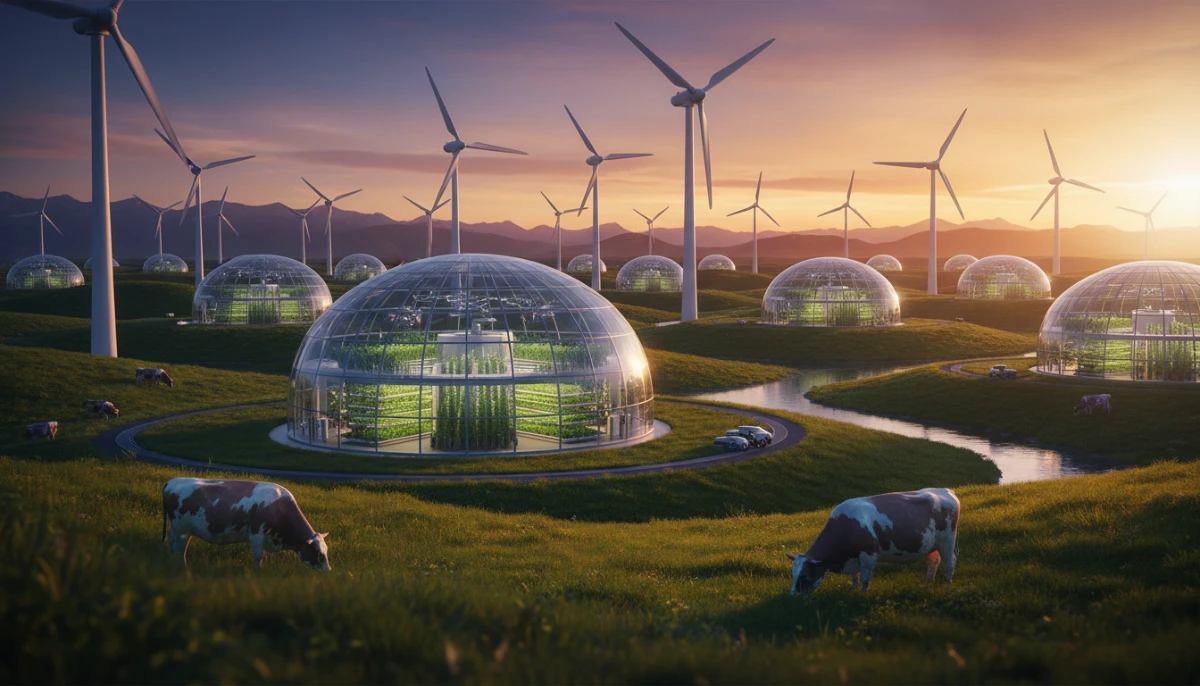
Ultimately, the transition toward a lower-carbon New Zealand will likely involve a hybrid approach: reducing the intensity of dairy farming while expanding the production of plant-based proteins like soy. For the consumer, choosing soy milk remains one of the most effective personal dietary changes to reduce one’s individual carbon footprint in the context of New Zealand agriculture.
Frequently Asked Questions
Is soy milk better for the environment than NZ dairy milk?
Yes, in terms of carbon emissions. Soy milk typically produces 60-70% fewer greenhouse gas emissions per liter compared to New Zealand dairy milk, primarily due to the absence of methane emissions from livestock.
Doesn’t soy farming cause deforestation?
While global soy production is linked to deforestation in the Amazon, most soy used for human milk alternatives is increasingly sourced from certified sustainable regions. In contrast, a significant portion of global soy is actually grown to feed dairy cows and other livestock.
Is New Zealand dairy the most sustainable in the world?
New Zealand dairy has one of the lowest carbon footprints per kilogram of milk produced globally because of its pasture-based system. However, its total environmental impact remains high due to the total volume of production and impact on local water quality.