
Soy meal prep for busy professionals is a strategic culinary approach designed to maximize nutritional intake and minimize kitchen time through the batch preparation of soy-based proteins like tofu, tempeh, and edamame. This method ensures access to quick plant meals that are high in protein, cost-effective, and specifically tailored for the fast-paced New Zealand corporate lifestyle.
The 30-Minute Soy Meal Strategy
For the modern New Zealand professional, time is often the scarcest resource. Between the morning commute and late-evening emails, nutrition frequently takes a backseat to convenience. However, the rise of quick plant meals utilizing soy protein offers a solution that does not compromise on health or efficiency. Unlike animal proteins that often require lengthy cooking times to ensure safety and tenderness, soy products are uniquely suited for rapid preparation.
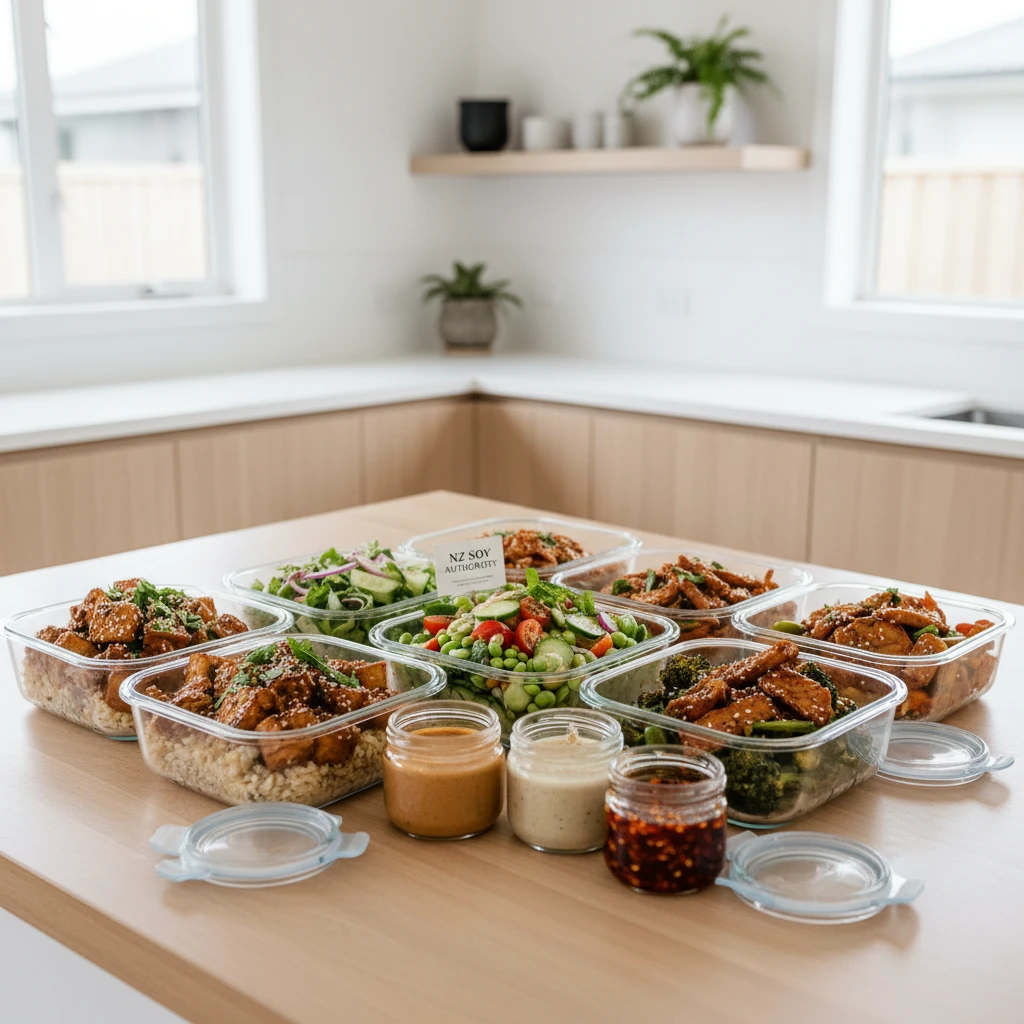
The core of this strategy lies in “Mise-en-place”—a French culinary phrase meaning “putting in place.” By dedicating a tight 30 to 45-minute window on a Sunday afternoon, you can construct the architectural framework for your week’s nutrition. The goal is not to cook five distinct gourmet dinners at once, but to prepare the protein components so that assembling a meal on a Tuesday night takes less than five minutes.
The Rule of Thirds
To execute the 30-minute strategy effectively, visualize your meal prep containers in thirds. This visual heuristic ensures macronutrient balance without the need for obsessive calorie counting:
- The Protein Foundation (35%): This is your marinated tofu, tempeh cubes, or shelled edamame. This component provides the satiety required to power through afternoon meetings.
- The High-Fiber Volume (45%): Cruciferous vegetables like broccoli, kale, or bok choy. These can be pre-blanched or kept raw depending on your texture preference.
- The Complex Carbohydrate (20%): Quinoa, brown rice, or roasted NZ kumara. These provide sustained energy release rather than the spike-and-crash associated with refined sugars.
By focusing primarily on the protein preparation—which we will detail in the next section—the other two components can often be assembled from pre-washed supermarket bags or quick-cook pouches, drastically reducing your active kitchen time.
Batch Cooking Tofu for the Week
Tofu is the chameleon of the culinary world, but its reputation for blandness stems entirely from improper preparation. For the busy professional, the objective is to create a high-yield, high-flavor protein source that holds up well in the refrigerator for 4-5 days. Baking is superior to frying for meal prep; it is a passive cooking method that allows you to multitask while the oven does the work.
Step 1: The Press (Crucial for Texture)
New Zealand supermarkets, such as Countdown and New World, generally stock “Firm” or “Extra Firm” tofu varieties (brands like Bean Supreme or Tonzu are staples). Despite the label, these blocks contain significant water. To achieve a “meaty” texture that absorbs marinade, you must press the tofu. Wrap the block in a clean tea towel and place a heavy object (like a cast-iron skillet or a stack of cookbooks) on top for 15 minutes. This step is non-negotiable for superior quick plant meals.
Step 2: The Marinade Matrix
Once pressed and cubed, the tofu acts as a sponge. A professional-grade marinade balances salt, acid, fat, and sweetness. A reliable formula for 500g of tofu includes:
- 3 Tablespoons of Tamari or Soy Sauce (Salt/Umami)
- 1 Tablespoon of Rice Wine Vinegar or Lemon Juice (Acid)
- 1 Teaspoon of Sesame Oil (Fat/Aroma)
- 1 Teaspoon of Maple Syrup or Brown Sugar (Caramelization)
- Fresh grated ginger and garlic
Step 3: The High-Heat Roast
Preheat your oven to 200°C (fan bake). Spread your marinated cubes on a baking sheet lined with parchment paper. Ensure they are not touching; overcrowding creates steam, leading to soggy tofu. Bake for 25-30 minutes, flipping halfway through. The result should be golden-brown cubes with a chewy exterior and tender interior. These can be stored in an airtight glass container and added cold to salads or quickly reheated in a microwave for warm bowls.
Desk-Friendly Soy Salads and Bowls
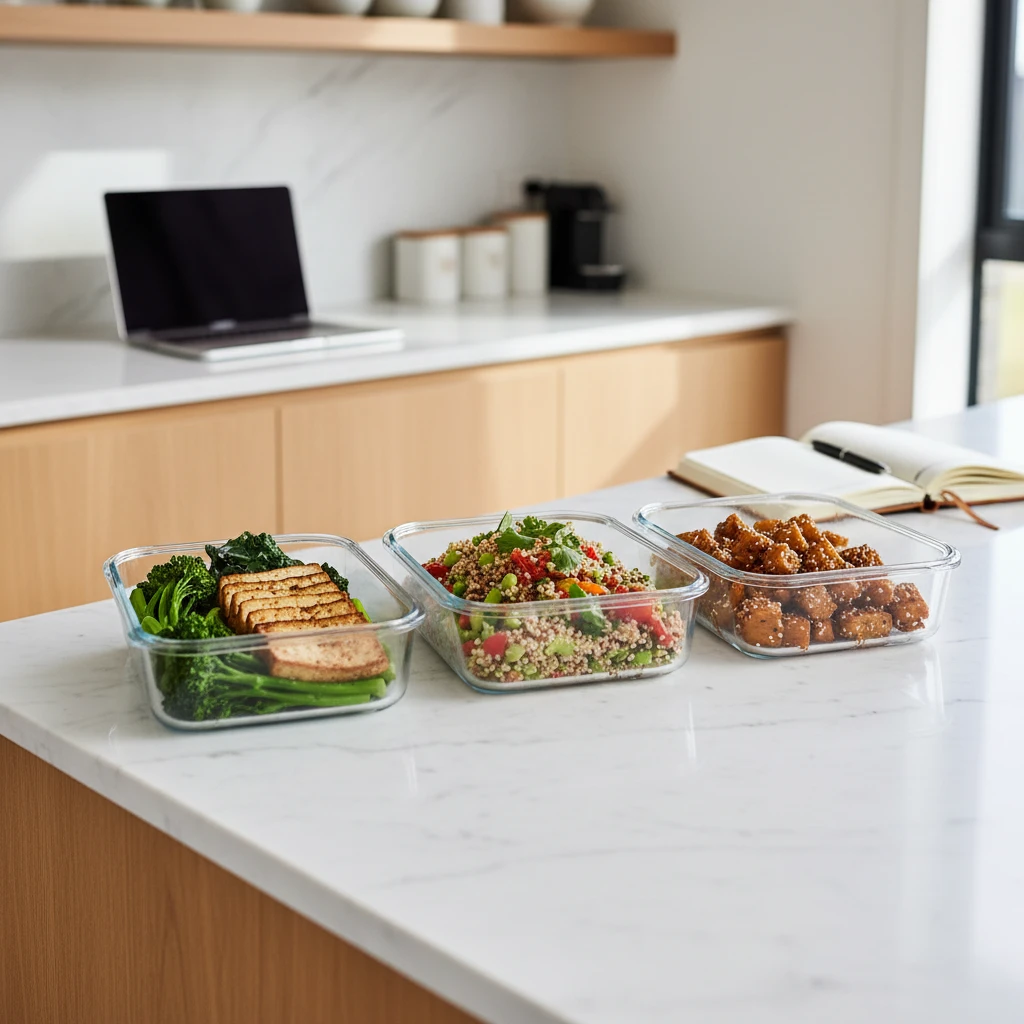
The “Sad Desk Lunch” is a common corporate trope, but with soy meal prep, your midday meal can be the highlight of your day. The challenge with packing salads is managing moisture. There is nothing worse than opening a container at 1:00 PM to find wilted spinach and soggy croutons. The solution is structural integrity through proper layering.
The Mason Jar Technique
While trendy, the mason jar method is rooted in physics. By stacking ingredients vertically, you separate the hydroscopic elements from the liquid dressing. Build your jar in this order:
- Bottom: Dressing (Vinaigrette or peanut sauce).
- Layer 2: Hard vegetables (Carrots, cucumbers, capsicum). These act as a barrier and marinate slightly in the dressing.
- Layer 3: Beans and Soy. Your batch-cooked tofu or edamame goes here.
- Layer 4: Grains (Rice, quinoa, noodles).
- Top: Delicate greens (Spinach, mesclun, rocket).
When you are ready to eat, simply shake the jar vigorously and pour it into a bowl. The dressing coats the greens immediately before consumption, ensuring crispness.
Tempeh: The Robust Alternative
If you prefer a heartier texture, Tempeh (fermented soy beans) is an excellent alternative for desk lunches. Unlike tofu, which can be soft, tempeh has a firm, nutty texture that holds up exceptionally well at room temperature. It is particularly good in wraps or “Buddha Bowls.” In New Zealand, look for locally fermented options in the chilled section. Tempeh boasts a higher protein density and includes probiotics, which are beneficial for gut health—a key consideration for professionals managing workplace stress.
For more on the nutritional benefits of plant-based diets, you can refer to the Heart Foundation of New Zealand, which offers extensive guidelines on heart-healthy eating patterns.
NZ Supermarket Hacks for Fast Protein
Navigating the aisles of Pak’nSave, Woolworths, or your local organic grocer efficiently is a skill. You don’t always have to cook from scratch to enjoy quick plant meals. Knowing which semi-prepared products to buy can shave hours off your weekly prep time.
The Freezer Aisle Goldmine
Do not overlook the freezer section. Bags of shelled edamame (often labeled as “Soy Beans”) are arguably the most efficient protein source available. They require no chopping or marinating. Simply pour boiling water over a cup of frozen beans, let them sit for three minutes, and drain. They are instantly ready to be tossed into salads or stir-frys. They are also significantly cheaper per kilo compared to fresh protein sources.
Chilled Convenience
New Zealand has seen a surge in high-quality pre-marinated tofu and plant-based meats. Brands like Tonzu and Bean Supreme offer pre-diced, marinated tofu options (e.g., Honey Soy or Teriyaki flavors). While these are slightly more expensive than plain blocks, the time saved is often worth the premium for a busy professional.
Canned Goods and Pantry Staples
Textured Vegetable Protein (TVP) is a dried soy product found in the health food aisle or bulk bins. It is shelf-stable and rehydrates in hot water in 10 minutes to resemble mince. It is perfect for a quick Bolognese or chili when you haven’t had time to shop for fresh produce. Additionally, keeping canned soy beans (black soy beans are rare but available in specialty stores) allows for instant protein addition to soups.
Essential Gear for the Corporate Kitchen
To professionalize your meal prep, you need the right tools. You wouldn’t attend a board meeting without prepared notes; do not attempt meal prep without proper equipment.
- Glass Containers with Locking Lids: Plastic containers can retain odors and stain easily, especially with turmeric or tomato-based sauces. Glass is non-porous, microwave safe, and looks more professional on your desk.
- A Tofu Press: While you can use heavy books, a dedicated tofu press (available at kitchenware stores like Stevens or Living & Giving) extracts water more evenly and cleanly, reducing mess.
- High-Quality Insulated Lunch Bag: If your office fridge is overcrowded or non-existent, a high-quality insulated bag with an ice brick is essential to keep your soy meals food-safe (under 5°C) until lunch.
Frequently Asked Questions
How long can I store cooked tofu in the fridge?
Properly stored in an airtight container, baked or fried tofu will last for 4 to 5 days in the refrigerator. If you notice a sour smell or a slimy texture, discard it immediately. To maximize shelf life, let the tofu cool completely before sealing the container to prevent condensation.
Can I freeze tofu for meal prep?
Yes, and it actually improves the texture. Freezing tofu causes the water inside to expand and form ice crystals, which creates small pockets within the curd. Upon thawing, the tofu becomes spongier and chewier, making it excellent for absorbing sauces. You can freeze the whole block or pre-cubed pieces.
Are quick plant meals with soy enough protein for an active lifestyle?
Absolutely. Soy is a complete protein, meaning it contains all nine essential amino acids necessary for human health. A standard 150g serving of firm tofu provides approximately 20-22g of protein, which is comparable to a serving of fish or chicken, making it ideal for gym-goers and busy professionals alike.
What is the fastest way to cook soy if I forgot to meal prep?
The fastest method is using shelled edamame (frozen) or soft silken tofu. Edamame thaws in minutes under hot water. Silken tofu can be eaten cold right out of the pack; simply dress it with soy sauce, sesame oil, and spring onions for a traditional Japanese cold dish (Hiyayakko).
Is processed soy like TVP healthy?
Textured Vegetable Protein (TVP) is defatted soy flour. While it is more processed than edamame, it remains a high-protein, low-fat food source rich in fiber. It is a healthy, shelf-stable option for quick plant meals, though whole soy foods like tempeh and tofu are generally preferred for their micronutrient profile.
How do I reheat tofu without it getting rubbery?
The microwave can make tofu rubbery if overheated. The best way to reheat is in a pan over medium heat for 2-3 minutes or in an air fryer for 3 minutes. If you must use a microwave, cover the container with a damp paper towel and heat in 30-second intervals to retain moisture.
Adopting a soy-based meal prep routine is more than just a diet change; it is a productivity hack. By streamlining your nutrition with these quick plant meals, you reclaim valuable mental energy and time, allowing you to focus on your professional goals while maintaining peak physical health in the New Zealand corporate landscape.