
Fortified soy milk is a plant-based beverage enriched with essential micronutrients—specifically calcium, vitamin D, and vitamin B12—to match the nutritional profile of cow’s milk. This fortification ensures that individuals following vegan or lactose-free diets receive critical vitamins and minerals necessary for bone density and nerve function without consuming animal products.
Understanding Fortified Soy Milk
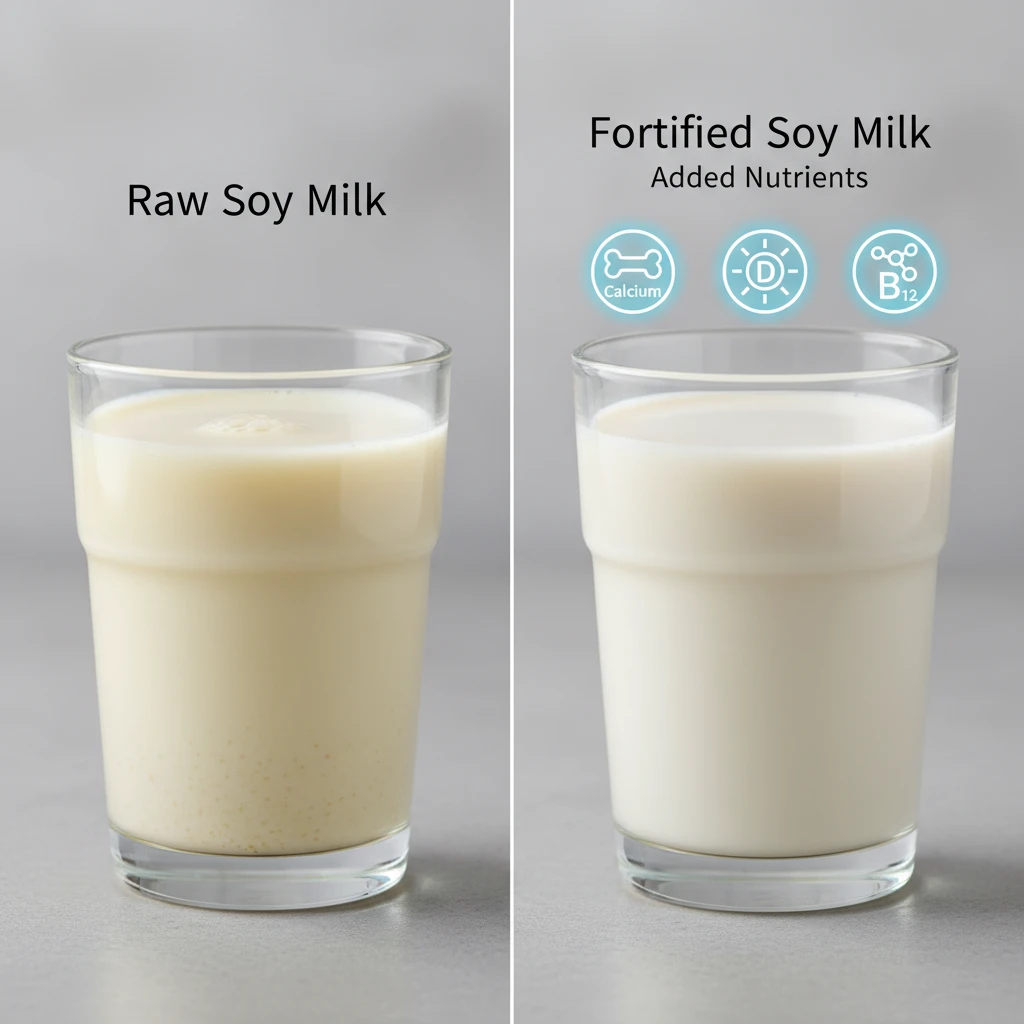
In the rapidly expanding landscape of plant-based nutrition, soy milk remains the gold standard for dairy alternatives due to its high protein content and complete amino acid profile. However, in its natural state, the liquid extracted from soybeans—while rich in protein, isoflavones, and potassium—lacks specific micronutrients found abundantly in bovine milk. This is where the process of fortification becomes essential.
Fortification is the deliberate addition of micronutrients to food products to prevent nutritional deficiencies in the general population. For soy milk, the primary goal is to create a nutritional equivalent to cow’s milk, allowing consumers to swap one for the other without sacrificing bone health or metabolic function. Unlike “enriched” foods, which replace nutrients lost during processing, fortified foods often add nutrients that were not originally present in significant quantities.
The distinction between fortified and unfortified soy milk is profound. Unfortified versions are essentially water and soybeans; they are excellent sources of protein but offer negligible amounts of calcium or Vitamin D. For a consumer relying on soy milk as a daily staple, particularly children or the elderly, choosing a fortified option is not merely a preference but a nutritional necessity.
Key Micronutrients in Fortified Soy Milk
To understand the value of fortified soy milk, one must analyze the specific micronutrients added during manufacturing. The formulation is designed to address the most common gaps in plant-based diets.
Calcium
Calcium is the most critical addition to soy milk. Cow’s milk naturally contains about 300mg of calcium per cup. To match this, manufacturers add calcium salts. The most common forms used are calcium carbonate and tricalcium phosphate.
- Calcium Carbonate: Sourced often from limestone, this is the same compound found in many calcium supplements and antacids. It has a high percentage of elemental calcium.
- Tricalcium Phosphate: This form helps fortify the milk while also acting as a stabilizer to prevent separation, though it contains slightly less elemental calcium by weight than carbonate.
Vitamin D
Calcium cannot be effectively absorbed by the body without adequate Vitamin D. Since few foods naturally contain Vitamin D, and sun exposure is often insufficient, fortification is vital. Soy milk is typically fortified with Vitamin D2 (ergocalciferol), which is plant-derived, or Vitamin D3 (cholecalciferol). While D3 is often sourced from sheep’s wool (lanolin), making it non-vegan, many modern brands now use lichen-sourced D3 to maintain a 100% plant-based status.
Vitamin B12 (Cobalamin)
Vitamin B12 is perhaps the most crucial nutrient for vegans, as it is naturally found almost exclusively in animal products. Deficiency in B12 can lead to anemia and irreversible neurological damage. Fortified soy milk often provides between 25% to 50% of the Daily Value (DV) of B12 per serving, usually in the form of cyanocobalamin, making it a convenient vehicle for this essential nutrient.
Vitamin A and Riboflavin (B2)
Cow’s milk is a major source of Riboflavin and Vitamin A in the Western diet. To ensure that switching to soy doesn’t create a deficit, these are frequently added. Vitamin A supports vision and immune function, while Riboflavin is essential for converting food into energy.
Bioavailability and Absorption Dynamics
Simply adding nutrients to a liquid does not guarantee they will be absorbed by the body. This concept is known as bioavailability. There has been significant debate regarding whether the calcium in fortified soy milk is as bioavailable as that in dairy milk.
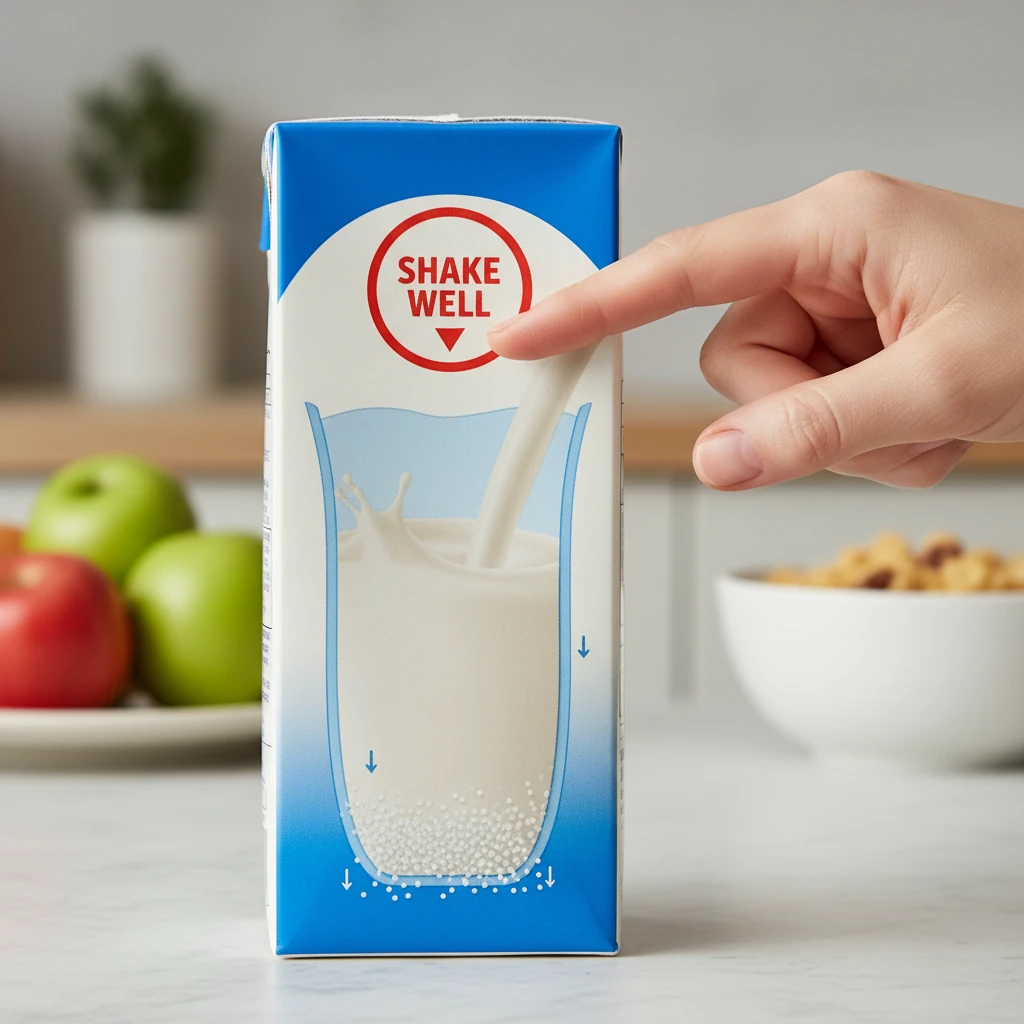
According to research, calcium carbonate in fortified soy milk exhibits an absorption rate very similar to that of cow’s milk. However, there is a physical challenge: sedimentation. Calcium salts are heavier than the liquid base and tend to settle at the bottom of the carton. If the consumer does not shake the container vigorously before pouring, the calcium remains at the bottom, and the consumer drinks only the liquid protein.
Furthermore, soybeans contain phytates (phytic acid), which are antinutrients that can bind to minerals like calcium, iron, and zinc, potentially inhibiting absorption. However, modern processing methods used to create soy milk significantly reduce phytate levels, and the high level of fortification generally compensates for any minor reduction in absorption efficiency.
Fortified Soy Milk vs. Cow’s Milk
When analyzing “Fortified Soy Milk & Micronutrients” against traditional dairy, the comparison reveals that soy is the only plant-based milk that naturally competes with dairy in terms of macronutrients (protein), while fortification brings the micronutrients up to par.
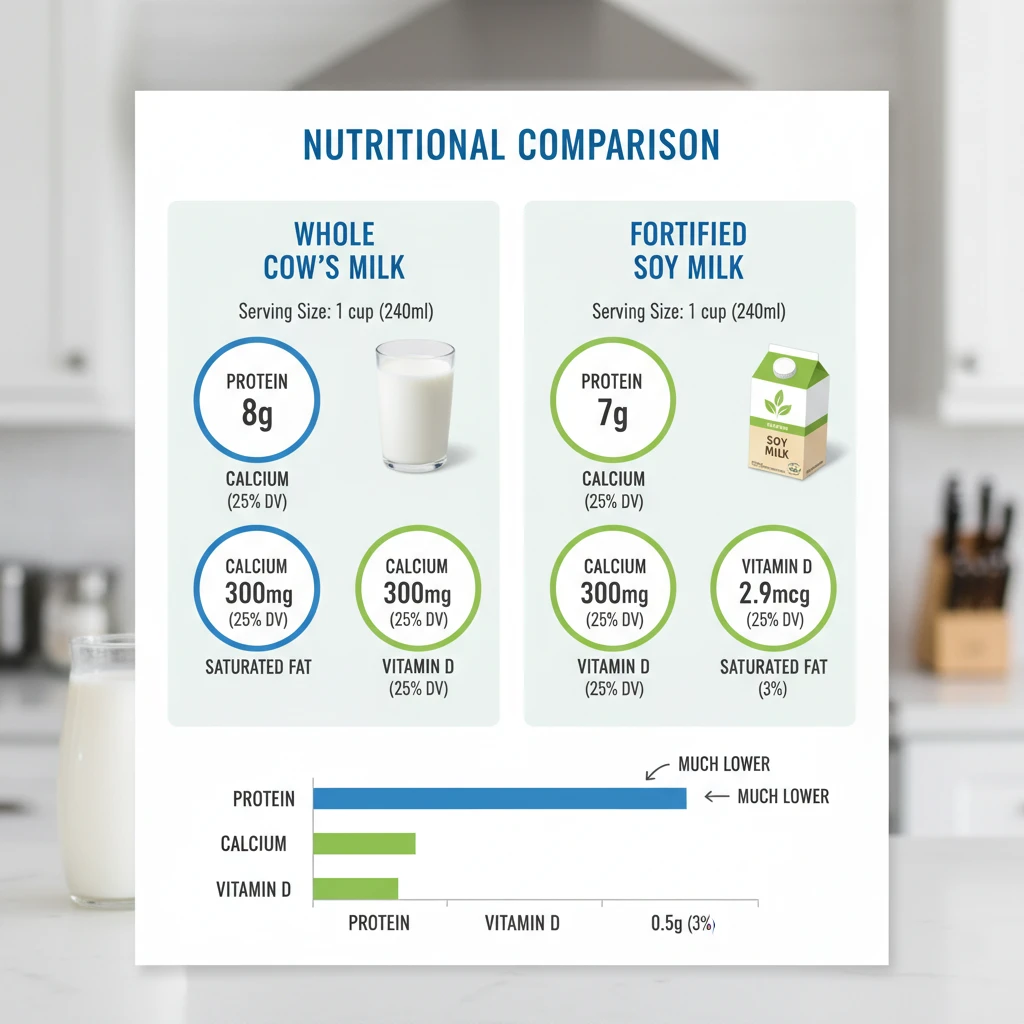
Nutritional Comparison (Per 240ml / 1 Cup):
- Protein: Cow’s milk (~8g) vs. Soy milk (~7-8g).
- Calcium: Cow’s milk (~300mg) vs. Fortified Soy (~300-450mg, depending on brand).
- Vitamin D: Cow’s milk (fortified to ~100-120 IU) vs. Fortified Soy (~100-120 IU).
- Potassium: Both are excellent sources.
- Saturated Fat: Cow’s milk (high, unless skim) vs. Soy milk (very low).
The Harvard T.H. Chan School of Public Health notes that soy is a unique protein source containing isoflavones, which may exert different health effects than the animal proteins and hormones found in dairy.
Health Benefits of Micronutrient Fortification
Consuming fortified soy milk offers a dual-stream of benefits: the inherent benefits of soy protein and the added benefits of the micronutrients.
Bone Health Maintenance
The combination of protein, calcium, and Vitamin D is the “holy trinity” for bone density. For post-menopausal women, who are at higher risk of osteoporosis, fortified soy milk is particularly beneficial. The isoflavones (phytoestrogens) in soy may inhibit bone resorption, while the added calcium provides the raw material for bone remineralization.
Cardiovascular Health
Unlike cow’s milk, soy milk contains no cholesterol and low saturated fat. The FDA has acknowledged that consuming 25 grams of soy protein a day, as part of a diet low in saturated fat and cholesterol, may reduce the risk of heart disease. When you combine this with Vitamins B12 and B6 (often added), which help regulate homocysteine levels, fortified soy milk becomes a heart-healthy powerhouse.
Solution for Lactose Intolerance
For the estimated 65% of the human population that has a reduced ability to digest lactose after infancy, fortified soy milk is a lifeline. It allows these individuals to enjoy cereal, coffee, and baking without gastrointestinal distress, while still obtaining the calcium needed for skeletal health.
How to Choose the Best Fortified Soy Milk
Not all soy milks are created equal. The market is flooded with “beverage” style drinks that may lack nutritional density. To ensure you are getting the benefits of Fortified Soy Milk & Micronutrients, follow these selection criteria:
- Check the “Nutrition Facts” Panel: Do not assume a product is fortified. Look specifically for Calcium (aim for 20% DV or higher) and Vitamin D (15-25% DV). If these numbers are 0% or 2%, it is not a fortified product suitable for replacing dairy.
- Watch for Added Sugars: Many flavored soy milks (vanilla or chocolate) contain significant amounts of added cane sugar. The healthiest option is always “Unsweetened Original.”
- Identify the Calcium Source: Calcium Carbonate is generally preferred for higher calcium content, but it settles more. If you choose this, you must be diligent about shaking the carton.
- Organic vs. Non-GMO: Soy is one of the most genetically modified crops in the world. Choosing “USDA Organic” guarantees non-GMO soybeans and ensures that no synthetic pesticides were used in cultivation.
Potential Drawbacks and Considerations
While fortified soy milk is an excellent food, there are nuances to consider. The primary concern is the presence of antinutrients. As mentioned, phytates and oxalates in soy can bind to minerals. However, the fortification levels are usually calculated to overcome this absorption deficit.
Additionally, some consumers may have a soy allergy, which is one of the top nine food allergens. For these individuals, fortified pea milk or fortified oat milk would be safer alternatives, though they may differ in protein content.
Finally, there is the issue of the “sediment layer.” Because the micronutrients are suspended rather than dissolved, the last cup in the carton often contains a sludge of calcium salts. This can be gritty and unpalatable. To avoid this, and to ensure consistent nutrient intake, the carton must be inverted and shaken before every single pour.
Frequently Asked Questions
Below are common questions regarding fortified soy milk and its micronutrient profile.
Is fortified soy milk as healthy as cow’s milk?
Yes, for most people, fortified soy milk is nutritionally comparable to cow’s milk. It provides similar amounts of protein, calcium, and Vitamin D but with less saturated fat and no cholesterol. It is widely considered the most balanced plant-based alternative to dairy.
Does soy milk block calcium absorption?
Soybeans contain phytates which can slightly inhibit mineral absorption, but this effect is minimal in processed soy milk. Manufacturers fortify soy milk with extra calcium to compensate for this, ensuring the net absorption remains adequate for bone health.
What is the difference between fortified and unfortified soy milk?
Unfortified soy milk contains only the nutrients naturally found in soybeans (protein, some iron, potassium). Fortified soy milk has added vitamins and minerals (Calcium, Vitamin D, B12) to mimic the nutritional profile of dairy milk.
Can toddlers drink fortified soy milk?
Yes, fortified soy milk is generally the only plant-based milk recommended by pediatricians for toddlers (ages 1-2) as a dairy alternative, because its protein and fat content is sufficient for growth, unlike almond or oat milk. Always consult a pediatrician first.
Does fortified soy milk contain Vitamin B12?
Most fortified soy milks contain added Vitamin B12 (cyanocobalamin), which is essential for nerve function and red blood cell formation, especially for those following a vegan diet who cannot get B12 from plants naturally.
Why do I need to shake soy milk before drinking?
Fortified minerals, especially calcium carbonate, are heavier than the liquid and settle at the bottom of the carton. Shaking the container ensures the nutrients are evenly distributed so you don’t miss out on the health benefits.
For further reading on nutrient databases and fortification standards, refer to the USDA FoodData Central.