
Environmental Impact & Sustainability refers to the comprehensive assessment of how human activities alter natural ecosystems and the strategic implementation of practices designed to preserve resources for future generations. It involves balancing economic development with ecological stewardship to mitigate climate change, reduce pollution, and ensure the long-term viability of life on Earth.
Understanding the Core Definitions
To navigate the complex landscape of modern ecology and business, one must first distinguish between two inextricably linked concepts: environmental impact and sustainability. While often used interchangeably in casual conversation, they represent distinct facets of our relationship with the planet.
Environmental Impact is the measure of the alteration of the environment, whether adverse or beneficial, resulting wholly or partially from an organization’s activities, products, or services. This encompasses a wide array of vectors, including carbon emissions, water usage, land degradation, and waste generation. Impact is the quantitative footprint left behind—the tangible consequence of action.
Sustainability, on the other hand, is a proactive methodology and a desired end-state. The most widely accepted definition comes from the UN’s Brundtland Commission (1987), which defined sustainable development as “development that meets the needs of the present without compromising the ability of future generations to meet their own needs.” It is the strategic framework used to manage and mitigate environmental impact to ensure system longevity.
The synergy between these two concepts is where true progress lies. By rigorously analyzing environmental impact, governments and corporations can devise sustainability strategies that are not merely performative but are rooted in data and aimed at critical ecological thresholds.
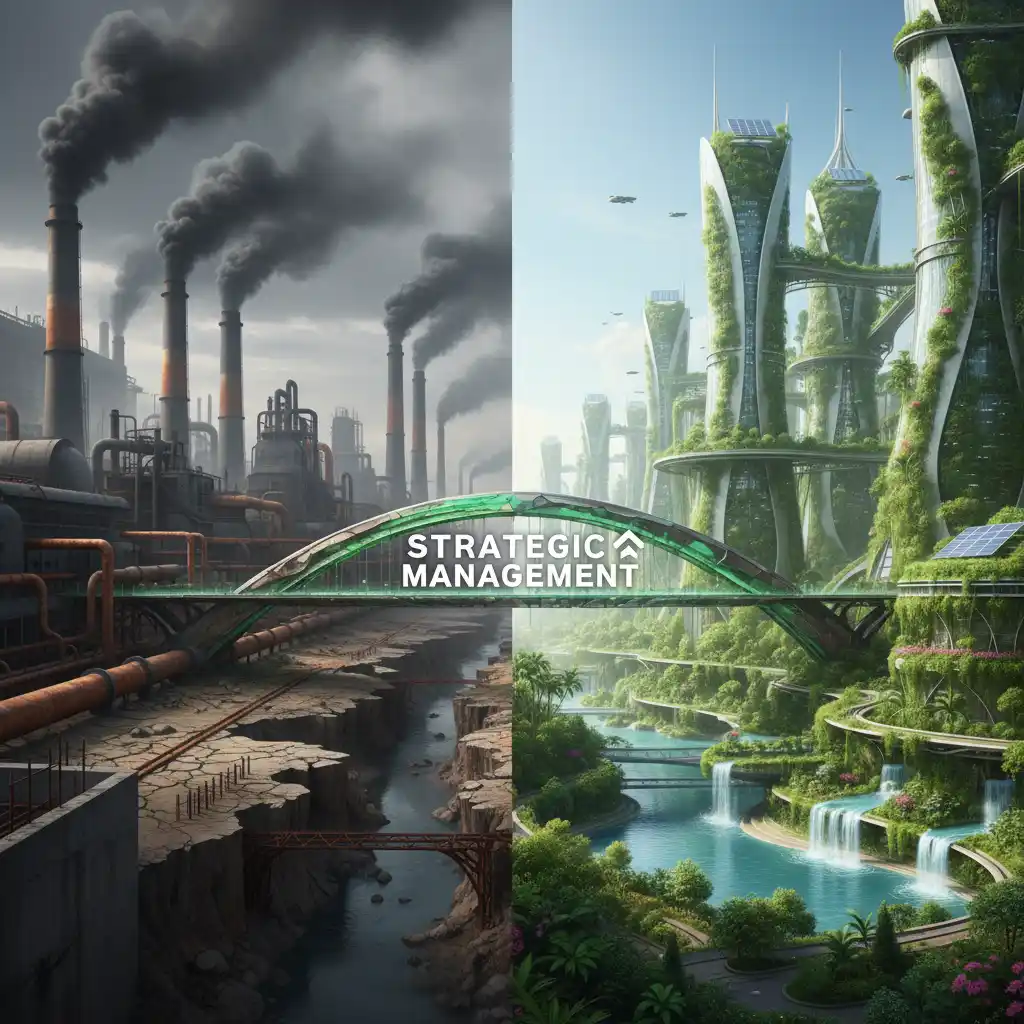
The Three Pillars of Sustainability
Sustainability is not solely an environmental concern; it is a holistic approach often referred to as the “Triple Bottom Line.” To achieve true sustainability, progress must be balanced across three primary dimensions: Environmental, Social, and Economic.
1. Environmental Protection (Planet)
This is the most visible pillar. It focuses on reducing carbon footprints, conserving water, ensuring air quality, and protecting biodiversity. The goal is to ensure that the consumption of renewable resources does not exceed their rate of long-term regeneration and that non-renewable resources are used sparingly while alternatives are developed.
2. Social Equity (People)
A sustainable system must be socially just. This involves fair labor practices, community engagement, and ensuring that the health and wellness of populations are not compromised by industrial activities. Environmental justice is a key component here, ensuring that marginalized communities do not disproportionately bear the brunt of pollution and climate change.
3. Economic Viability (Profit)
Sustainability cannot exist in a vacuum; it must be economically feasible. This pillar asserts that businesses must be profitable to survive and continue providing jobs and services. However, it challenges the traditional notion of “profit at any cost,” advocating instead for long-term value creation over short-term quarterly gains. This involves investing in green technology that may have high upfront costs but yields significant savings and risk reduction over time.
Critical Areas of Environmental Impact
When assessing environmental impact & sustainability, specific sectors require urgent attention due to their disproportionate effect on the planetary biosphere.
Greenhouse Gas Emissions and Climate Change
The accumulation of greenhouse gases (GHGs) like carbon dioxide and methane in the atmosphere is the primary driver of global warming. The burning of fossil fuels for energy, transportation, and industrial processes remains the largest contributor. The impact is systemic, leading to rising sea levels, extreme weather events, and the disruption of agricultural cycles.
Biodiversity Loss and Land Use
Human expansion often comes at the cost of natural habitats. Deforestation for agriculture, urban sprawl, and mining operations fragment ecosystems, leading to a rapid decline in biodiversity. A diverse ecosystem is resilient; a homogenized one is fragile. The loss of pollinators, for instance, poses a direct threat to global food security.
Water Scarcity and Pollution
Freshwater is a finite resource. Industrial agriculture consumes approximately 70% of the world’s accessible freshwater. Furthermore, the discharge of untreated industrial wastewater and agricultural runoff introduces heavy metals, nitrates, and microplastics into the water supply, affecting both marine life and human health.
Measuring Impact: Frameworks and Metrics
You cannot manage what you cannot measure. Modern sustainability relies on rigorous auditing and scientific frameworks to quantify environmental impact.
Life Cycle Assessment (LCA)
LCA is the gold standard for assessing the environmental impacts associated with all the stages of the life-cycle of a commercial product, process, or service. This includes:
- Raw Material Extraction: The impact of mining or harvesting.
- Manufacturing: Energy consumption and waste during production.
- Distribution: Transportation emissions.
- Usage: Energy efficiency during the product’s life.
- End-of-Life: Recyclability or landfill impact.
Carbon Footprinting
This metric specifically calculates the total amount of greenhouse gases (including carbon dioxide and methane) that are generated by our actions. Businesses utilize the Greenhouse Gas Protocol (GHG Protocol) to categorize emissions into three scopes:
- Scope 1: Direct emissions from owned or controlled sources.
- Scope 2: Indirect emissions from the generation of purchased energy.
- Scope 3: All other indirect emissions that occur in a company’s value chain (often the largest share).
For authoritative data on emission standards and environmental regulations, the U.S. Environmental Protection Agency (EPA) provides extensive resources and guidelines that businesses must adhere to.
Corporate Responsibility and ESG Integration
The corporate world has moved beyond voluntary Corporate Social Responsibility (CSR) to the more rigorous framework of Environmental, Social, and Governance (ESG) criteria. Investors are increasingly using ESG data to evaluate material risks and growth opportunities.
The Shift from Shareholder to Stakeholder Capitalism
Traditionally, the primary duty of a corporation was to its shareholders. Today, the scope has widened to include stakeholders: employees, customers, suppliers, and the local communities where they operate. Companies that ignore environmental impact face “transition risks”—regulatory fines, reputational damage, and supply chain disruptions caused by climate change.
Combating Greenwashing
As sustainability becomes a marketing asset, “greenwashing”—the practice of making misleading claims about the environmental benefits of a product or practice—has proliferated. Robust reporting standards, such as those developed by the Global Reporting Initiative (GRI) or the Sustainability Accounting Standards Board (SASB), are essential for maintaining transparency and trust.

The Transition to a Circular Economy
One of the most profound shifts in mitigating environmental impact is the move from a linear economy to a circular economy.
The Linear Model: Take-Make-Waste
The traditional industrial model relies on extracting raw materials, turning them into products, and discarding them after use. This model assumes infinite resources and infinite capacity for waste disposal, neither of which is true.
The Circular Model: Restore and Regenerate
A circular economy is designed to decouple economic activity from the consumption of finite resources. It is based on three principles:
- Design out waste and pollution: Products are designed to be durable, repairable, and recyclable from the start.
- Keep products and materials in use: Through reuse, repair, and remanufacturing, materials stay within the economy rather than ending up in landfills.
- Regenerate natural systems: Instead of merely doing less harm, circular practices aim to do good, such as returning nutrients to the soil.
This systemic change requires innovation in material science and logistics but offers a pathway to sustainable growth that aligns with planetary boundaries.
The Future of Global Sustainability
The trajectory of environmental impact & sustainability is pointing toward deeper integration of technology and biology. We are entering an era of “regenerative business,” where the objective is to leave the environment better than it was found.
Emerging technologies like Artificial Intelligence (AI) are being deployed to optimize energy grids, predict extreme weather patterns, and design new materials that are fully biodegradable. Furthermore, the global commitment to the United Nations Sustainable Development Goals (SDGs) provides a shared blueprint for peace and prosperity for people and the planet.
Ultimately, achieving sustainability is not a destination but a continuous process of adaptation. It requires a fundamental rethinking of how we value resources, how we define success, and how we interact with the natural world. Whether through individual choices to reduce consumption or multinational commitments to net-zero emissions, every action contributes to the aggregate impact on our shared environment.
Frequently Asked Questions
What is the difference between environmental impact and sustainability?
Environmental impact refers to the direct effect (positive or negative) of an action on the ecosystem, such as pollution or resource depletion. Sustainability is the broader strategy and capacity to maintain processes indefinitely without depleting natural resources, effectively managing impact to ensure long-term viability.
How can businesses measure their environmental impact?
Businesses measure impact using frameworks like Life Cycle Assessment (LCA) to analyze product lifespans, and Carbon Footprinting to calculate greenhouse gas emissions. They often adhere to standards like ISO 14001 and report via ESG (Environmental, Social, and Governance) criteria.
What are the three pillars of sustainability?
The three pillars, often called the Triple Bottom Line, are Environmental (Planet), Social (People), and Economic (Profit). True sustainability is achieved only when a balance is struck between protecting the environment, ensuring social equity, and maintaining economic profitability.
Why is biodiversity important for sustainability?
Biodiversity provides ecosystem resilience. A diverse range of species ensures that ecosystems can recover from disruptions, continue to pollinate crops, purify water, and regulate climate. Loss of biodiversity weakens these natural support systems, threatening human survival and economic stability.
What is a circular economy?
A circular economy is an economic system aimed at eliminating waste and the continual use of resources. Unlike the traditional linear “take-make-waste” model, it focuses on reuse, sharing, repair, refurbishment, remanufacturing, and recycling to create a closed-loop system.
How does climate change affect economic sustainability?
Climate change poses “physical risks” (damage to infrastructure, supply chain disruptions from extreme weather) and “transition risks” (regulatory changes, carbon taxes). These factors can lead to increased operational costs, insurance premiums, and market instability, threatening long-term economic viability.