
The Ultimate Guide to the Best Tofu Brands in NZ Supermarkets
The best tofu brands in NZ supermarkets, including local favorites like Tonzu and Bean Supreme, offer a spectrum of textures from delicate silken to robust extra-firm varieties. Selecting the ideal product requires analyzing protein density, manufacturing methods, and non-GMO sourcing to ensure optimal culinary performance for frying, scrambling, or blending.
Understanding the New Zealand Soy Landscape
The culinary landscape in New Zealand has shifted dramatically over the past decade. Once relegated to the back shelves of health food stores, soy products have moved front and center in mainstream supermarkets like Countdown, New World, and Pak’nSave. This shift is driven by a growing awareness of plant-based nutrition and the versatility of soy protein.
For the discerning Kiwi shopper, the connection between different soy derivatives is crucial. The same quality standards that define the premium soy milk nz consumers add to their morning flat whites often apply to the tofu sector. Manufacturers who prioritize whole, non-GMO beans for their milk products typically utilize similar high-grade sourcing for their solid curds. Understanding this ecosystem helps in identifying brands that prioritize flavor and integrity over mass production.
When browsing the chilled aisles, you are not just looking for a white block; you are looking for craftsmanship. The coagulation process, the quality of the water used (often New Zealand spring water), and the pressing techniques all contribute to the final mouthfeel. Whether you are a vegan veteran or a flexitarian experimenting with Meat-free Mondays, the quality of your tofu can make or break a dish.
Major Contenders: Sanitarium vs. Boutique NZ Brands
The battle for shelf space in New Zealand supermarkets is primarily fought between large-scale health food giants and smaller, artisanal producers. Each brings a different philosophy to the table regarding taste, texture, and price point.
Bean Supreme: The Ubiquitous Kiwi Staple
Bean Supreme is arguably the most recognizable tofu brand in New Zealand. Owned by Life Health Foods, they have managed to strike a balance between accessibility and quality. Their range is extensive, covering everything from marinated bites to whole blocks of firm tofu.
What sets Bean Supreme apart is their consistency. Their firm tofu holds its shape remarkably well during stir-frying, a testament to their pressing methods. They openly market their use of whole soybeans, which appeals to consumers concerned about processing levels. While they are a larger operation, their product often retains a “fresh” taste that rivals smaller boutique offerings.
Tonzu: The Artisanal Choice
If Bean Supreme is the reliable workhorse, Tonzu is the thoroughbred. Produced by Chalmers Organics, Tonzu products are often found in the organic sections of supermarkets. Their philosophy leans heavily on traditional Japanese methods.
Tonzu tofu is known for being “activated” or produced in a way that maximizes digestibility. Their texture is distinct—often slightly softer and creamier than mass-market equivalents, even in their firm varieties. For consumers who prioritize organic certification and traditional nigari (magnesium chloride) coagulation over calcium sulphate, Tonzu is frequently the top choice. Their price point is higher, but for a simple dish like Hiyayakko (chilled tofu) where the soy flavor is the star, the investment is justified.
The Sanitarium Influence
Sanitarium is a massive entity in the plant-based sector, most famous for their “So Good” range which dominates the soy milk nz market. While they are less synonymous with block tofu than Bean Supreme, their influence on the supply chain and the normalization of soy products in New Zealand cannot be overstated.
Sanitarium’s focus has largely been on convenience products and dairy alternatives. However, their Vegie Delights range often sits alongside tofu products, offering pre-seasoned alternatives. For shoppers who trust the “So Good” brand for their calcium-fortified milk, transitioning to associated soy protein products feels like a safe, reliable step.
Value for Money: Bulk Options and Budget Picks
With the cost of living rising in New Zealand, the price per kilogram of protein is a critical metric for many households. Tofu remains one of the most cost-effective protein sources available, but prices can vary significantly between brands and retailers.
Supermarket House Brands vs. Premium Labels
Recently, supermarkets like Countdown (Woolworths) and Pams (New World/Pak’nSave) have introduced or expanded their own plant-based ranges. These house-brand tofus are often manufactured by the same facilities that produce branded versions but are sold at a discount.
In terms of value, house brands usually come in at $2.00 – $3.00 cheaper per block compared to premium organic brands. The trade-off is often in the firmness and the specific bean origin. House brand tofu tends to be slightly more watery, requiring more pressing time before cooking. However, for dishes with heavy sauces like Mapo Tofu or a robust curry, the subtle flavor differences are negligible, making house brands an excellent budget strategy.
The Asian Supermarket Advantage
For the absolute best value, one must look beyond the standard aisles to the specialized Asian supermarkets such as Tai Ping, Lim Chhour, or Japan Mart. Here, you can find locally made fresh tofu (often still warm) or bulk packs imported from Asia.
Brands like “The Tofu Shop” (a local NZ producer often found in these stores) offer 1kg bulk bags of fried or fresh tofu for prices that standard supermarkets cannot compete with. If you are a high-volume consumer—perhaps meal prepping for a family—buying from Asian grocers is the most economical approach. Furthermore, these stores often stock a wider variety of soy milk nz consumers might not see elsewhere, including unsweetened varieties specifically designed for savory cooking rather than coffee.
The Best Texture for Frying vs. Blending
Tofu is a shapeshifter. Its ability to mimic meat or dairy depends entirely on the water content and texture of the block you purchase. Using the wrong type of tofu is the most common reason Kiwis claim they “don’t like tofu.”
Best for Frying: Extra Firm and Pressed
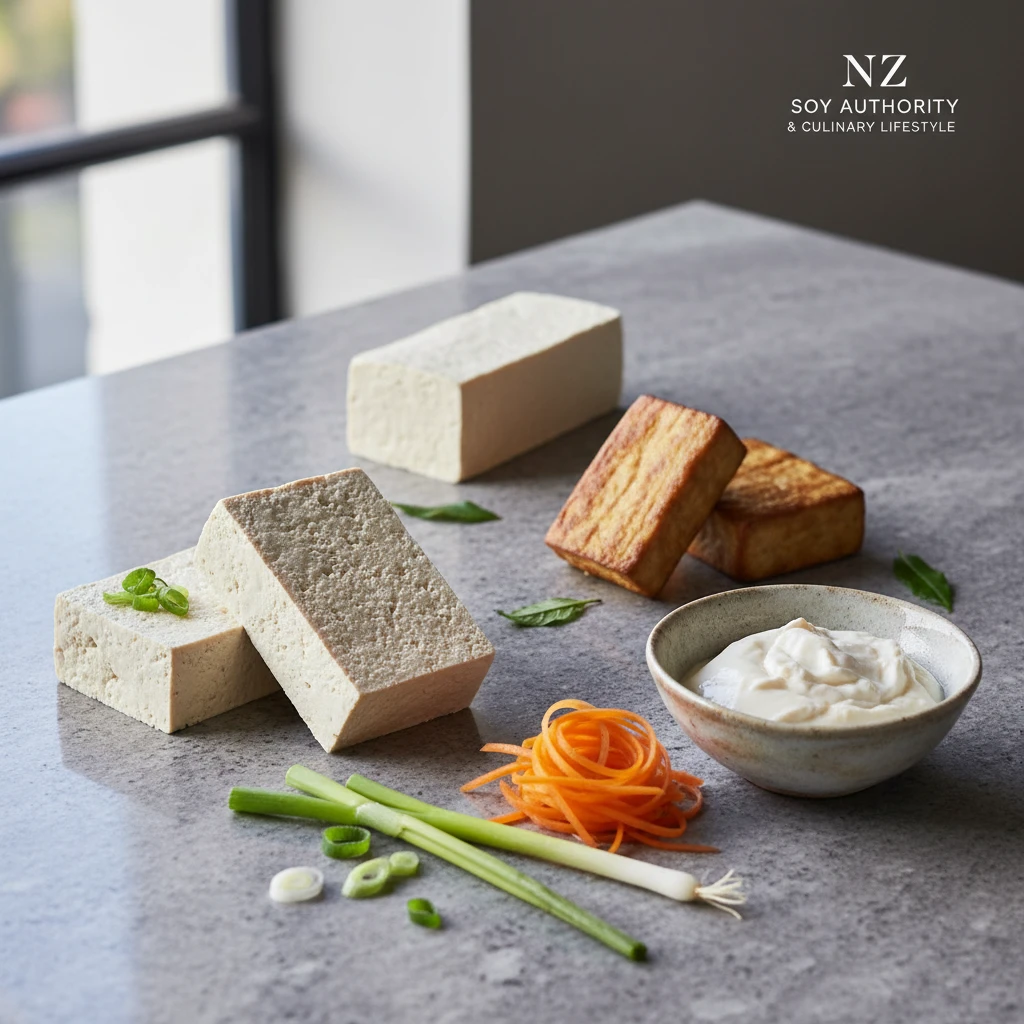
For a crispy exterior and a chewy interior, you need a low moisture content. The best brands for this in NZ are the Bean Supreme Firm Style and Tonzu Sausage (a dense, pre-compressed cylinder of tofu).
When frying, the Maillard reaction (browning) can only occur once surface moisture evaporates. If you use a soft tofu, it will likely disintegrate in the wok. We recommend selecting “Firm” or “Extra Firm” labeled packages. Even with firm tofu, we advise pressing the block. Wrap it in a clean tea towel and place a heavy object (like a cast-iron skillet) on top for 20 minutes. This squeezes out residual whey, allowing the tofu to act like a sponge for marinades.
Best for Blending and Desserts: Silken
Silken tofu is undrained and unpressed, containing the highest moisture content. It has a custard-like consistency. In NZ supermarkets, Morinaga (sold in shelf-stable Tetra Paks) is a common find in the international aisle, though some fridge-section brands now offer “Soft” varieties.
Silken tofu is the secret weapon for dairy-free creaminess. It can be blended into smoothies to add protein without the chalkiness of powder, or whipped with melted chocolate to create a vegan mousse. It is also the base for creamy salad dressings. Do not attempt to fry this unless you are an expert at deep-frying with a batter, as it will fall apart instantly in a stir-fry.
User Reviews: Kiwi Favorites
To get a pulse on the market, we analyzed discussions from NZ community hubs, including local food blogs and social media groups focused on vegan and vegetarian living in Aotearoa.
The Consensus on Flavor
Tonzu consistently ranks highest for flavor among purists. Reviews frequently mention that it tastes “clean” and “nutty,” unlike some cheaper imports that can have a slightly sour or metallic aftertaste. The lack of preservatives in Tonzu is a major selling point, though users note it has a shorter shelf life once opened.
The Consensus on Convenience
Bean Supreme wins the convenience category. Their pre-marinated ranges (Honey Garlic, Ginger & Sesame) are cited as life-savers for busy parents. Reviews highlight that these products are a “gateway tofu” for skeptics who think soy is bland. The texture is generally praised as being “meaty” enough to satisfy those transitioning away from animal proteins.
The “Soy Milk” Connection
Interestingly, user reviews often correlate brand loyalty across products. Consumers who purchase premium organic soy milk nz brands like Vitasoy or Boring Oat Milk (often used as a benchmark for local quality) tend to gravitate toward Tonzu for their solid food needs. There is a clear demographic of Kiwi shoppers who view soy products not just as a commodity, but as a health investment, willing to pay a premium for NZ-made, non-GMO certification.
Conversely, budget-conscious students and large families often praise the Pams and Countdown Macro Organic ranges for providing a “good enough” canvas for heavy seasoning, proving that you don’t always need artisanal curds for a Tuesday night curry.
Frequently Asked Questions
- What is the healthiest tofu brand available in NZ?
- Most nutritionists recommend brands like Tonzu or Chalmers Organics because they are certified organic and use traditional nigari for coagulation. These brands typically have fewer additives and use non-GMO soybeans, ensuring a cleaner nutritional profile high in protein and healthy fats.
- Is all tofu sold in New Zealand non-GMO?
- Generally, yes. New Zealand has strict regulations regarding Genetically Modified Organisms. Most major brands like Bean Supreme and Tonzu explicitly state they use non-GMO soybeans. However, it is always prudent to check the packaging, especially on imported products found in the international section.
- Can you eat raw tofu straight from the packet?
- Yes, tofu is pre-cooked during the manufacturing process (the soy milk is boiled before coagulation). It is safe to eat cold directly from the package, which is common in salads or cold dishes like Japanese Hiyayakko, though rinsing it first is recommended.
- What is the best way to store leftover tofu?
- Once opened, tofu should be submerged in fresh water in an airtight container and kept in the fridge. To keep it fresh, you must change the water daily. Consumed this way, it can last for 3-5 days after opening. Alternatively, you can freeze tofu, which changes its texture to be more spongy and meat-like.
- Why is my tofu falling apart in the pan?
- This usually happens because the tofu is too soft (silken or soft variety) or it hasn’t been pressed to remove excess water. For frying, always choose “Firm” or “Extra Firm” and press it for at least 15-20 minutes to improve structural integrity.
- Are there soy milk brands in NZ that make their own tofu?
- While some companies operate under parent groups that produce both, most brands specialize. However, the raw ingredient supply chains are often shared. Brands that prioritize high-quality soy milk nz production often source from the same high-grade, non-GMO growers that supply premium tofu manufacturers.
For more information on healthy eating guidelines and soy protein intake, refer to the New Zealand Ministry of Health or check consumer reviews on Consumer NZ.