
Animal Studies vs. Human Trials: The Validity of Rodent Studies in Soy Research
An exhaustive analysis of why mice aren’t men, especially when it comes to the complex metabolic interactions of soy isoflavones and hormonal health.
The Preclinical Paradigm: Why We Use Rodents
In the hierarchy of scientific evidence, animal studies serve as the bedrock of preclinical exploration. For decades, the validity of rodent studies in soy research has been foundational for generating hypotheses regarding the biological effects of isoflavones. Rodents—specifically mice and rats—are chosen due to their short lifespans, ease of genetic manipulation, and the relative similarity of their organ systems to humans. However, the reliance on these models has created a massive rift in public perception and clinical reality.
When we look at soy, a legume rich in phytoestrogens, the rodent model presents unique challenges. Researchers often utilize these animals to observe rapid physiological changes that would take decades to manifest in humans. While this provides a speed advantage, it introduces a significant risk of “false positives” or biological misinterpretations. To understand the validity of rodent studies in soy research, one must first acknowledge that a mouse is not merely a small human with a tail; its physiology, particularly regarding hormonal regulation, is distinct and highly specialized.

The central question remains: how much of what we see in a rat cage applies to a human dinner table? The answer lies in the nuances of metabolic kinetics and the specific way soy isoflavones like genistein and daidzein interact with cellular machinery. Over the following sections, we will dismantle the components of these studies to identify where they provide value and where they lead us astray.
The Metabolic Chasm: Isoflavone Processing
One of the primary reasons the validity of rodent studies in soy research is often questioned is the radical difference in metabolism. When a human consumes soy, the isoflavones undergo a complex process of glucuronidation in the liver. Humans are remarkably efficient at converting these active compounds into inactive forms (glucuronides), which are then rapidly excreted via urine. Consequently, the levels of “free” or active isoflavones in human blood remain significantly lower than those found in rodent models under similar conditions.
Rodents, conversely, maintain a much higher proportion of circulating aglycones—the bioactive, unconjugated form of the isoflavone. This means that for every milligram of soy consumed, a rodent is exposed to a far more potent biological signal than a human. This metabolic discrepancy explains why early rodent studies often showed stimulatory effects on estrogen-sensitive tissues that were never replicated in human clinical trials. The rodent’s body is effectively “bathed” in active phytoestrogens, whereas the human body is designed to temper their influence through rapid metabolic deactivation.
“The difference in plasma concentrations of unconjugated isoflavones between rodents and humans can be as high as 10 to 20-fold, rendering direct comparisons of toxicity and efficacy highly suspect without sophisticated pharmacokinetic scaling.”
The Equol Factor: A Key Biological Divergence
Daidzein, one of the primary isoflavones in soy, is metabolized by gut bacteria into a compound called equol. Equol is of intense interest to researchers because it has a higher affinity for estrogen receptors than its parent compound. Herein lies a massive strike against the validity of rodent studies in soy research: nearly all rodents are equol producers.
In contrast, only about 30% to 50% of the human population possesses the specific gut microbiome necessary to produce equol. This creates a binary in human populations that does not exist in the laboratory rodent. When researchers feed soy to a group of rats, they are testing a population that is uniformly and efficiently producing a potent estrogenic metabolite. Applying these results to the 70% of Western humans who are non-equol producers is a fundamental scientific error. This biological divergence ensures that the “rodent experience” of soy is fundamentally different from that of the majority of humans.

Estrogen Receptors: Alpha vs. Beta Distribution
To understand why soy behaves differently in humans and rodents, we must look at the targets: the Estrogen Receptors (ERs). There are two primary types: ER-alpha (ERα) and ER-beta (ERβ). ERα is primarily associated with cell proliferation in the breast and uterus, while ERβ is often associated with anti-proliferative, protective effects. Soy isoflavones have a significantly higher affinity for ERβ—up to 20 times higher—than for ERα.
The problem with the validity of rodent studies in soy research is that the distribution and ratio of these receptors vary wildly between species. For instance, in the rodent mammary gland, the expression and sensitivity of these receptors to phytoestrogens do not mirror the human mammary environment. Many rodent models used in soy research are ovariectomized or immunodeficient, which further alters the receptor landscape. When we see a rodent study suggesting that soy “stimulates” tumor growth, it is often because the model has been artificially manipulated to over-express certain receptors or because the rodent’s natural receptor distribution favors a proliferative response that simply does not occur in healthy human tissue.
The Dosage Dilemma: Translation Errors
One of the most frequent criticisms regarding the validity of rodent studies in soy research involves the sheer volume of isoflavones administered. In many preclinical trials, rodents are fed doses of genistein that, when scaled to human body weight, would be equivalent to a human drinking 20 to 50 liters of soy milk per day. While these “megadoses” are useful for identifying potential toxicological thresholds, they are irrelevant for nutritional science.
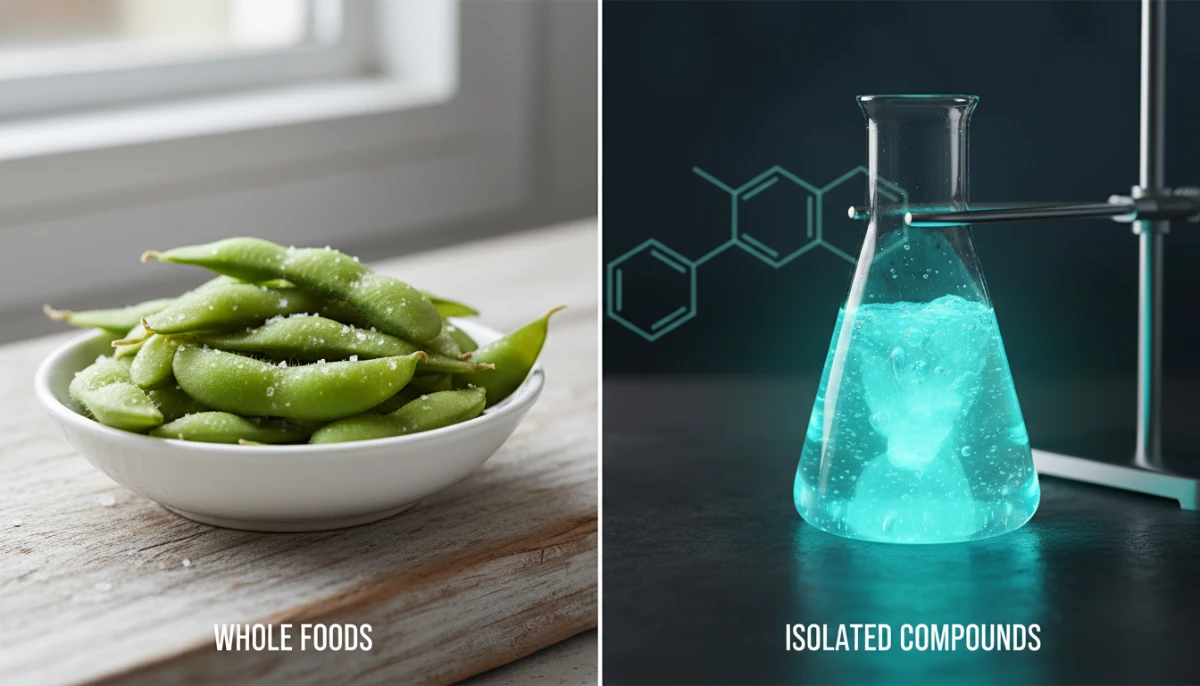
Furthermore, the delivery method matters. Rodents are often injected with purified isoflavones (subcutaneous or intraperitoneal injection), bypassing the digestive tract entirely. Humans, however, consume soy as a whole food—tofu, tempeh, or edamame. The matrix of the whole food slows absorption and alters the metabolic profile. A study that injects a mouse with pure genistein cannot be used to argue that a human eating a bowl of miso soup is at risk. This lack of ecological validity is a primary reason why findings in the lab fail to manifest in the clinic.
Soy and Breast Cancer: A Study in Contrast
The controversy surrounding soy and breast cancer is perhaps the most famous example of the rodent-human disconnect. In the late 1990s, studies on athymic (immune-deficient) mice suggested that soy isoflavones could stimulate the growth of existing estrogen-dependent breast cancer tumors. This sparked decades of fear among survivors and clinicians. However, as human epidemiological data began to pour in, a different story emerged.
Large-scale human studies, such as the Shanghai Women’s Health Study (following over 70,000 women), consistently showed that soy consumption was either neutral or protective against breast cancer. Even more crucially, meta-analyses of human trials involving breast cancer survivors showed that soy intake significantly reduced the risk of recurrence and mortality. The validity of rodent studies in soy research in this specific area was found to be virtually zero; the mice lacked the immune systems and metabolic pathways to process the soy correctly, leading to a biological artifact that misled the public for a generation.
The Final Verdict: Integration of Evidence
Is there any validity to rodent studies in soy research? Yes, but only when interpreted through a rigorous comparative lens. Rodent studies are excellent for exploring molecular mechanisms—how a molecule moves through a cell or what genes it might turn on. They are poor tools for predicting complex clinical outcomes like cancer risk, cardiovascular health, or hormonal balance in humans.
To build a true understanding of soy’s impact on health, we must prioritize Human Clinical Trials and Prospective Epidemiological Studies. These represent the “gold standard” of evidence. When animal data and human data conflict, the human data must always take precedence. The scientific community is moving toward more sophisticated “humanized” mouse models and in-silico (computer) modeling to bridge this gap, but for now, the message is clear: don’t base your diet on the reaction of a rodent.

Frequently Asked Questions
Why are rodent studies still used if they are often inaccurate?
Rodent studies are cost-effective, allow for total control over variables, and provide results quickly. They are meant for hypothesis generation, not for final clinical recommendations.
What is the main biological difference between mice and humans regarding soy?
The primary differences are the higher levels of active (unconjugated) isoflavones in rodent blood and the fact that nearly all rodents produce equol, a potent metabolite that only some humans can produce.
Does soy increase estrogen in men according to human trials?
No. Multiple meta-analyses of human clinical trials have concluded that neither soy foods nor isoflavone supplements affect testosterone or estrogen levels in men, contrary to results seen in some extreme rodent models.