
Soy Protein Isolate (SPI): The Definitive Guide
An in-depth exploration of the manufacturing science, nutritional complexity, and industrial applications of the world’s most versatile plant protein.
1. Understanding Soy Protein Isolate
Soy Protein Isolate (SPI) represents the pinnacle of plant-based protein refining. As the most purified form of soy protein, it contains approximately 90% or more protein on a moisture-free basis. Unlike soy flour or soy protein concentrate, which retain varying amounts of carbohydrates, fats, and dietary fibers, the isolation process is specifically engineered to strip away non-protein components, resulting in a neutral-flavored, highly functional ingredient. This refinement makes SPI a cornerstone of the modern food industry, serving as the foundational element in everything from high-performance athletic supplements to sophisticated meat analogues.
The history of soy protein refinement is deeply rooted in food science innovation. Initially developed to provide a sustainable protein source that could mimic the functional properties of animal proteins, SPI has evolved into a global commodity. Its ability to emulsify fats, bind water, and create gel structures allows food scientists to manipulate texture and nutritional density with surgical precision. For the consumer, this translates to high-quality protein intake without the caloric overhead of sugars and fats found in whole soybeans.
2. How is Soy Protein Isolate Made?
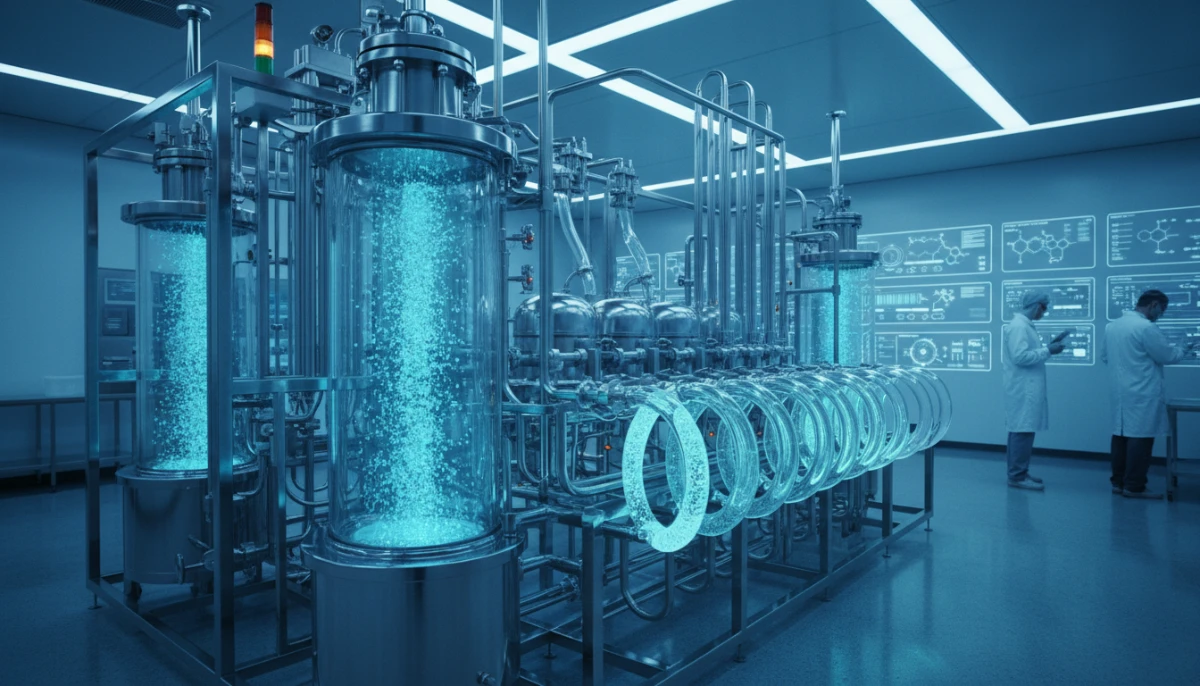
The manufacturing of soy protein isolate is a multi-stage industrial process that leverages chemical solubility and mechanical separation.
To answer the central question—how is soy protein isolate made—one must look at the transition from the whole soybean to a refined powder. The journey begins with the selection of high-quality soybeans, which are cleaned to remove foreign matter. These beans are then cracked and dehulled. Removing the hull is critical because it contains mostly fiber and can interfere with the purity of the final protein isolate. The dehulled beans are then rolled into thin flakes. This increased surface area is vital for the next step: oil extraction.
Step 1: Defatting
The soybean flakes undergo a process called solvent extraction, typically using hexane. Hexane is a highly efficient solvent that removes the soybean oil, leaving behind what is known as ‘defatted soy flakes’ or ‘soy meal.’ While the use of hexane is a standard industrial practice, modern facilities use closed-loop systems to ensure minimal environmental impact and virtually zero residue in the final product. The resulting defatted flakes are the raw material for all soy protein derivatives.
Step 2: Aqueous Extraction
The defatted flakes are mixed with water in large agitation tanks. To maximize protein solubility, the pH of the water is adjusted to an alkaline level (typically between pH 7.0 and 9.0) using food-grade hydroxides like sodium hydroxide. In this alkaline environment, the globular proteins in soy (glycinin and beta-conglycinin) dissolve into the water, while the insoluble fiber and polysaccharides remain in solid form. Through centrifugation, the fiber is spun out, leaving a protein-rich liquid called the ‘extract.’
3. The Chemistry of Precipitation
The most critical scientific phase in the production of SPI is isoelectric precipitation. This is where the magic of chemical separation occurs. Every protein has an isoelectric point—a specific pH level at which it has no net electrical charge and becomes insoluble in water.
For soy protein, this isoelectric point is approximately pH 4.5. The alkaline extract from the previous step is carefully treated with an acid (such as hydrochloric acid or phosphoric acid) to lower its pH. As the acidity reaches 4.5, the soy proteins lose their solubility and begin to clump together, forming what is known as ‘curd.’ This is very similar to the process of curdling milk to make cheese.

Final Processing: Washing and Drying
The protein curd is separated from the remaining liquid (whey) using centrifuges. This curd is then washed repeatedly with water to remove any lingering sugars (oligosaccharides), minerals, and off-flavors. Once purified, the curd is usually neutralized back to a pH of around 7.0 to improve its solubility and functional properties for food manufacturers. Finally, the protein slurry is pumped into a spray dryer. This device atomizes the liquid into a cloud of tiny droplets in a stream of hot air, instantly turning the protein into a fine, dry powder with a protein content of 90% or higher.
4. Nutritional Profile & PDCAAS
Soy protein isolate is widely regarded as the gold standard of plant proteins due to its complete amino acid profile. Unlike many other plant sources that are deficient in specific essential amino acids (such as lysine in grains or methionine in legumes), soy provides a balanced distribution of all nine essential amino acids required for human health.
Furthermore, SPI is a rich source of branched-chain amino acids (BCAAs)—leucine, isoleucine, and valine—which are critical for muscle protein synthesis. While whey protein is slightly higher in leucine, soy protein isolate offers a robust alternative for those seeking plant-based nutrition without sacrificing the physiological triggers for muscle growth.
5. Health & Performance Benefits
Beyond basic nutrition, SPI offers several targeted health benefits supported by clinical research. One of the most well-documented effects is its role in cardiovascular health. The FDA has previously recognized the heart-health claim for soy protein, noting that 25 grams of soy protein a day, as part of a diet low in saturated fat and cholesterol, may reduce the risk of heart disease.
- Muscle Recovery: Studies show that soy protein can be as effective as whey for building muscle mass when combined with resistance training.
- Metabolic Health: Soy contains isoflavones like genistein and daidzein, which may improve insulin sensitivity and support weight management.
- Bone Density: Some research suggests that the phytoestrogens in soy may help maintain bone mineral density in postmenopausal women.
- Hormonal Balance: Contrary to popular myths, moderate soy consumption does not negatively impact testosterone levels in men or significantly alter estrogen levels in women.
6. Isolate vs. Concentrate vs. Flour
Choosing the right soy product depends on the application. Here is a breakdown of how SPI compares to its less-refined counterparts:
| Feature | Soy Flour | Soy Concentrate | Soy Isolate (SPI) |
|---|---|---|---|
| Protein Content | 50% | 70% | 90%+ |
| Flavor | Strong, Beany | Mild | Neutral |
| Digestibility | Moderate | High | Highest |
| Primary Use | Baking | Meat Fillers | Shakes, Meat Analogues |

7. Addressing Common Concerns
Despite its benefits, SPI is often the subject of debate. One major concern is the presence of antinutrients like phytic acid and trypsin inhibitors. However, the manufacturing process—specifically the alkaline extraction and heat treatment during spray drying—deactivates the vast majority of these compounds, making SPI much easier on the digestive system than raw soy products.
Another frequent topic is GMO (Genetically Modified Organisms). A significant portion of the global soy crop is genetically modified for herbicide resistance. For consumers concerned with GMOs, ‘Non-GMO Project Verified’ soy protein isolates are widely available. These are sourced from identity-preserved (IP) soybeans that are tracked from seed to shelf to ensure no genetic modification has occurred.
8. Industrial Applications
The versatility of SPI is unmatched. In the meat industry, it is used for its ‘gelation’ properties, allowing it to hold together ingredients in sausages and deli meats. In the dairy-free sector, it provides the creamy texture of soy milk and vegan yogurts. It is also an essential component in infant formulas (for babies with lactose intolerance) and medical nutrition products intended for tube feeding, where high purity and low viscosity are paramount.
In recent years, the ‘Beyond Meat’ and ‘Impossible Foods’ revolution has spotlighted SPI’s ability to be extruded. Through high-moisture extrusion cooking (HMEC), SPI can be transformed into fibrous structures that remarkably mimic the texture of chicken or beef fibers, paving the way for the next generation of meat alternatives.
9. Frequently Asked Questions
Is soy protein isolate safe for daily consumption?
Yes, for the majority of the population, SPI is safe and beneficial when consumed as part of a balanced diet. Individuals with soy allergies should avoid it.
Does soy protein isolate cause estrogen spikes?
Scientific consensus indicates that the phytoestrogens (isoflavones) in soy do not behave like human estrogen and do not cause feminizing effects in men or hormonal disruption in women at standard intake levels.
Is hexane used in the making of soy protein isolate?
Hexane is used in the initial oil extraction phase, but it is removed during the desolventizing process. Modern testing shows that final SPI products contain negligible to no detectable hexane residues.