
Mastering Tofu Textures: The Ultimate Guide to Crispy Perfection
Discover the culinary secrets to transforming humble soy into a textural masterpiece. Learn exactly how to make tofu crispy using professional-grade techniques.
The Science of Tofu Protein Structure
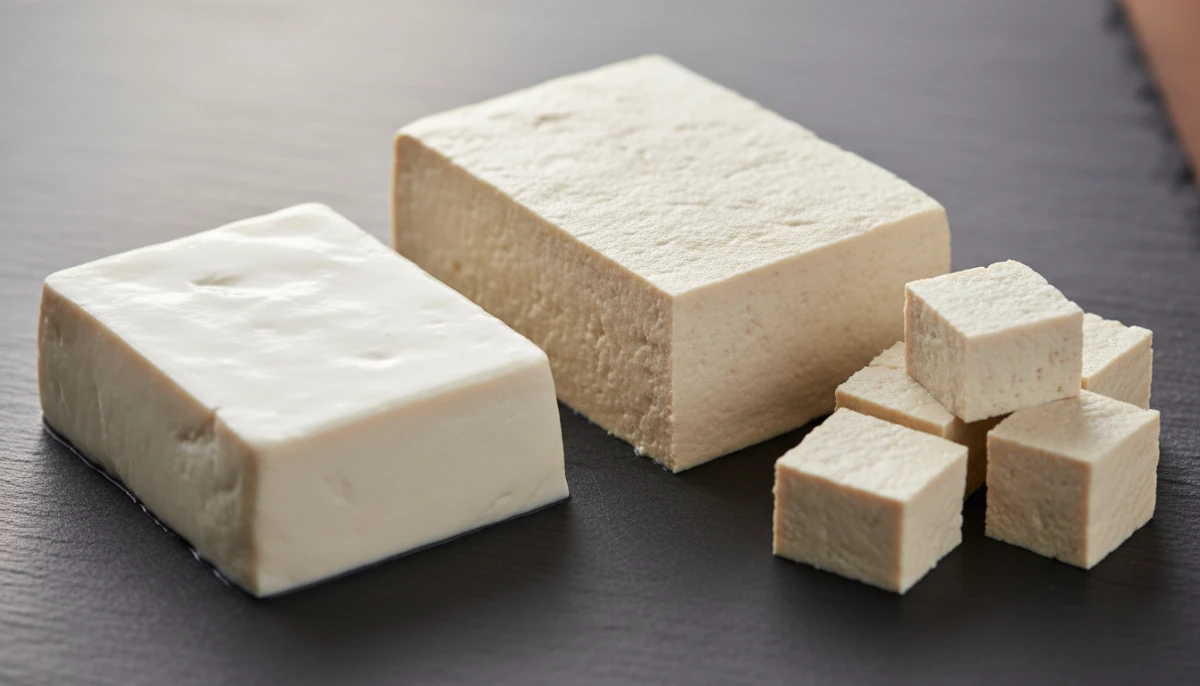
To master tofu, one must first understand its molecular composition. Tofu is essentially a protein-rich curd derived from coagulated soy milk. The texture is determined by the density of the protein cross-links created during the curdling process. For those seeking the answer to how to make tofu crispy, the fundamental challenge is managing the water-to-protein ratio. In its natural state, tofu is a sponge-like matrix that holds a significant volume of water within its interstitial spaces. When heat is applied, this water turns to steam, which can prevent the exterior from reaching the temperatures necessary for the Maillard reaction—the chemical reaction between amino acids and reducing sugars that gives browned food its distinctive flavor and crunch.
Professional chefs understand that achieving a glass-like crispness requires the efficient evaporation of surface moisture before the internal moisture can migrate outward. This necessitates a multi-stage approach: extraction, preparation, and thermal application. By manipulating the protein structure through freezing or pressing, we can effectively alter the ‘pore size’ of the tofu, allowing it to better absorb flavors while creating a rigid exterior that shatters upon the first bite. The transition from a soft, bland block to a savory, crispy delight is as much about physics as it is about culinary art.
Selecting the Right Tofu: From Silken to Super-Firm
The journey toward the perfect texture begins in the grocery aisle. Not all tofu is created equal, and choosing the wrong type is the most common reason home cooks fail to achieve a crispy result. Silken tofu, which contains the highest water content and has a delicate, custard-like consistency, is virtually impossible to make crispy through traditional frying or baking. It is best reserved for smoothies, desserts, or agedashi-style preparations where a very thin, delicate potato starch coating is used.
The Firmness Spectrum
- Soft/Medium: Good for soups, but collapses under high-heat searing.
- Firm: A versatile middle ground, though it requires extensive pressing to become truly crispy.
- Extra-Firm: The gold standard for frying and baking. It maintains its shape and has a lower baseline water content.
- Super-Firm: Often vacuum-sealed without water, this variety is the shortcut to success for those learning how to make tofu crispy.
Moisture Management: The Pressing Protocol
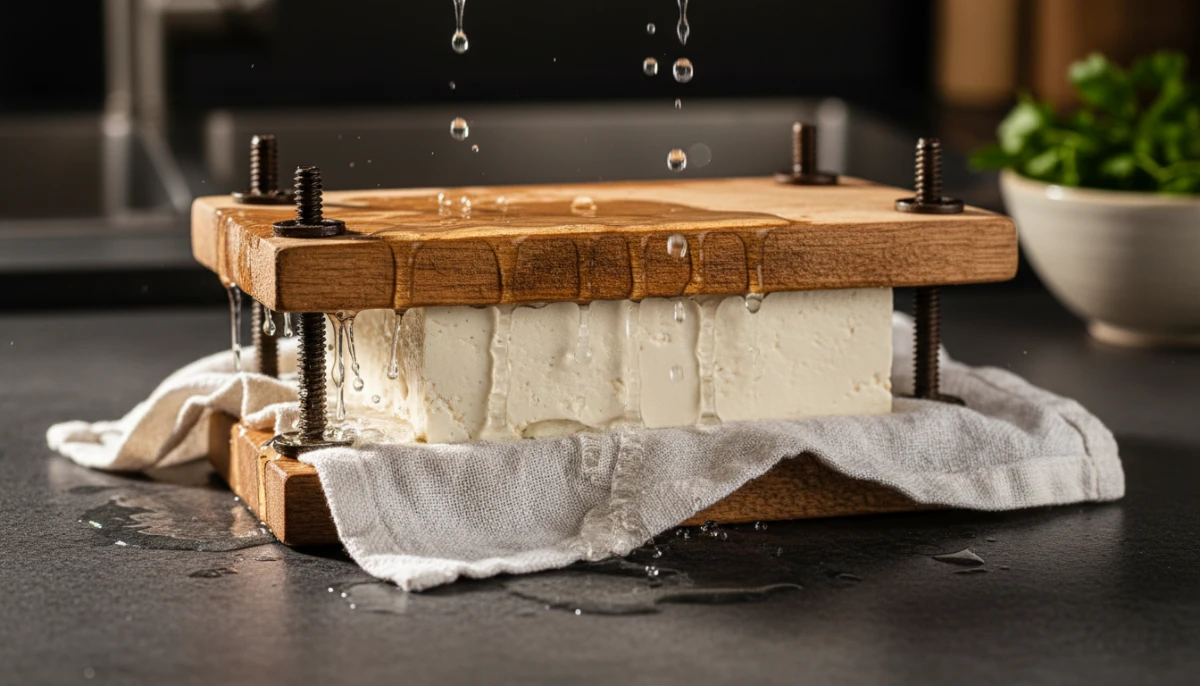
If you want to know how to make tofu crispy, you must first master the art of the press. Pressing tofu is the non-negotiable step that separates amateur results from restaurant-quality dishes. By applying consistent pressure over time, you force the excess water out of the protein matrix. This creates a denser, more meat-like texture and provides a dry surface that is ready for seasoning and starch application.
The Modern Pressing Technique
While many use a stack of heavy books balanced precariously on a plate, a dedicated tofu press provides even distribution of weight. Aim for at least 20 to 30 minutes of pressing for extra-firm tofu. For those looking for an even more advanced texture, try the ‘Freeze-Thaw’ method. Freezing the tofu causes the water inside to expand into ice crystals, which creates larger pores. Once thawed and pressed, the tofu becomes incredibly porous, acting like a sponge that can hold sauces internally while maintaining a remarkably rugged exterior when fried.
How to Make Tofu Crispy: The Starch Secret
The absolute secret weapon in the quest for crispness is starch. Specifically, cornstarch or potato starch. After your tofu is pressed and cut into cubes or slabs, a light coating of starch acts as a moisture barrier. As the tofu cooks, the starch absorbs any remaining surface moisture and dehydrates rapidly, forming a micro-thin, crackling crust. This is the definitive answer to how to make tofu crispy without deep-frying.
Recommended Coatings
Cornstarch is the standard, providing a neutral flavor and reliable crunch. Potato starch offers a slightly thicker, glassier crunch often found in Japanese cuisine. For a keto-friendly version, nutritional yeast can provide a savory, though slightly less ‘shattering,’ crisp.
Seasoning the Crust
Never coat with plain starch. Mix your cornstarch with salt, garlic powder, smoked paprika, or onion powder. This ensures the flavor is embedded directly into the crispy layer rather than just sitting on the surface of the tofu.
Comparative Cooking Methods: Air Fry, Bake, or Sear?
Once prepared and coated, the final step is the application of heat. Each method offers a different profile of texture and effort. Let’s analyze the most effective ways to achieve that coveted crunch.
The Air Fryer Revolution
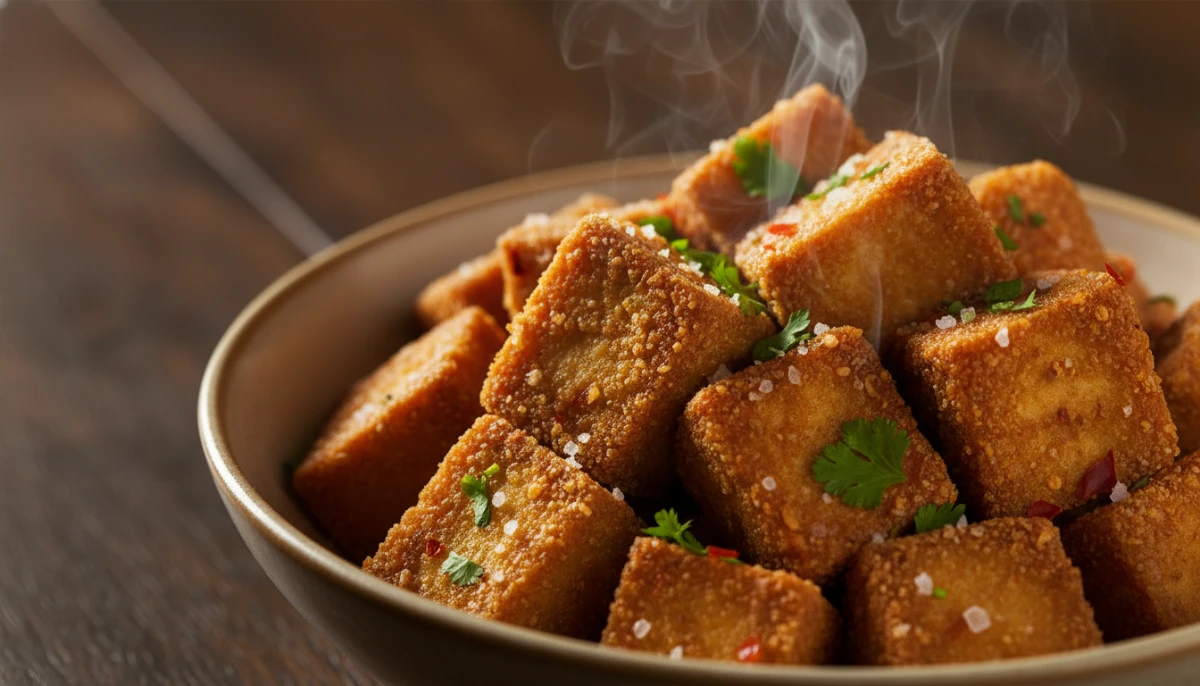
In the modern kitchen, the air fryer is arguably the most efficient tool for making tofu crispy. Because the air fryer circulates high-heat air rapidly around all sides of the tofu, it mimics the effects of deep-frying with only a fraction of the oil. At 400°F (200°C), starch-coated tofu cubes typically become perfectly crispy in 15 to 20 minutes. The key is to avoid overcrowding the basket; air must be able to move freely between each piece.
Oven Baking for Scale
If you are preparing a large batch, the oven is your best friend. Set the oven to 425°F (220°C). Using a parchment-lined baking sheet, arrange the tofu in a single layer. A light spray of oil over the starch coating will help the browning process. Bake for 25-30 minutes, flipping halfway through. The result is a consistent, slightly chewy-crispy texture that holds up well when tossed in heavy sauces.
Pan-Searing for Precision
For those who prefer a more artisanal approach, pan-searing in a cast-iron skillet allows for maximum control over the browning process. Use a neutral oil with a high smoke point (like avocado or grapeseed oil). The trick here is patience: do not move the tofu until it naturally releases from the pan. This indicates that the crust has fully formed. Once released, flip to the next side until all six sides of the cube are golden brown.
Frequently Asked Questions
Why is my tofu still soggy after frying?
This is usually caused by either insufficient pressing (too much internal water) or overcrowding the pan. When tofu pieces are too close together, they release steam that softens the neighboring pieces instead of evaporating.
Can I make crispy tofu without oil?
Yes, the air fryer can achieve a respectable crunch without oil, provided the tofu is coated in cornstarch. However, a small amount of oil significantly improves the heat transfer and the richness of the final texture.
Do I need to marinate tofu before or after making it crispy?
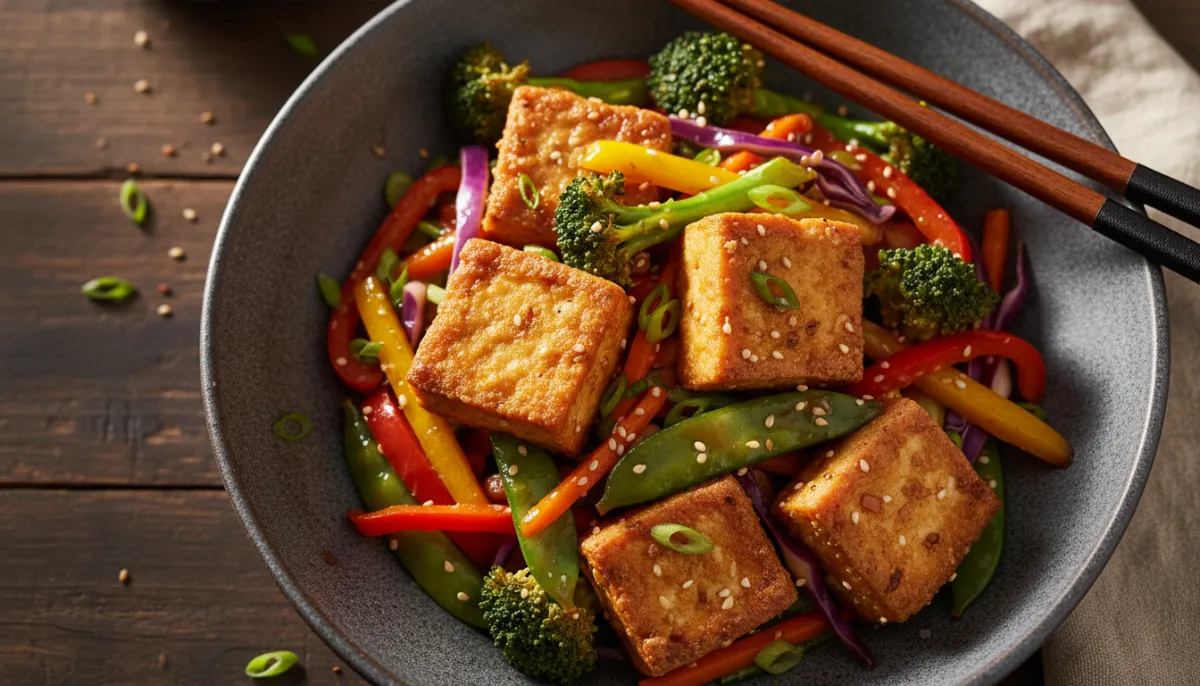
For maximum crispness, it is better to sauce the tofu *after* it has become crispy. If you marinate before, the added liquid can make it harder to achieve a dry surface. Try tossing your crispy cubes in a warm glaze just before serving.