
Regenerative Soy Farming Practices: A Comprehensive Guide to Sustainable Agriculture
Transforming global food systems through soil health, biodiversity, and sustainable soy farming methods.
The Evolution of Modern Soy Production
For decades, the global agricultural sector has relied on conventional monoculture techniques to satisfy the burgeoning demand for soybean products. As a primary source of protein for livestock and a staple in human diets, the pressure on soybean producers has never been higher. However, this intensive production has often come at a significant environmental cost, including soil degradation, loss of biodiversity, and increased carbon emissions. Enter regenerative soy farming practices—a holistic approach that seeks not just to minimize harm, but to actively restore the ecosystems upon which farming depends.
Sustainable soy farming methods are no longer a niche interest for organic hobbyists; they are becoming the cornerstone of a resilient global supply chain. By focusing on soil health, water retention, and carbon sequestration, regenerative practices offer a pathway toward a future where soy production can coexist with a healthy planet. This guide explores the multifaceted strategies that define this agricultural revolution.
The Core Pillars of Sustainable Soy Farming Methods
No-Till and Low-Till Farming
Conventional plowing disrupts the complex biological structures within the soil. No-till farming leaves the soil undisturbed from harvest to planting, preserving the organic matter and fungal networks essential for nutrient uptake. This practice significantly reduces soil erosion and keeps carbon trapped in the ground where it belongs.
Strategic Crop Rotation
Planting soybeans year after year on the same plot depletes specific nutrients and allows pests to become entrenched. By rotating soy with corn, wheat, or small grains, farmers break pest cycles naturally and improve the soil’s chemical profile without the heavy use of synthetic fertilizers.
Cover Cropping
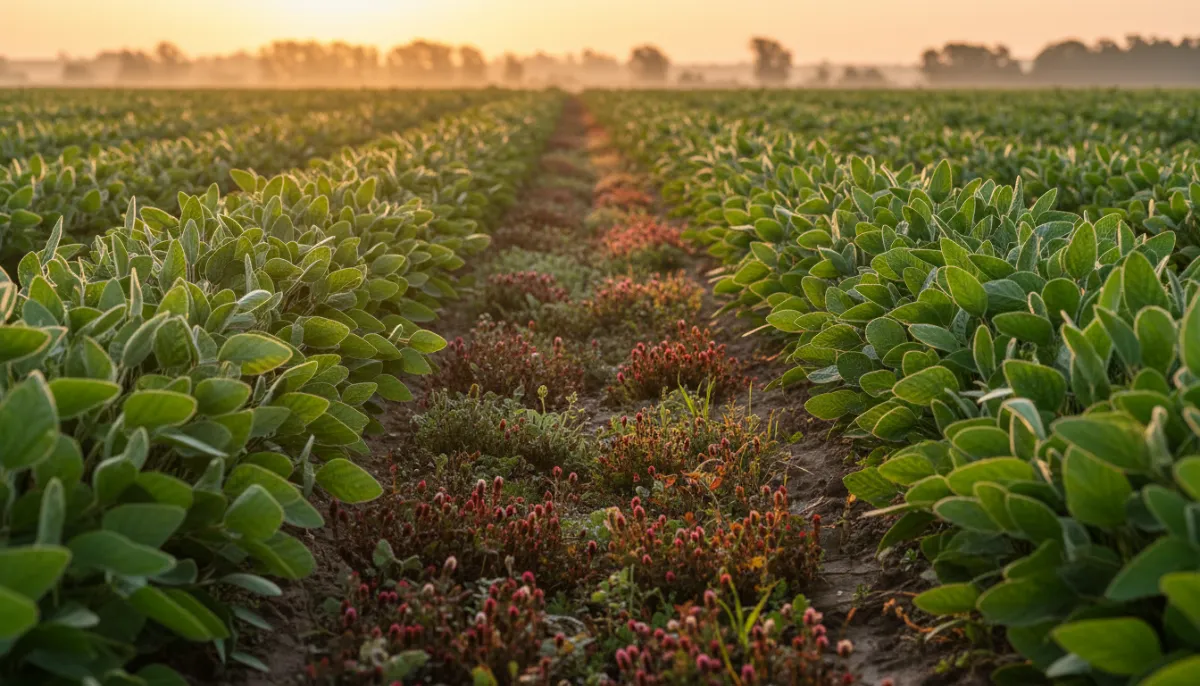
Regenerative farmers never leave their soil bare. Planting cover crops like rye or clover during the off-season prevents wind and water erosion, suppresses weeds, and adds nitrogen to the soil naturally through biological fixation.
Integrated Pest Management (IPM)
IPM focuses on biological controls and ecological balance rather than reflexive chemical spraying. By encouraging beneficial predatory insects and using targeted, low-impact interventions, farmers maintain yields while protecting local pollinators.
Soil Health: The Foundation of Productivity
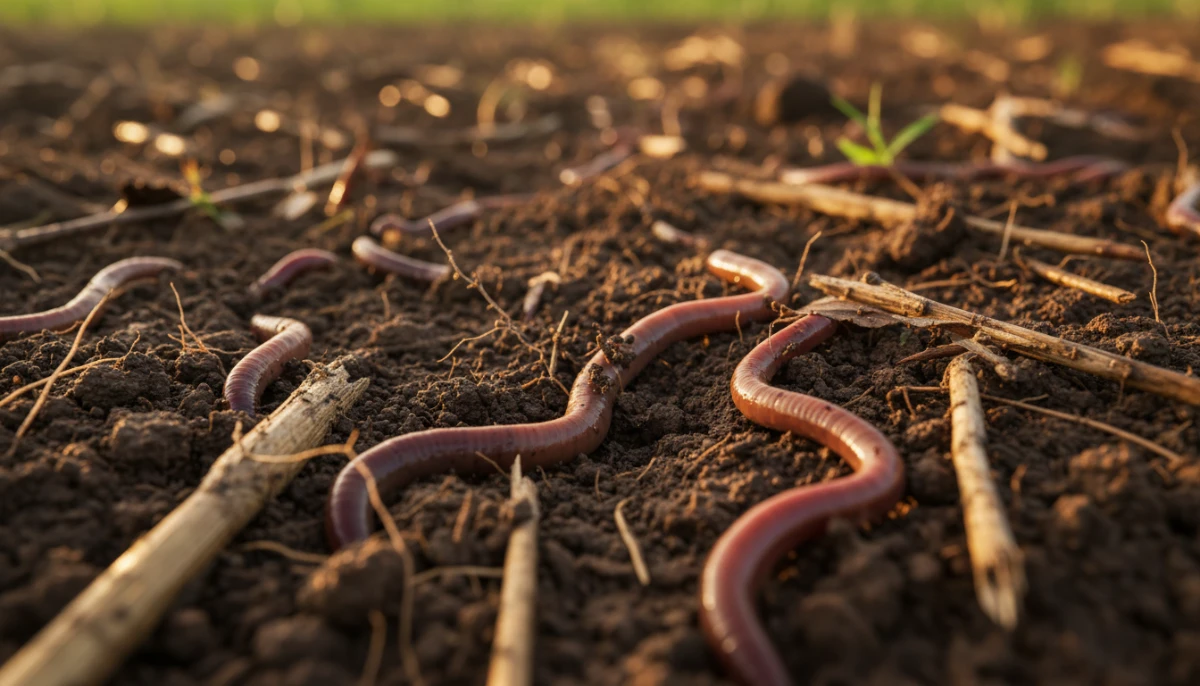
In the context of sustainable soy farming methods, soil is viewed as a living organism rather than an inert medium. The health of the soil microbiome—the billions of bacteria, fungi, and microbes—is directly linked to the nutritional density of the crop and the plant’s ability to resist disease. Regenerative practices prioritize the increase of Soil Organic Matter (SOM). Every 1% increase in SOM can significantly enhance the soil’s ability to hold water, making the farm more resilient against droughts.
Key Indicators of Soil Health:
- Aggregates: Soil structure that allows for air and water movement.
- Mycorrhizal Fungi: Symbiotic fungi that extend the root system’s reach for nutrients.
- Carbon Content: The primary measure of long-term soil fertility and climate mitigation potential.
Advanced Water Management and Conservation
Agriculture is the largest consumer of freshwater globally. Regenerative soy farming seeks to optimize every drop. By maintaining cover crops and high organic matter, the soil acts like a sponge. This reduces the need for supplemental irrigation and prevents the runoff of agricultural chemicals into local waterways. Techniques such as contour farming and the installation of riparian buffers—strips of native vegetation along streams—filter sediment and pollutants, ensuring that the farm contributes to the health of the local watershed rather than detracting from it.
The Role of Buffer Zones
Buffer zones are essential in sustainable soy farming methods. These areas serve as a final defense for aquatic ecosystems. They trap nitrogen and phosphorus, preventing the eutrophication of lakes and ponds. Furthermore, they provide a habitat for wildlife, creating a mosaic landscape that supports a variety of species.
Technological Innovations in Soy Production
The marriage of ecology and technology is driving the success of regenerative soy. Precision agriculture tools allow farmers to map their fields with incredible accuracy. GPS-guided equipment ensures that seeds and natural fertilizers are placed exactly where they are needed, reducing waste and minimizing the physical footprint of machinery.
Drone Monitoring
Using multispectral imaging to detect crop stress or nutrient deficiencies before they become visible to the naked eye.
IoT Soil Sensors
Real-time data on soil moisture and temperature to optimize irrigation and planting windows.
AI Modeling
Predictive algorithms that suggest crop rotations and cover crop mixes based on local climate trends.

The Economic Viability of Sustainability
A common misconception is that regenerative practices are too expensive for commercial-scale farming. While the transition period (usually 3-5 years) can involve initial costs and a learning curve, the long-term economic benefits are profound. By reducing the reliance on expensive synthetic inputs—fertilizers, herbicides, and fuel—farmers can significantly lower their operating expenses. Additionally, many regenerative farmers are seeing increased resilience to extreme weather events, which protects them from the devastating financial losses associated with crop failure in conventional systems.
Furthermore, the market for “responsibly sourced” or “regenerative” soy is growing. Global food brands are increasingly willing to pay a premium for soy that carries sustainability certifications, such as the Round Table on Responsible Soy (RTRS) or ProTerra. This creates a powerful financial incentive for farmers to adopt these methods.
Global Impact: Soy as a Climate Solution
Soy farming has historically been linked to deforestation, particularly in the Amazon and Cerrado regions. Regenerative practices provide an alternative by emphasizing the improvement of existing farmland rather than the expansion into new territories. By sequestering carbon in the soil, sustainable soy farming methods transform agriculture from a major source of greenhouse gas emissions into a powerful tool for climate mitigation. If scaled globally, regenerative agriculture could sequester gigatons of carbon, playing a crucial role in meeting international climate goals.

Frequently Asked Questions
What are the primary sustainable soy farming methods?
The primary methods include no-till farming, cover cropping, crop rotation, integrated pest management (IPM), and the use of precision agriculture technology to reduce input waste.
Does regenerative farming reduce soy yields?
During the transition phase, there may be a slight dip as soil biology recovers. However, long-term studies show that regenerative yields are competitive with conventional yields, with significantly higher stability during drought or extreme weather.
How does soy farming impact carbon sequestration?
Through no-till practices and cover cropping, soy farms can trap carbon dioxide from the atmosphere and store it in the soil as organic matter, helping to mitigate climate change.
Are there certifications for sustainable soy?
Yes, certifications like RTRS (Round Table on Responsible Soy) and ProTerra ensure that soy is produced without deforestation and with respect for social and environmental standards.