
The debate surrounding sustainable diets has intensified in recent years, with the environmental impact of protein sources moving to the forefront of global climate discussions. As consumers become more eco-conscious, the comparison between plant-based staples and traditional livestock farming has become a critical area of study.
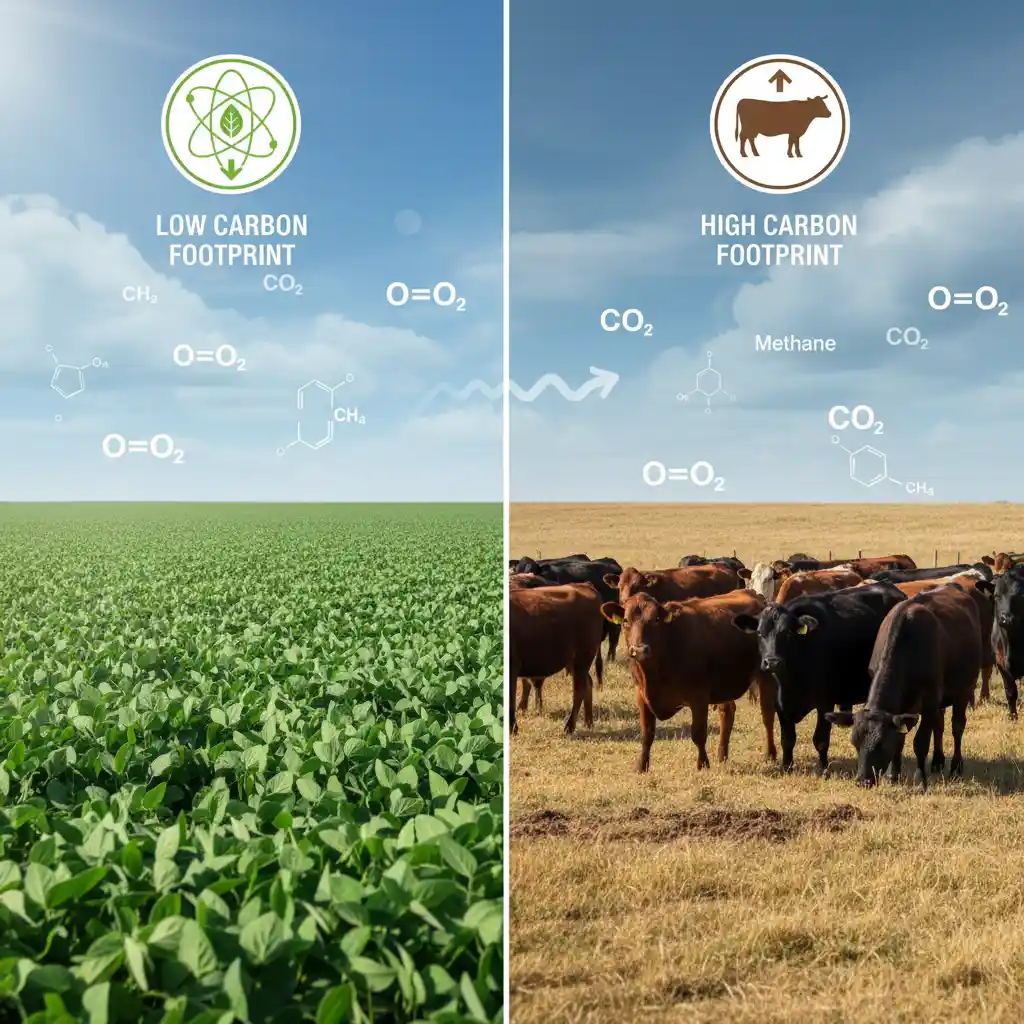
When conducting a soy vs. beef: carbon footprint analysis, the data reveals a significant disparity in environmental impact. Beef production generates an average of 60 kilograms of CO2-equivalents per kilogram of meat, primarily due to methane emissions and extensive land use. Conversely, soy production emits approximately 0.9 to 1.5 kilograms of CO2-equivalents per kilogram, making beef’s carbon footprint roughly 40 to 60 times higher than that of soy.
The Core Comparison: Defining the Metrics
To accurately compare the environmental footprint of soy and beef, we must look beyond simple carbon dioxide emissions. Environmental scientists utilize a metric known as Carbon Dioxide Equivalent (CO2e). This metric aggregates the impact of various greenhouse gases—such as methane (CH4) and nitrous oxide (N2O)—into a single unit based on their global warming potential over a specific timeframe, usually 100 years.
Agriculture is a massive contributor to global emissions, accounting for approximately 26% of total greenhouse gas (GHG) output. Within this sector, the disparity between animal-based and plant-based foods is stark. The analysis of soy versus beef involves examining three primary pillars: direct emissions (what the farm produces), land-use change (deforestation and soil degradation), and supply chain logistics (transport and processing). Understanding these metrics is essential for interpreting the Life Cycle Assessments (LCAs) that inform climate policy.
The Environmental Impact of Beef Production
Beef production is widely recognized as the most carbon-intensive form of protein generation in the modern food system. The reasons for this are biological, logistical, and geographical. To understand why beef has such a high footprint, we must break down the sources of its emissions.
Enteric Fermentation and Methane
The primary driver of beef’s high carbon footprint is the biology of the cow itself. Cattle are ruminants, meaning they possess a specialized stomach compartment called the rumen that ferments plant matter. This process, known as enteric fermentation, produces methane as a byproduct, which the animals belch out. Methane is a potent greenhouse gas, with a warming potential roughly 28 to 80 times greater than CO2 over a 20-year period.
Feed Conversion Inefficiency
Thermodynamics plays a cruel role in livestock farming. Cattle are inefficient converters of feed into edible body mass. It takes approximately 25 kilograms of feed to produce just one kilogram of beef. This inefficiency means that for every calorie of beef consumed, vast amounts of resources—water, fertilizer, and land—were expended to grow the crops that fed the animal. This “trophic loss” multiplies the carbon footprint significantly compared to eating crops directly.
Manure Management
Beyond enteric fermentation, the management of manure in feedlots and pastures releases significant amounts of nitrous oxide and methane. Nitrous oxide is particularly concerning as it is nearly 300 times more potent than carbon dioxide in trapping heat in the atmosphere.
The Environmental Impact of Soy Cultivation
While soy is often championed as a sustainable alternative to meat, it is not without its own environmental baggage. However, the context of soy production is critical to understanding its true footprint.
Direct Emissions and Soil Health
Legumes, including soybeans, have a unique ability to fix nitrogen from the atmosphere into the soil. This reduces the need for synthetic nitrogen fertilizers, which are a major source of emissions in agriculture. Consequently, the direct emissions from growing soy are relatively low compared to other crops and significantly lower than livestock. The machinery used for planting, harvesting, and processing contributes to CO2 emissions, but these are minimal per kilogram of protein produced.
The Supply Chain
Soy is a globally traded commodity. It is often transported thousands of miles from major producers like Brazil and the United States to markets in Europe and Asia. While transportation does add to the carbon footprint, studies consistently show that “food miles” make up a small percentage of a food product’s total environmental impact compared to land use and on-farm emissions.
Head-to-Head: Carbon Footprint Data Analysis
When we analyze the data from comprehensive meta-analyses, such as the landmark study by Poore and Nemecek (2018) published in Science, the difference between beef and soy is overwhelming.
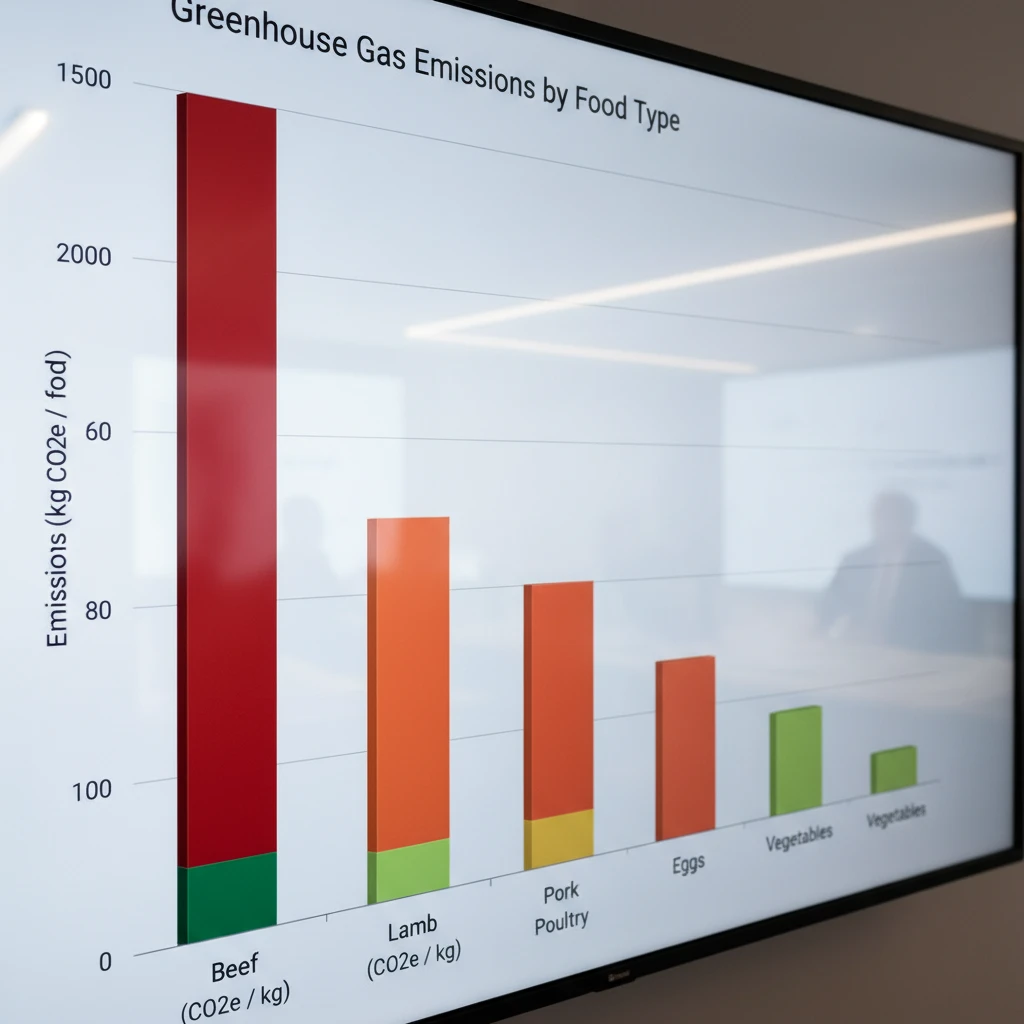
- Beef (Beef Herd): Produces an average of 99.48 kg CO2e per kg of product.
- Beef (Dairy Herd): Produces an average of 33.3 kg CO2e per kg of product (lower because emissions are shared with milk production).
- Tofu (Soy): Produces an average of 3.16 kg CO2e per kg of product.
- Soybeans: Produces an average of 0.9 kg CO2e per kg of product.
Even under the most optimistic scenarios for beef production (highly efficient, low-impact systems) and the worst-case scenarios for soy production, soy remains the significantly lower-carbon option. For comprehensive data visualizations on this topic, Our World in Data provides extensive resources illustrating these disparities.
The Deforestation Dilemma: Amazon and Beyond
One of the most common counter-arguments against soy is its association with deforestation, particularly in the Amazon rainforest and the Cerrado savanna in Brazil. It is true that soy cultivation is a driver of deforestation, which releases massive amounts of stored carbon into the atmosphere and destroys biodiversity.
The “Soy Feeds Cattle” Paradox
However, attributing this deforestation solely to tofu and soy milk consumption is a misconception. Approximately 77% of the world’s soy is produced to feed livestock, primarily poultry, pork, and cattle. Only about 7% of global soy is processed into tofu, soy milk, and tempeh for direct human consumption (the remainder is largely soy oil).
Therefore, the carbon footprint associated with soy-driven deforestation is largely an embedded cost of the meat industry. When a consumer eats beef, they are often indirectly responsible for the land cleared to grow the soy that fed the animal (or the land cleared for pasture that pushed soy cultivation further into the forest). If the world shifted to direct human consumption of soy, the total land required for soy cultivation would plummet, as we would bypass the inefficient animal conversion process.
Land Use Efficiency and Resource Allocation
Land is a finite resource. How we use it determines the planet’s capacity to sequester carbon and support biodiversity. The land-use efficiency gap between soy and beef is perhaps even wider than the emissions gap.
Beef farming is incredibly land-intensive. It requires vast acreage for grazing and additional land to grow feed crops. Currently, livestock takes up nearly 80% of global agricultural land but produces less than 20% of the world’s supply of calories. In contrast, soy is highly land-efficient. A single acre of land devoted to soy can produce roughly 356 pounds of usable protein. That same acre, if used for grazing cattle, produces approximately 20 pounds of usable protein.
This inefficiency leads to an “opportunity cost” of carbon. The land used for cattle could otherwise be used for rewilding or restoring forests, which would actively pull carbon out of the atmosphere. When calculating the carbon footprint, this lost potential for sequestration is a significant factor weighing against beef.
Nutritional Return on Environmental Investment
To make a fair comparison, we must also look at the nutritional value provided per unit of emission. Both beef and soy are considered sources of “complete” protein, containing all nine essential amino acids necessary for human health.
- Protein Density: Beef is very protein-dense, but soy is one of the few plant foods that rivals it in quality.
- Micronutrients: Beef provides heme iron and B12, while soy provides fiber, isoflavones, and zero cholesterol.
When we analyze the “carbon cost per gram of protein,” the results mirror the raw weight comparisons. Producing 100 grams of protein from beef emits roughly 50kg of CO2e. Producing 100 grams of protein from tofu emits roughly 2kg of CO2e. From a resource management perspective, soy is vastly more efficient at delivering essential nutrition to a growing global population.

Conclusion: Making Informed Dietary Choices
The scientific consensus is clear: in a direct soy vs. beef carbon footprint analysis, soy is the overwhelmingly superior choice for environmental sustainability. Beef production requires significantly more land, water, and resources, and emits exponentially higher levels of greenhouse gases due to methane and land-use changes.
While sustainable beef initiatives (such as regenerative grazing) aim to mitigate some of these impacts, they cannot currently compete with the low baseline emissions of plant-based proteins like soy. For consumers looking to reduce their personal carbon footprint, substituting beef with soy-based alternatives is one of the most impactful actions available. For further reading on global agricultural impacts, the Food and Agriculture Organization (FAO) offers detailed reports on livestock emissions.
Ultimately, the choice between soy and beef is not just about dinner; it is about the allocation of global resources. Shifting toward plant-based proteins offers a pathway to feeding a growing population while respecting planetary boundaries.
People Also Ask
Is soy production bad for the environment?
Soy production does have environmental costs, primarily related to deforestation in South America. However, the vast majority (over 75%) of this soy is grown to feed livestock, not humans. Direct human consumption of soy has a very low environmental impact compared to meat.
Why is beef’s carbon footprint so high?
Beef has a high carbon footprint because cattle are ruminants that produce methane (a potent greenhouse gas) during digestion. Additionally, raising cattle requires immense amounts of land, water, and feed crops, leading to high resource consumption and land-use emissions.
Does grass-fed beef have a lower carbon footprint than soy?
Generally, no. While grass-fed beef can improve soil health in specific contexts, it often produces higher methane emissions per kilogram of meat than grain-fed beef because the animals take longer to reach market weight. Both forms of beef have a significantly higher footprint than soy.
How much CO2 does 1kg of beef produce vs soy?
On average, 1kg of beef produces roughly 60kg to 99kg of CO2-equivalents, whereas 1kg of soy produces approximately 0.9kg to 1.5kg of CO2-equivalents. This makes beef roughly 60 times more carbon-intensive than soy.
Is eating tofu better for climate change than eating meat?
Yes, replacing meat (especially red meat like beef) with tofu significantly reduces an individual’s carbon footprint. Tofu production is energy-efficient and requires a fraction of the land and water needed for meat production.
What is the most environmentally friendly source of protein?
Pulses, legumes (including soy), and nuts are generally considered the most environmentally friendly sources of protein. They have the lowest greenhouse gas emissions and land use requirements while also improving soil health through nitrogen fixation.