
Soy Sustainability & Ethics: Unmasking the Environmental Impact of Soy
A comprehensive analysis of global soy production, its ecological footprint, and the ethical dilemmas of a crop that feeds the world while challenging its boundaries.
1. The Paradox of the Golden Bean
The soybean (Glycine max) is often referred to as the ‘golden bean’ due to its incredible versatility and high protein density. In the last five decades, soy production has expanded tenfold, transforming from a minor crop into a global agricultural powerhouse. However, this astronomical growth comes with a heavy price tag. To understand the environmental impact of soy, one must look beyond the grocery store aisles and tofu packages into the vast industrial landscapes of South and North America.
Sustainability in the soy sector is not merely a buzzword; it is a critical necessity for planetary health. While soy is a vital source of nutrition for humans, its primary role in the global economy is as a catalyst for the industrial meat industry. This dual nature—being a plant-based protein source while simultaneously driving the expansion of animal agriculture—creates a complex ethical landscape that consumers, policymakers, and corporations must navigate with extreme caution.
2. The Environmental Impact of Soy
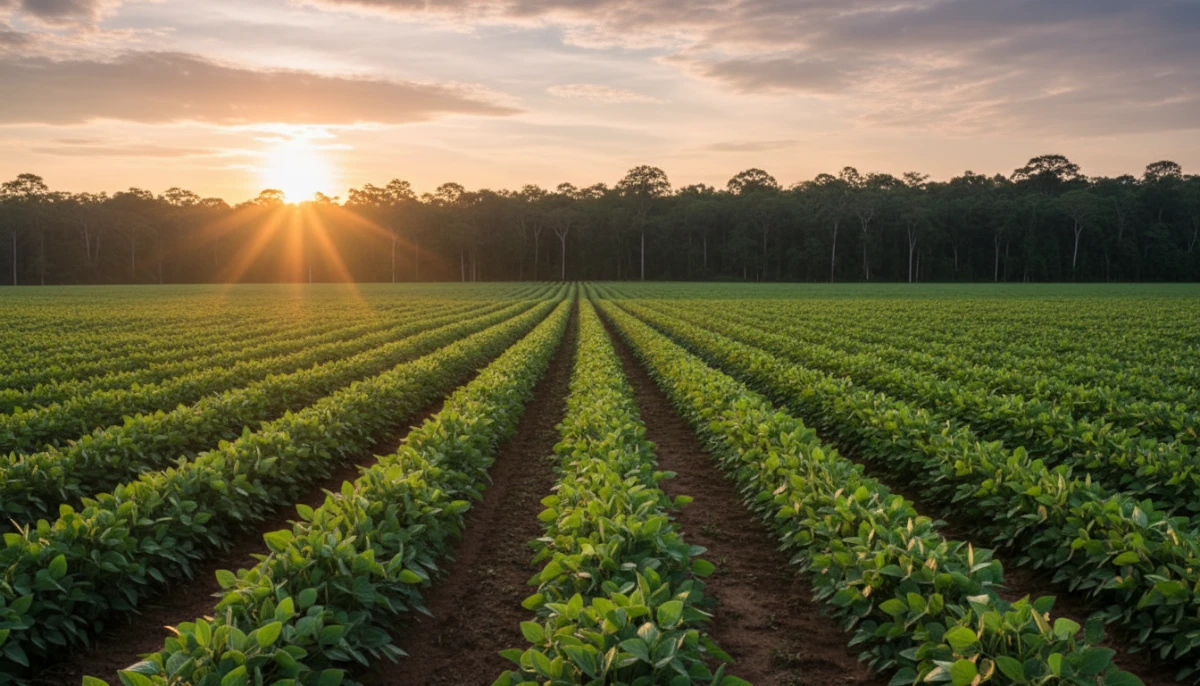
When we quantify the environmental impact of soy, we are looking at three primary pillars: land use change, water consumption, and chemical dependency. Soy is a demanding crop that thrives in tropical and temperate climates, often competing for space with some of the most biodiverse regions on Earth. The carbon footprint of soy is largely dictated by whether it was grown on existing agricultural land or land cleared through burning and logging.
Soil Health and Monoculture
Industrial soy production is characterized by monoculture—the practice of growing a single crop over a massive area year after year. This leads to severe soil depletion, as the natural nutrient cycles are disrupted. Farmers often compensate for this loss of fertility with heavy applications of synthetic fertilizers and pesticides. These chemicals eventually leach into local waterways, causing eutrophication and poisoning aquatic ecosystems, which further exacerbates the environmental impact of soy on a regional scale.
Water Scarcity and Contamination
While soy is relatively efficient in its water usage compared to beef, the sheer scale of production means it consumes trillions of liters of water annually. In regions like the Brazilian Cerrado, the over-extraction of groundwater for soy irrigation has led to the drying up of local springs and rivers, impacting both wildlife and indigenous communities who rely on these water sources for survival.
3. Deforestation and Biome Degradation
The most publicized environmental impact of soy is its direct link to deforestation, particularly in South America. The Amazon rainforest often takes center stage in these discussions, but other biomes like the Cerrado and the Gran Chaco are at even higher risk. These areas are vital carbon sinks and home to thousands of endemic species that are being pushed to the brink of extinction as land is cleared for soy expansion.
The Amazon Soy Moratorium
In 2006, the Amazon Soy Moratorium was established, a voluntary agreement between major soy traders not to purchase soy grown on land deforested in the Amazon after a certain date. While this has significantly reduced direct deforestation in the Amazon for soy, it has unfortunately displaced the pressure to neighboring regions like the Cerrado, where legal protections are weaker. This ‘leakage’ effect demonstrates that sustainability efforts must be holistic rather than localized to be truly effective.
Loss of Biodiversity
The conversion of wild savannas and forests into soy fields results in a massive loss of habitat. Iconic species such as the jaguar, the giant anteater, and the maned wolf are losing the corridors they need to hunt and reproduce. The loss of biodiversity isn’t just a sentimental concern; it undermines the resilience of our global food system, making crops more vulnerable to pests and climate-induced disasters.
4. Socio-Economic and Human Rights Ethics
Sustainability is not only about the environment; it is also about people. The ethics of soy production involve complex questions of land rights, labor conditions, and food sovereignty. In many developing nations, the expansion of large-scale soy estates has led to the displacement of smallholder farmers and indigenous peoples. These communities often lack formal land titles, making them vulnerable to ‘land grabbing’ by powerful agricultural corporations.
Labor Rights and Working Conditions
Reports of forced labor and poor working conditions in the soy supply chain have surfaced repeatedly. While major corporations have policies against such practices, the complexity and lack of transparency in the global supply chain make enforcement difficult. Ethical soy must ensure that every worker involved in the production—from the field to the processing plant—is treated with dignity and paid a fair wage.

5. The Livestock Connection: Where Soy Goes
One of the most significant misconceptions about the environmental impact of soy is that it is driven by vegans and vegetarians consuming tofu and soy milk. In reality, roughly 75-80% of the world’s soy is used as animal feed for the production of meat, dairy, and eggs. This inefficient conversion of calories—using high-quality plant protein to produce a smaller amount of animal protein—is a major driver of global resource depletion.
The Efficiency Gap
To produce one kilogram of beef, it can take up to seven kilograms of soy and grain. As global demand for meat rises, particularly in emerging economies, the pressure to expand soy production increases exponentially. Addressing the environmental impact of soy requires a fundamental shift in our global dietary habits and a reduction in our reliance on industrially produced animal products.
6. Sustainable Solutions and Certifications
Despite the challenges, there are pathways toward a more sustainable and ethical soy industry. These include regenerative farming practices, strict government regulations, and transparent certification schemes that allow consumers to make informed choices.
- Regenerative Agriculture: Practices like no-till farming, cover cropping, and crop rotation can restore soil health and sequester carbon.
- RTRS & ProTerra: The Round Table on Responsible Soy (RTRS) and ProTerra are certification bodies that set standards for deforestation-free and socially responsible soy.
- EU Deforestation Regulation (EUDR): New laws in the European Union now require companies to prove that their soy imports did not contribute to deforestation.

7. The Path to Ethical Sovereignty
The future of soy must be one where production harmonizes with nature rather than exploiting it. This requires a multi-faceted approach: corporations must commit to radical transparency, governments must enforce environmental protections, and consumers must demand accountability. Transitioning to a circular agricultural economy—where soy is grown responsibly and used efficiently—is the only way to mitigate the environmental impact of soy and ensure food security for future generations.
Frequently Asked Questions
What is the main environmental impact of soy?
The primary environmental impact is deforestation and habitat loss, particularly in South American biomes like the Amazon and Cerrado, which leads to biodiversity loss and increased greenhouse gas emissions.
Is soy milk worse for the environment than cow’s milk?
No. Even when considering the environmental impact of soy, soy milk uses significantly less land and water and produces fewer emissions than dairy milk production.
How can I identify ethical soy?
Look for certifications like RTRS, ProTerra, or Organic labels, which indicate that the soy was grown without deforestation and with attention to labor rights.