
Carbon Efficiency of Tofu vs. Beef Production: A Comprehensive Life Cycle Analysis
Understanding the profound impact of dietary choices through the lens of GHG emissions, plant-based protein vs meat, and the sustainability of global food systems.
Table of Contents
- 1. The Climate-Food Nexus: Why Protein Source Matters
- 2. The Heavy Weight: Deconstructing the Beef Carbon Footprint
- 3. The Legume Advantage: The Lifecycle of Tofu Production
- 4. Head-to-Head: GHG Emissions per 100g of Protein
- 5. Resource Efficiency: Land, Water, and Biodiversity
- 6. Navigating the Soy-Deforestation Myth
- 7. Future-Proofing Our Plates: The Path to Net-Zero Dining
- 8. Frequently Asked Questions
1. The Climate-Food Nexus: Why Protein Source Matters
In the global effort to mitigate the catastrophic effects of climate change, the lens of scrutiny has shifted from energy and transportation to the very plates on our tables. Food production accounts for approximately 26% to 30% of global greenhouse gas (GHG) emissions. Within this sector, the disparity between different protein sources is not merely a matter of percentage points, but of orders of magnitude. The discussion surrounding ghg emissions plant based protein vs meat is central to our ability to meet the targets set by the Paris Agreement.
While carbon dioxide (CO2) is the most discussed greenhouse gas, the agricultural sector is the primary source of two other potent gases: methane (CH4) and nitrous oxide (N2O). Methane, while shorter-lived in the atmosphere than CO2, has a global warming potential (GWP) over 80 times higher over a 20-year period. Nitrous oxide, primarily released through fertilizer use and manure management, has a GWP nearly 300 times that of CO2. When we compare tofu to beef, we are not just comparing two foods; we are comparing two vastly different ecological paradigms.
2. The Heavy Weight: Deconstructing the Beef Carbon Footprint
Beef is frequently cited as the most carbon-intensive food in the human diet. To understand why, one must look at the biological and logistical realities of raising ruminant livestock. The emissions profile of beef is categorized into several key areas:
Enteric Fermentation
Ruminants like cattle possess a specialized stomach (the rumen) where microbes break down cellulose. A byproduct of this process is methane, which is released primarily through belching. This biological reality makes beef fundamentally more emission-heavy than monogastric animals or plants.
Land Use & Deforestation
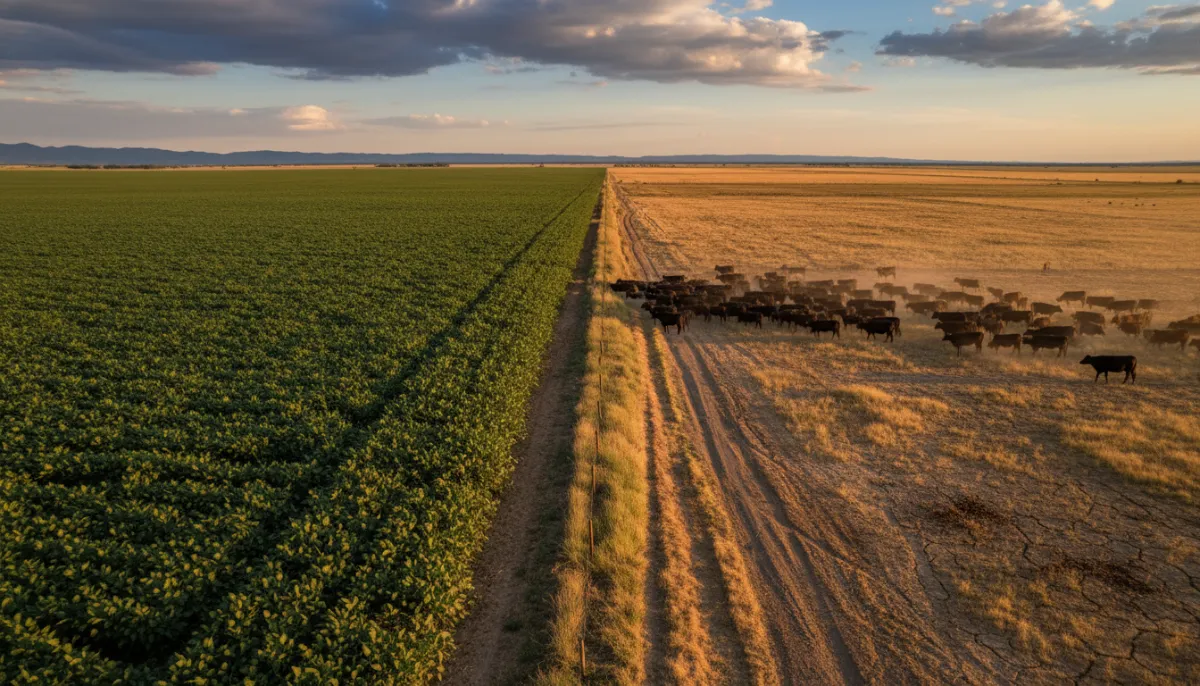
Beef production requires vast tracts of land for grazing and even more land to grow feed crops like corn and soy. In regions like the Amazon, cattle ranching is a primary driver of deforestation, which releases stored carbon and destroys essential carbon sinks.
The Feed Conversion Ratio (FCR) Problem
Beef is remarkably inefficient at converting calorie and protein inputs into edible meat. It takes roughly 25 kilograms of grain to produce just 1 kilogram of beef. This “up-cycling” process means that the carbon footprint of all the water, fertilizer, and fuel used to grow that grain must be attributed to the final beef product. When calculating ghg emissions plant based protein vs meat, this multiplier effect is often the deciding factor in the data disparity.
3. The Legume Advantage: The Lifecycle of Tofu Production
Tofu, a staple of plant-based diets for millennia, offers a starkly different emissions profile. Derived from soybeans, tofu benefits from the inherent efficiency of the legume family. Unlike cattle, soybeans do not produce methane through digestion. In fact, legumes have the unique ability to “fix” nitrogen from the atmosphere into the soil, reducing the need for synthetic nitrogen fertilizers—a major source of N2O.
Cultivation & Low Input
Soybeans grown for human consumption (like tofu) typically require fewer chemical inputs than the genetically modified varieties grown for livestock feed. The carbon sequestered in the soil during the soy growth cycle further offsets the minimal emissions from planting and harvesting machinery.
The Processing Phase
Converting soybeans into tofu involves soaking, grinding, boiling, and curdling. While these industrial processes require energy (heat and electricity), they are far less energy-intensive than the slaughtering, refrigeration, and large-scale logistics required for the meat industry. On average, the processing of tofu accounts for less than 15% of its total carbon footprint.

4. Head-to-Head: GHG Emissions per 100g of Protein
To provide a fair comparison, scientists often measure emissions relative to the amount of protein delivered. This ensures that the nutritional density of the food is accounted for. The following data highlights the massive gulf between these two options.
| Food Item | GHG Emissions (kg CO2-eq per 100g protein) | Primary Gas Source | Impact Level |
|---|---|---|---|
| Beef (Beef Herd) | 49.89 | Methane (Enteric) | Critical |
| Beef (Dairy Herd) | 16.43 | Methane / Manure | High |
| Pork | 7.61 | Feed / Manure | Moderate |
| Poultry | 5.70 | Feed Production | Low-Moderate |
| Tofu | 1.98 | Transport / Processing | Very Low |
Source: Our World in Data, based on Poore & Nemecek (2018). Values represent the global average of greenhouse gas emissions across 38,700 farms.
5. Resource Efficiency: Land, Water, and Biodiversity
The comparison of ghg emissions plant based protein vs meat tells only half the story. To truly understand the environmental superiority of tofu, we must look at land and water use. Biodiversity loss is currently driven primarily by the expansion of agricultural land, specifically for livestock.
The Land Footprint
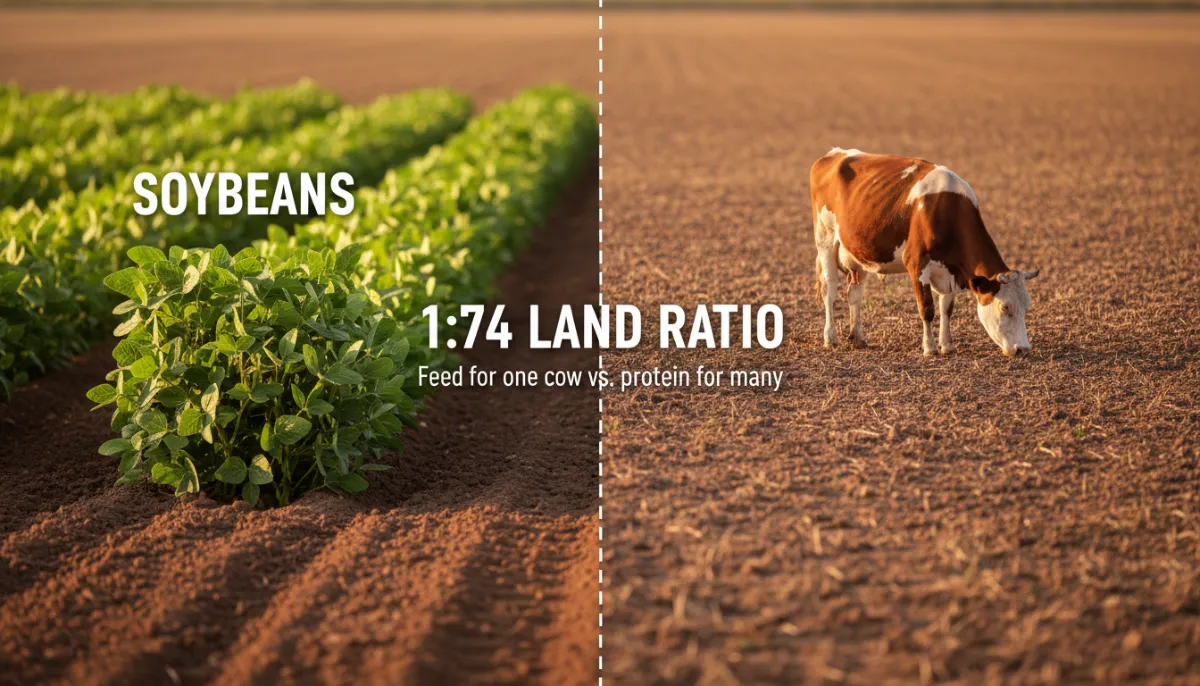
Producing 100g of protein from beef requires approximately 163 square meters of land. In contrast, 100g of protein from tofu requires just 2.2 square meters. This 74-fold difference means that if the world shifted toward plant-based diets, we could restore massive areas of land to native forests and grasslands, creating a “double climate dividend” through natural carbon sequestration.
The Water Footprint
Beef is famously water-intensive, requiring nearly 15,000 liters of water per kilogram of meat (mostly to grow the feed). Tofu, however, uses roughly 2,500 liters per kilogram. While tofu still requires water, it is significantly more efficient at converting that water into usable human nutrition, especially in regions prone to drought.
6. Navigating the Soy-Deforestation Myth
A common argument used to defend meat consumption is that soy production is a primary cause of deforestation in the Amazon. While it is true that soy cultivation contributes to habitat loss, a critical distinction must be made regarding where that soy goes.
- The 77% Reality: Approximately 77% of global soy is used as feed for livestock (cows, pigs, and chickens). Only about 7% is used directly for human food products like tofu, soy milk, and tempeh.
- Efficiency of Scale: If humans ate soy directly instead of feeding it to animals, we would need 75% less agricultural land globally. The “soy is bad” narrative actually highlights why meat production is so problematic.
- Certified Soy: Most tofu sold in Western markets is made from soy grown in the US, Canada, or Europe, which is subject to stricter land-use regulations than the soy grown for industrial animal feed.
7. Future-Proofing Our Plates: The Path to Net-Zero Dining
As we move toward 2050, the demand for protein will only increase as the global population grows. We cannot meet climate targets without a systemic shift in how we produce and consume protein. This shift involves three key pillars:
- Dietary Diversification: Replacing even 20-30% of beef consumption with tofu or other legumes could reduce agricultural emissions by billions of tons.
- Regenerative Practices: While beef will always have a higher footprint than plants, moving toward regenerative grazing can sequester some carbon back into the soil, though it is not a complete solution for global demand.
- Technological Innovation: Precision fermentation and cultivated meat offer the promise of “meat” without the cow, but currently, the humble tofu block remains the most carbon-efficient, scalable, and healthy option available today.

8. Frequently Asked Questions
What has the highest carbon footprint: beef, chicken, or tofu?
Beef has the highest carbon footprint by far, producing roughly 50kg of CO2-equivalent per 100g of protein. Chicken produces about 5.7kg, while tofu produces only about 2kg. Tofu is over 25 times more carbon-efficient than beef.
Is local beef better for the environment than imported tofu?
Generally, no. Transportation typically accounts for less than 10% of a food’s total carbon footprint. The *type* of food you eat matters much more than where it came from. Even the most local beef will have a much higher footprint than tofu shipped from overseas.
Why is methane from cows worse than CO2?
Methane is a much more potent greenhouse gas. Over a 100-year period, it is 28-34 times more powerful than CO2 at trapping heat in the atmosphere. Because cows produce so much methane through enteric fermentation, their climate impact is disproportionately high.
Can tofu production be carbon neutral?
With the use of renewable energy for processing, regenerative farming techniques for soy cultivation, and minimized packaging, tofu can come very close to carbon neutrality, something that is biologically impossible for beef production at scale.