
Plant milk comparisons & buying guides are essential resources for consumers navigating the complex dairy-free market, offering critical evaluations of nutritional content, environmental impact, and flavor profiles. To select the best option, you must analyze protein density, fortification levels, and ingredient lists to ensure the alternative aligns with your dietary goals and culinary needs.
The Plant-Based Revolution: Why Compare?
The dairy aisle has undergone a radical transformation in the last decade. What was once a monopoly held by cow’s milk has fractured into a diverse spectrum of plant-based alternatives. From the creamy texture of oat milk to the protein-rich profile of soy, the options are seemingly endless. However, this variety brings confusion. Not all plant milks are created equal; they vary wildly in terms of nutrition, environmental footprint, price, and culinary application.
Understanding the nuances between these beverages is crucial for your health and your wallet. Some are little more than expensive water with added thickeners, while others are nutritional powerhouses that rival or exceed dairy milk. This comprehensive guide serves as the definitive resource for plant milk comparisons & buying guides, designed to help you make an informed commercial decision whether you are vegan, lactose intolerant, or simply curious.

The Big Three: Almond, Oat, and Soy
When discussing plant-based alternatives, three heavyweights dominate the market. Understanding their distinct characteristics is the first step in your buying journey.
Almond Milk: The Low-Calorie Leader
Almond milk has long been the most popular plant milk in the United States. It is prized for its mild, nutty flavor and thin consistency.
- Nutrition: It is naturally low in calories and sugar (if unsweetened), making it a favorite for weight management. However, it is generally low in protein (often just 1 gram per cup).
- Texture: Thin and somewhat watery, though “creamy” versions exist which use gums for thickening.
- Best For: Cereal, smoothies, and general drinking.
Oat Milk: The Barista’s Favorite
Oat milk has seen a meteoric rise, primarily due to its texture. It contains beta-glucans, a soluble fiber that gives the milk a natural creaminess without heavy reliance on thickeners.
- Nutrition: Higher in carbohydrates and calories than almond milk. It often contains slightly more protein (2-4 grams) but can spike blood sugar faster than nut milks.
- Texture: Thick, creamy, and coats the tongue similarly to whole dairy milk.
- Best For: Coffee, lattes (it froths beautifully), and baking.
Soy Milk: The Nutritional Powerhouse
Before the trendiness of oat and almond, there was soy. It remains the most nutritionally balanced alternative to cow’s milk.
- Nutrition: Soy is a complete protein, containing all nine essential amino acids. A cup typically offers 7-9 grams of protein, comparable to dairy.
- Texture: Smooth and creamy, though some brands have a distinct “beany” aftertaste.
- Best For: replacing dairy in baking, high-protein diets, and cooking savory dishes.
Emerging Contenders: Pea, Hemp, and Cashew
Beyond the primary triad, the market offers niche milks that cater to specific dietary requirements and allergen concerns.
Pea Milk (Ripple)
Made from yellow split peas, this is the dark horse of the industry. It is surprisingly creamy and one of the most eco-friendly options available.
- Pros: High protein (8g per cup), usually fortified with calcium and Vitamin D, low water footprint.
- Cons: Can have a slight vegetal aftertaste if not flavored or sweetened masking agents are not used.
Hemp Milk
Derived from hemp seeds, this milk is a great option for those with nut and soy allergies.
- Pros: rich in Omega-3 fatty acids (alpha-linolenic acid), which are vital for heart health. It has a distinct, earthy, nutty flavor.
- Cons: Lower protein than soy or pea; the strong flavor can overpower delicate recipes.
Cashew Milk
Cashew milk is similar to almond milk but generally creamier because the blended nut pulp is often retained or dissolves more fully.
- Pros: Extremely low calorie (unsweetened versions), very creamy texture suitable for cream-based soups.
- Cons: Very low protein; expensive compared to other varieties.
Nutritional Showdown: Protein, Calcium, and Sugar
When conducting plant milk comparisons, nutrition labels are your roadmap. Many consumers assume that because a product is “plant-based,” it is automatically healthier. This is a misconception. According to the Harvard T.H. Chan School of Public Health, cow’s milk contains natural nutrients that plant milks must often simulate through fortification.
Here is a comparative breakdown of the average nutritional content per 8oz (240ml) serving of unsweetened varieties:
| Milk Type | Calories | Protein (g) | Carbs (g) | Fat (g) |
|---|---|---|---|---|
| Dairy (Whole) | 150 | 8 | 12 | 8 |
| Soy | 80-100 | 7-9 | 4 | 4 |
| Pea | 70-100 | 8 | 0-1 | 4.5 |
| Oat | 120 | 3 | 16 | 5 |
| Almond | 30-40 | 1 | 1 | 2.5 |
| Rice | 120 | 0-1 | 22 | 2 |
Key Takeaway: If you rely on milk as a primary protein source (especially for children), Soy and Pea milk are the only comparable substitutes to dairy. Almond and Rice milk are essentially recreational beverages rather than nutritional staples unless heavily fortified.
Sustainability: Which Milk is the Greenest?
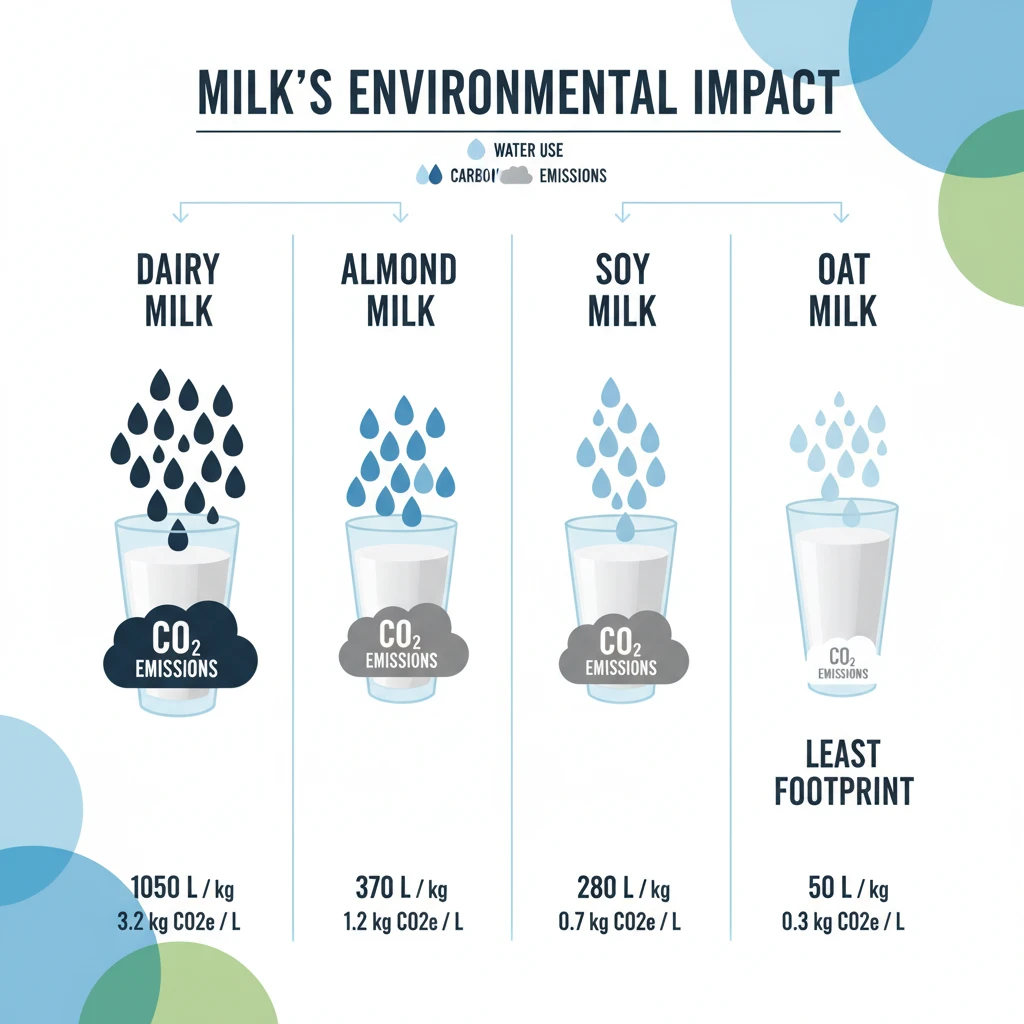
For many consumers, the switch to plant milk is driven by environmental concerns. While almost all plant milks have a lower carbon footprint than dairy, there are significant differences between them.
Water Usage
Almond milk has faced scrutiny regarding water usage. It takes a significant amount of water to grow almonds, and the majority of the world’s supply comes from drought-stricken California. While still better than dairy, it is the thirstiest of the plant milks.
Land Use
Oat milk is widely considered one of the most sustainable options regarding land use. Oats are grown in temperate climates worldwide and are generally not associated with deforestation. Soy is also efficient, but concerns exist regarding soy cultivation contributing to deforestation in the Amazon (though most Amazonian soy is used for livestock feed, not human milk consumption).
Carbon Emissions
According to data aggregated by Our World in Data, almond and oat milks have the lowest greenhouse gas emissions. Dairy milk produces nearly three times the emissions of any plant-based alternative.
The Ultimate Buying Guide: Reading Labels Like a Pro
Navigating the grocery aisle requires a keen eye. Manufacturers often use marketing buzzwords to disguise inferior products. Use this checklist before you buy:
1. The “Unsweetened” Rule
Always opt for “Unsweetened” varieties. Original or Vanilla flavors can contain 10 to 15 grams of added sugar per serving—essentially turning your healthy drink into a liquid dessert. You can always sweeten it yourself at home with a touch of maple syrup or stevia.
2. Watch for Gums and Oils
To mimic the mouthfeel of dairy, brands add thickeners like Carrageenan, Guar Gum, or Xanthan Gum. While generally recognized as safe, Carrageenan causes digestive distress in some people. Furthermore, many oat milks add rapeseed or canola oil to achieve creaminess. If you are avoiding inflammatory seed oils, check the ingredient list carefully (brands like Elmhurst or Malk offer gum-free, oil-free options).
3. Fortification is Key
If you are fully vegan, fortification is non-negotiable. Look for brands that add Calcium, Vitamin D, and Vitamin B12. Without these, you are missing out on the key micronutrients provided by traditional dairy.
Best Plant Milks for Specific Uses
One plant milk rarely fits all purposes. To master the dairy-free kitchen, you might need to keep two different cartons in your fridge.
Best for Coffee: Oat Milk
Oat milk is the undisputed champion of the coffee shop. Its neutral flavor doesn’t compete with the acidity of the coffee, and its fat content allows it to steam and froth into a velvety micro-foam. Almond milk often curdles in hot coffee due to the temperature difference and acidity, while soy can sometimes separate.
Best for Baking: Soy Milk
Because of its high protein content, soy milk reacts similarly to dairy milk in baking chemistry. It promotes browning (Maillard reaction) and provides structure to cakes and muffins. Almond milk is often too watery for baking unless the recipe is specifically adjusted for it.
Best for Smoothies: Coconut or Almond Milk
If you want a tropical flavor and rich texture, carton coconut milk (not canned) is excellent. For a neutral base that lets the fruit flavors shine without adding many calories, unsweetened almond milk is the go-to choice.
Best for Savory Cooking: Cashew or Unsweetened Soy
When making a vegan béchamel, alfredo sauce, or creamy soup, you need a neutral flavor. Oat milk is often too sweet for savory dishes. Cashew milk creates a luxurious creaminess, while unsweetened soy offers the necessary protein structure for thickening sauces.

Frequently Asked Questions
Below are common questions regarding plant milk comparisons and selection.
What is the healthiest plant milk to drink?
Soy milk and pea milk are generally considered the healthiest options nutritionally because their protein content matches dairy milk. However, the “healthiest” choice depends on your goals; for weight loss, unsweetened almond milk is superior due to its low calorie count.
Which plant milk tastes most like cow’s milk?
Oat milk is widely regarded as having the taste and texture most similar to cow’s milk. It has a mild, slightly sweet flavor and a creamy mouthfeel that mimics whole milk better than nut-based alternatives.
Is it safe to give plant milk to toddlers?
Most pediatricians recommend full-fat soy milk or pea milk as the only suitable alternatives to cow’s milk for toddlers (ages 1-2) because of the protein and fat requirements for brain development. Almond, rice, and oat milks generally lack sufficient protein and fat for growing toddlers unless specifically formulated.
Does plant milk curdle in coffee?
Yes, some plant milks, particularly almond and soy, can curdle in coffee due to the acidity and heat. To prevent this, warm the milk before adding it to the coffee, or choose “Barista Edition” blends which contain acidity regulators to ensure smoothness.
Which plant milk has the most calcium?
Most commercial plant milks are fortified with calcium carbonate or tricalcium phosphate to match or exceed dairy levels (usually 300-450mg per cup). Always check the label, as homemade or unfortified organic versions will have very little calcium.
Why do some plant milks contain oil?
Oils (like sunflower or rapeseed) are added to plant milks, particularly oat milk, to act as an emulsifier and to give the liquid a creamy, rich mouthfeel that resembles the fat content of dairy milk. Without oil, many grain-based milks would feel watery.