
Soy Nutrient Absorption and the Bioavailability of Nutrients
A comprehensive architectural guide to understanding how our bodies process nutrients, with a specialized focus on soy nutrient absorption and food synergy.
Defining Bioavailability: Beyond Intake
In the realm of nutritional science, optimizing soy nutrient absorption and the general bioavailability of nutrients is central to health. A more accurate assertion than “you are what you eat” would be “you are what you absorb and utilize.” Bioavailability refers to the proportion of a nutrient that is digested, absorbed, and metabolized through standard pathways. It is a critical metric for evaluating the nutritional quality of both whole foods and dietary supplements.

Bioavailability is typically divided into two distinct phases: bioaccessibility and bioefficacy. Bioaccessibility is the fraction of a nutrient that is released from the food matrix in the gastrointestinal tract and becomes available for absorption. Bioefficacy, on the other hand, is the efficiency with which the absorbed nutrient is converted into its active biological form.
Factors Influencing Nutrient Utilization
Intrinsic Factors
These include age, gender, genetic polymorphisms, and health status. The health of the gut microbiome and the acidity of the stomach (pH levels) play foundational roles in how efficiently minerals like calcium and iron are ionized and subsequently absorbed.
Extrinsic Factors
Extrinsic factors relate to the food itself and its preparation. This includes the chemical form of the nutrient (e.g., heme vs. non-heme iron) and the food matrix (the physical structure of the food).
Deep Dive: Soy Nutrient Absorption Dynamics
The discussion surrounding soy nutrient absorption is one of the most complex in modern dietetics. Soybeans are nutrient-dense legumes, offering a complete amino acid profile and high concentrations of minerals. However, the presence of certain naturally occurring compounds has led to debate regarding the efficiency of soy nutrient absorption.
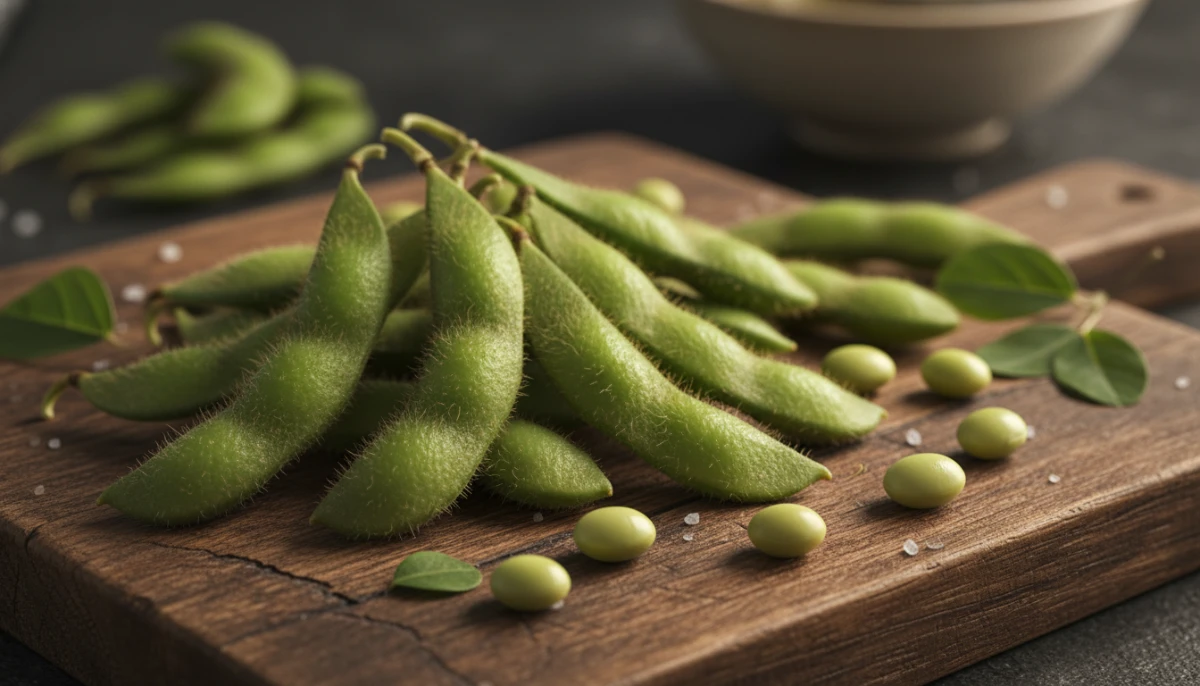
The Role of Phytic Acid in Soy
Soybeans are naturally high in phytic acid, often termed an “anti-nutrient.” Phytic acid has a high affinity for divalent cations such as zinc, iron, and calcium. When these minerals bind to phytic acid, they form insoluble complexes that the human digestive tract cannot easily break down, potentially reducing the bioavailability of nutrients found within the bean.
Key Insight: Soy Protein Isolate vs. Whole Soy
Research indicates that while soy protein isolate has a high digestibility score, fermented forms like tempeh significantly enhance the absorption of minerals and isoflavones by neutralizing phytates.

The Paradox of Anti-Nutrients: Phytates and Oxalates
While the term “anti-nutrient” suggests a negative impact, current research paints a more nuanced picture. Phytates are also recognized for their antioxidant properties. The goal is not to eliminate these compounds but to manage their concentrations through preparation techniques like soaking and fermentation.
Micronutrient Bioavailability Pathways
Iron (Heme vs. Non-Heme)
Heme iron has high absorption (15-35%). Non-heme iron, found in soy, requires Vitamin C to improve uptake and counteract phytates.
Calcium and Vitamin D
Calcium absorption is heavily dependent on Vitamin D status, which promotes the transport of minerals across the intestinal wall.
Strategies for Enhancing Dietary Efficiency
- Pairing Vitamin C with Plant-Based Minerals: Consuming citrus alongside soy can triple iron absorption.
- Fat-Soluble Nutrient Delivery: Consume Vitamins A, D, E, and K with healthy fats like olive oil.
- The Power of Fermentation: Prioritize miso or tempeh to utilize the enzymatic breakdown of anti-nutrients.
Conclusion: The Holistic Approach
The science of soy nutrient absorption reveals that nutrition is not a passive process. While the bioavailability of nutrients varies, employing traditional preparation techniques and smart food pairings allows one to harness the full potential of complex foods. Ultimately, health relies on creating the optimal internal environment for these nutrients to flourish.
Frequently Asked Questions
What exactly is bioavailability?
Bioavailability is the fraction of a nutrient that is absorbed and becomes available for use in the body.
Does soy inhibit the absorption of other nutrients?
Soy contains phytates, but their impact is minimized through fermentation and soaking, leading to an overall positive nutrient contribution.