
Allergies in Children: The Comprehensive Parent Guide to Diagnosis and Management
Understanding and managing Allergies in Children is a critical task for modern parents and caregivers. As the prevalence of allergic conditions continues to rise globally, identifying the triggers, recognizing the symptoms early, and implementing a robust management plan can significantly improve a child’s quality of life and ensure their safety in various environments ranging from home to school.
Table of Contents
- 1. The Pathophysiology of Childhood Allergies
- 2. Common Types of Allergies in Children
- 3. Identifying Signs and Symptoms
- 4. Diagnostic Procedures and Testing
- 5. Treatment Modalities and Medications
- 6. Emergency Protocols: Anaphylaxis
- 7. Navigating School and Social Environments
- 8. Conclusion and Long-term Outlook
- 9. Frequently Asked Questions

The Pathophysiology of Childhood Allergies
When we discuss allergies in children, we are essentially talking about an overreaction of the immune system. In a healthy state, the immune system defends the body against harmful invaders like bacteria and viruses. However, in an allergic child, the immune system identifies a harmless substance—such as pollen, pet dander, or peanut protein—as a dangerous threat. This misidentification triggers the production of Immunoglobulin E (IgE) antibodies. These antibodies travel to cells that release chemicals, including histamine, into the bloodstream. Histamine is what causes the classic allergic symptoms we observe, such as itching, swelling, and mucus production.
The development of allergies in children is often influenced by a combination of genetics and environmental factors, a concept frequently referred to as the ‘Atopic March.’ This term describes a clinical sequence of allergic conditions that often appear in a specific order during early childhood, starting with eczema (atopic dermatitis), followed by food allergies, and later progressing to allergic rhinitis (hay fever) and asthma. Understanding this progression allows pediatricians to intervene early and potentially mitigate the severity of future allergic responses.
The Genetic Component
Research indicates that if one parent has allergies, their child has a 30% to 50% chance of developing them. If both parents have allergies, the risk jumps to 60% to 80%. However, it is important to note that children do not necessarily inherit a specific allergy, such as a peanut allergy; rather, they inherit the tendency to be allergic in general.
Common Types of Allergies in Children
Allergies in children can be broadly categorized into four main groups: food, environmental, skin, and insect-related. Each type presents unique challenges and requires tailored management strategies.
1. Food Allergies
Food allergies are among the most concerning for parents due to the potential for severe reactions. The ‘Big Nine’ allergens account for about 90% of all food-allergic reactions in children: milk, eggs, peanuts, tree nuts, wheat, soy, fish, shellfish, and sesame. While many children eventually outgrow allergies to milk, egg, soy, and wheat, allergies to peanuts, tree nuts, and seafood are more likely to be lifelong.
2. Environmental Allergies
Often referred to as hay fever or allergic rhinitis, environmental allergies are triggered by airborne substances. These include seasonal triggers like tree, grass, and weed pollen, as well as perennial triggers like dust mites, mold, and pet dander. These allergies significantly impact a child’s sleep quality and school performance due to chronic congestion and fatigue.
3. Skin Allergies
Atopic dermatitis, or eczema, is a common skin condition in children with an underlying allergic predisposition. It presents as dry, itchy, and inflamed skin. Other skin-related allergic reactions include contact dermatitis (a reaction to a substance touching the skin, like nickel or certain soaps) and hives (urticaria).

4. Insect Sting Allergies
Most children experience minor swelling and redness after an insect sting. However, for those with a true allergy to the venom of bees, wasps, or hornets, a sting can be life-threatening. Recognizing the difference between a large local reaction and a systemic allergic reaction is vital for emergency preparedness.
Identifying Signs and Symptoms
The symptoms of allergies in children can vary based on the allergen and the individual child. Symptoms may appear within seconds of exposure or may take several hours to manifest. Consistency in monitoring these signs is key for accurate diagnosis.
Respiratory Symptoms
- Sneezing and runny or stuffy nose
- Itchy, watery, or red eyes
- Chronic coughing or wheezing
- Shortness of breath
Skin and GI Symptoms
- Hives or skin rashes
- Swelling (angioedema)
- Stomach pain or cramping
- Vomiting or diarrhea
It is often difficult to distinguish between a common cold and environmental allergies in children. A key indicator is the duration: a cold usually lasts 7 to 10 days, whereas allergies persist as long as the child is exposed to the allergen. Additionally, allergies typically do not cause a fever and are often accompanied by ‘allergic shiners’ (dark circles under the eyes) and a persistent itch in the nose or throat.
Diagnostic Procedures and Testing
If you suspect your child has an allergy, consulting a board-certified allergist is the first step. The diagnostic process begins with a detailed medical history, including a review of the child’s symptoms, family history, and potential triggers in the home and school environment.
Skin Prick Testing (SPT)
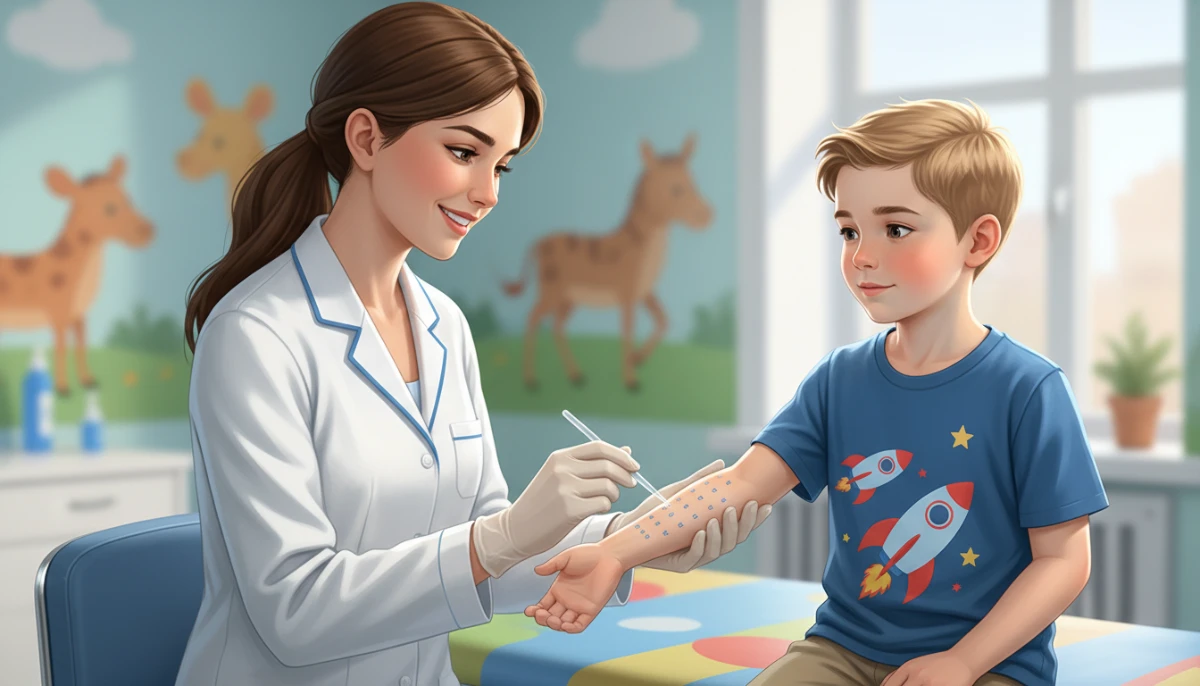
This is the most common and rapid form of allergy testing. A small amount of diluted allergen is placed on the skin (usually the back or forearm), and the skin is lightly pricked. If the child is allergic, a small raised bump (wheal) similar to a mosquito bite will appear within 15 to 20 minutes. It is a highly sensitive test and provides immediate results.
Specific IgE Blood Tests
Blood tests, such as the ImmunoCAP test, measure the amount of IgE antibodies to specific allergens in the blood. While these tests are helpful, especially if a child has severe eczema that prevents skin testing, they can sometimes produce false positives. Therefore, results must be interpreted alongside the clinical history.
Oral Food Challenges
Considered the ‘gold standard’ for food allergy diagnosis, an oral food challenge involves feeding the child increasing amounts of the suspected allergen under strict medical supervision. This is only done when history and other tests are inconclusive, as it carries a risk of a severe reaction.
Treatment Modalities and Medications
Management of allergies in children involves a multi-faceted approach focusing on avoidance, pharmacotherapy, and in some cases, immunotherapy. The goal is to minimize symptoms and prevent life-threatening reactions.
Avoidance Strategies
The most effective treatment is the complete avoidance of the known allergen. This might involve using dust-mite-proof mattress covers, removing carpets, or strictly reading food labels to ensure no cross-contamination of allergens like peanuts or dairy.
Pharmacological Interventions
Antihistamines are the primary medication for mild allergic reactions, working by blocking the effects of histamine. For chronic environmental allergies, nasal corticosteroids are often the most effective treatment for reducing inflammation. Children with asthma and allergies may also require bronchodilators or inhaled steroids.
Allergy Immunotherapy (Allergy Shots)
For children with severe environmental allergies who do not respond well to medications, immunotherapy can provide long-term relief. This involve injecting gradually increasing amounts of the allergen to ‘train’ the immune system to become less sensitive over time. Sublingual immunotherapy (tablets under the tongue) is also an option for certain allergens like grass and ragweed.
Emergency Protocols: Anaphylaxis
Anaphylaxis is a severe, potentially life-threatening systemic allergic reaction. It requires immediate medical attention. When managing allergies in children, parents must be able to recognize the signs of anaphylaxis, which often involve two or more body systems (e.g., hives plus vomiting, or coughing plus fainting).
The first-line treatment for anaphylaxis is Epinephrine. This medication works quickly to reverse the dangerous effects of the reaction by constricting blood vessels to increase blood pressure and relaxing the muscles in the lungs to open airways. If your child has a known severe allergy, you should always carry two epinephrine auto-injectors (such as an EpiPen or Auvi-Q) because some reactions require a second dose before emergency services arrive.
The Anaphylaxis Action Plan
Every child with a severe allergy needs a written Anaphylaxis Action Plan. This document should outline the child’s specific allergens, symptoms to watch for, and clear instructions on when and how to administer epinephrine. This plan must be shared with all caregivers, including teachers, coaches, and family members.
Navigating School and Social Environments
Sending a child with allergies to school can be a source of significant anxiety for parents. However, with proper preparation, school can be a safe and inclusive environment. In the United States, children with life-threatening allergies may be eligible for a 504 Plan, which is a legal document ensuring that the school provides necessary accommodations to keep the child safe and included in all activities.
Accommodations might include a ‘nut-free’ table in the cafeteria, hand-washing protocols after meals, and training for all staff members on how to use an epinephrine auto-injector. It is also essential to educate the child’s peers in an age-appropriate way to foster empathy and prevent bullying related to their dietary restrictions.

Social events like birthday parties also require planning. Communication with the host about the child’s specific allergies is paramount. Many parents find it helpful to send a ‘safe’ cupcake or snack with their child so they can participate in the celebration without risk.
Conclusion and Long-term Outlook
While allergies in children represent a significant medical and logistical challenge, the outlook for most allergic children is very positive. Advances in medical research, particularly in the field of oral immunotherapy (OIT) and biologics, are providing new ways to treat and potentially even cure certain allergies. Early intervention, consistent monitoring, and open communication between parents, doctors, and schools are the cornerstones of successful management.
As your child grows, it is important to involve them in their own allergy management. Teaching them how to read labels, how to ask about ingredients at restaurants, and eventually how to carry and use their own emergency medication empowers them to lead a full, active, and safe life. Remember, having an allergy is just one part of your child’s life—it does not define who they are or what they can achieve.
Frequently Asked Questions
Can children outgrow their allergies?
Yes, many children outgrow allergies to milk, eggs, soy, and wheat by their teenage years. However, allergies to peanuts, tree nuts, fish, and shellfish are typically lifelong.
What is the ‘hygiene hypothesis’?
The hygiene hypothesis suggests that our modern, ultra-clean environments prevent children from being exposed to microbes that help ‘train’ the immune system, potentially leading to an increase in allergic diseases.
Is it safe to introduce allergens early to infants?
Current guidelines suggest that for most infants, introducing common allergens like peanuts and eggs around 4 to 6 months of age can actually help prevent the development of food allergies.
How can I tell if a reaction is anaphylaxis?
Anaphylaxis usually involves severe symptoms in more than one organ system, such as difficulty breathing, swelling of the tongue, a drop in blood pressure, or persistent vomiting. If suspected, use epinephrine immediately and call emergency services.