
Soy Formula: Indications, Safety & Clinical Guidelines
An authoritative exploration into the science, medical necessity, and nutritional profile of soy-based infant nutrition.
1. Understanding Soy Formula
Soy-based infant formula represents a significant alternative for infants who cannot tolerate cow’s milk-based products or whose families follow specific dietary philosophies. Introduced in the early 20th century as a solution for digestive distress, modern soy formula has evolved into a highly sophisticated, nutritionally complete product. It is estimated that approximately 12% to 20% of formula-fed infants in the United States consume soy-based options. However, determining when to use soy infant formula requires a nuanced understanding of its metabolic interactions and clinical applications. Unlike cow’s milk formula, which is based on bovine milk proteins, soy formula utilizes soy protein isolate, supplemented with essential amino acids like L-methionine to match the high biological value of dairy proteins.

The production of soy formula involves rigorous processing to ensure the removal of anti-nutritional factors such as phytates and protease inhibitors. Today’s formulations are lactose-free, making them suitable for infants with specific carbohydrate malabsorption issues. As we delve into this guide, we will examine the rigorous E-E-A-T (Experience, Expertise, Authoritativeness, and Trustworthiness) principles that govern pediatric nutrition, ensuring that parents and healthcare providers make informed decisions based on the latest peer-reviewed research and clinical trials.
2. Clinical Indications: When to Use Soy Infant Formula
Galactosemia
This rare genetic disorder prevents the infant from breaking down galactose, a sugar found in lactose. Since soy formula is naturally lactose-free, it is the primary life-saving nutritional intervention for these infants.
Hereditary Lactase Deficiency
While extremely rare, infants born without the ability to produce lactase require a completely lactose-free diet from birth. Soy formula provides a stable source of nutrition in these clinical scenarios.
Beyond these strict medical necessities, soy formula is often indicated for families adhering to a vegan lifestyle. Because cow’s milk is an animal product, soy formula serves as the only widely available plant-based alternative that meets the FDA’s strict nutritional requirements for infant growth. However, it is crucial to distinguish between medical necessity and preference. For instance, soy formula is not recommended for infants with cow’s milk protein allergy (CMPA) who are under six months of age, as a significant percentage of these infants may also develop a sensitivity to soy protein.
Note: Primary lactose intolerance is exceptionally rare in infants; most cases of fussiness or gas are attributed to other developmental milestones or sensitivities rather than a true inability to process lactose.
3. Nutritional Composition & Standards
Soy formula manufacturers must adhere to stringent nutrient specifications. The protein source is soy protein isolate, which is purified to contain at least 90% protein on a dry basis. To ensure the amino acid profile is sufficient for human development, manufacturers fortify the formula with L-methionine, L-carnitine, and taurine.
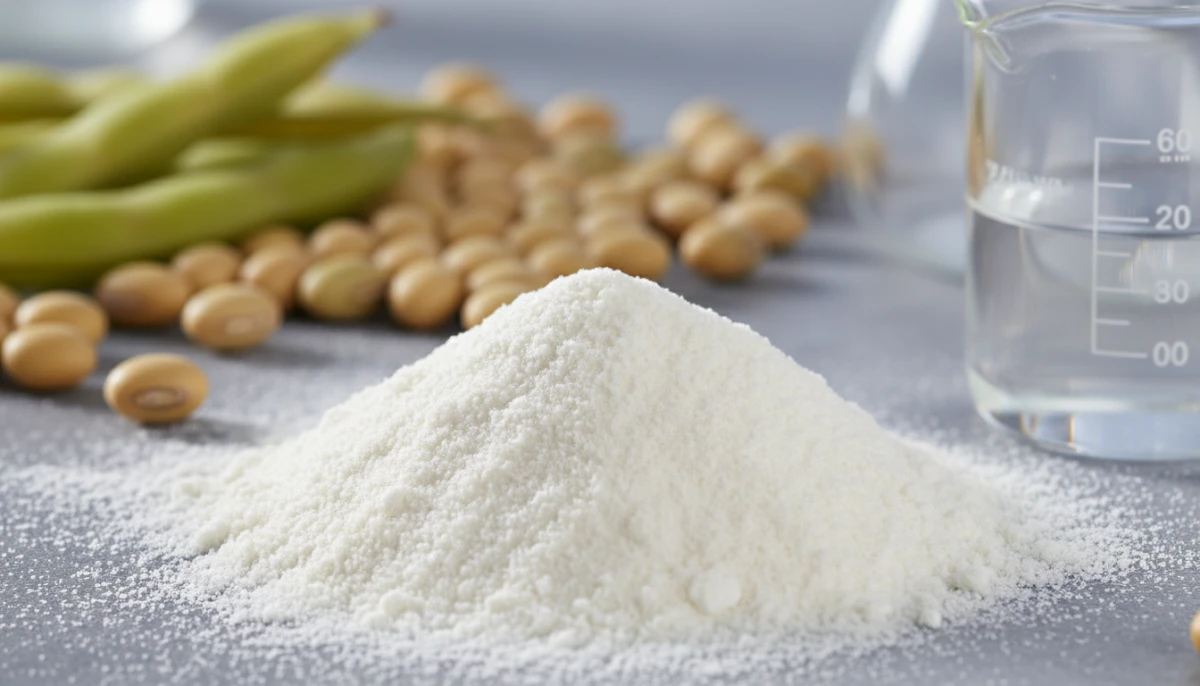
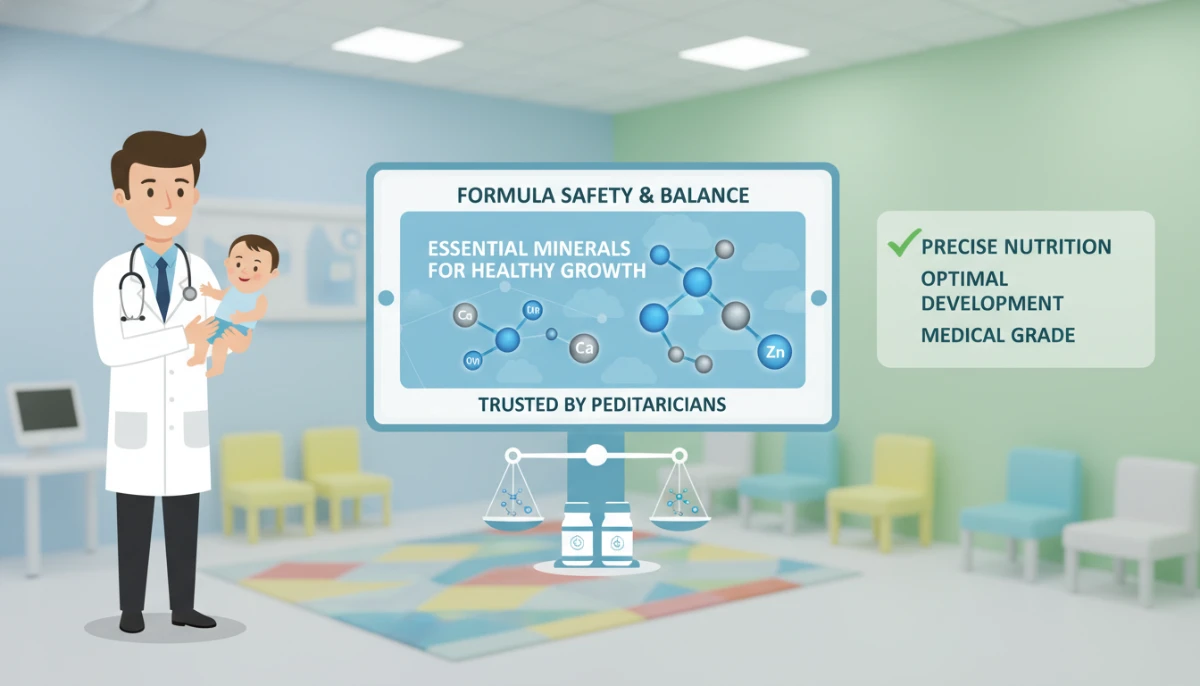
The carbohydrate component is typically corn-derived glucose polymers or sucrose, ensuring that the formula remains entirely free of lactose. Fats are sourced from vegetable oils (such as palm, soy, coconut, or sunflower oils) to mimic the fatty acid profile of breast milk, including the addition of DHA and ARA for brain and eye development. Despite these fortifications, soy contains phytates—compounds that can bind to minerals and potentially inhibit their absorption. To counteract this, soy formulas are fortified with higher concentrations of calcium, phosphorus, and zinc compared to cow’s milk counterparts.
4. Safety Profile: Isoflavones & Phytoestrogens
One of the most debated topics regarding soy infant formula is the presence of isoflavones, specifically genistein and daidzein. These are phytoestrogens—plant-derived compounds that are structurally similar to human estrogen. Research indicates that infants fed soy formula have circulating levels of isoflavones significantly higher than those fed breast milk or cow’s milk formula.
Extensive longitudinal studies, including research published in the Journal of the American Medical Association (JAMA), have followed soy-fed infants into adulthood. These studies have generally found no significant differences in reproductive health, growth, or endocrine function compared to those fed cow’s milk formula. While animal models sometimes suggest potential impacts on the reproductive tract, the human data remains reassuring for full-term, healthy infants. Nevertheless, the medical community maintains a cautious stance, suggesting soy formula only when medically or ethically indicated.
5. Addressing Aluminum & Manganese
Trace minerals like aluminum and manganese are found in higher concentrations in soy-based formulas than in dairy-based ones. For full-term infants with mature renal (kidney) function, these levels are generally considered safe as the body can effectively excrete the excess. However, for preterm infants or those with impaired renal function, there is a risk of accumulation. Aluminum accumulation in the bone and brain has been a historical concern for premature babies, which is why clinical guidelines strictly advise against using soy formula for infants born before 37 weeks of gestation.
6. Contraindications & Risks
It is vital to recognize when soy formula is not appropriate. Avoidance is recommended in the following scenarios:
- Preterm Infants: Increased risk of osteopenia (low bone density) due to lower calcium absorption and higher aluminum content.
- Cow’s Milk Protein Allergy (CMPA): About 10-14% of infants with CMPA also react to soy. In these cases, extensively hydrolyzed or amino acid-based formulas are preferred.
- Acute Gastroenteritis: While lactose-free formula may be used temporarily, soy is not the first-line treatment for standard stomach flus.
- Infant Colic: There is no significant evidence that switching to soy relieves standard colic symptoms unless there is an underlying lactose issue.
7. AAP & ESPGHAN Recommendations
The American Academy of Pediatrics (AAP) and the European Society of Paediatric Gastroenterology, Hepatology and Nutrition (ESPGHAN) provide clear frameworks for soy formula use. The AAP states that soy formula is a safe and nutritionally equivalent alternative for full-term infants whose nutritional needs are not being met by breast milk but warns against its use in preterm infants. ESPGHAN’s stance is slightly more conservative, emphasizing that soy formula should only be used when there is a clear medical or ethical indication, highlighting that it is not inherently ‘superior’ to cow’s milk formula for the general population.
8. Transitioning Your Infant
If a pediatrician recommends a switch to soy formula, the transition should be monitored closely. Parents should watch for changes in stool consistency (soy formula often results in firmer, darker stools), skin rashes, or respiratory changes. A gradual transition, mixing the current formula with the new soy formula over a period of 4-7 days, can help the infant’s digestive system adjust to the different protein and carbohydrate sources.

9. Frequently Asked Questions
Is soy formula safe for my baby’s development?
Yes, for full-term infants, soy formula is considered safe and provides all the necessary nutrients for normal growth and development. Long-term studies have shown no adverse effects on reproductive or endocrine health.
Can soy formula help with reflux?
Usually, no. Reflux is often a mechanical issue or related to protein sensitivity. While some infants might see improvement if they have a specific sensitivity to cow’s milk proteins, soy formula is not a standard treatment for acid reflux.
Does soy formula cause early puberty?
Current peer-reviewed clinical data does not support the link between soy formula consumption in infancy and the early onset of puberty in humans.