
Trypsin inhibitors are naturally occurring anti-nutritional factors found primarily in legumes, such as soybeans, that interfere with the digestive enzyme trypsin. By binding to trypsin, these compounds block the biological process of protein hydrolysis, reducing the bioavailability of amino acids and potentially causing digestive distress if food sources are not adequately processed or cooked.
What Are Trypsin Inhibitors?
In the realm of nutritional biochemistry and the culinary arts, few compounds spark as much debate as trypsin inhibitors (TIs). To understand them, we must first look at the plant kingdom’s defense mechanisms. Plants, unlike animals, cannot run from predators. Instead, they have evolved sophisticated chemical defenses to deter insects and herbivores from consuming their seeds. Trypsin inhibitors are a class of proteins—specifically protease inhibitors—that serve this protective function.
These compounds are most abundant in legumes, cereals, and tubers. Their primary biological role in the seed is to regulate protein synthesis and prevent the seed’s own enzymes from breaking down storage proteins prematurely. However, when consumed by humans or animals, they act as “antinutrients.” An antinutrient is a substance that reduces the body’s ability to utilize essential nutrients. In this specific case, TIs target the protein digestion process.
For the New Zealand culinary market, where plant-based diets and soy consumption are witnessing an exponential rise, understanding TIs is critical. It is not merely a matter of safety, but of maximizing the nutritional value of the foods we eat. If you consume high-quality NZ-grown soy protein but fail to deactivate the inhibitors, your body cannot access the full spectrum of amino acids present in the food.
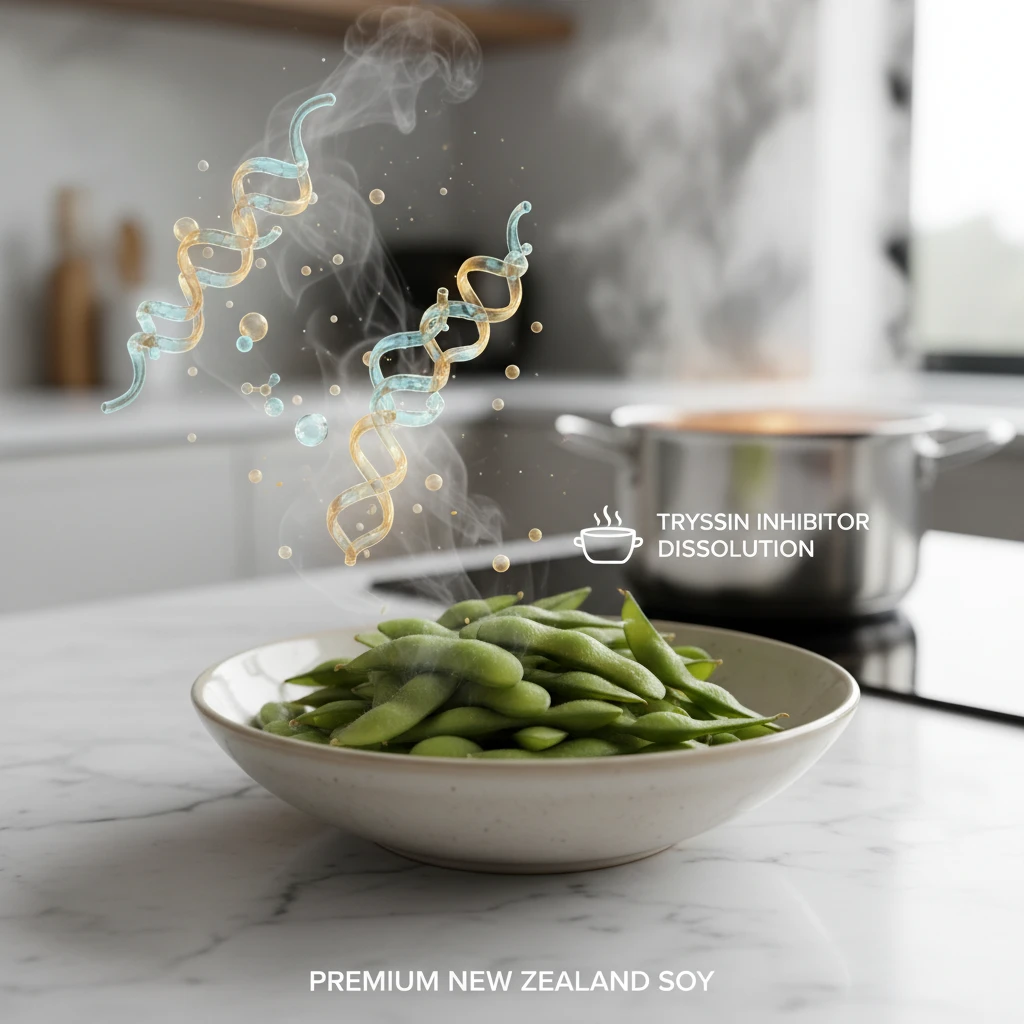
The Biological Mechanism: How They Block Digestion
To appreciate the impact of trypsin inhibitors, one must understand the role of trypsin. Trypsin is a vital serine protease enzyme produced in the pancreas in an inactive form called trypsinogen. When food enters the small intestine, trypsinogen is activated into trypsin. Its job is to cleave protein chains into smaller peptides and amino acids, which are then absorbed into the bloodstream for muscle repair and metabolic function.
Trypsin inhibitors function as a “competitive substrate.” They mimic the protein structure that trypsin is designed to break down. However, unlike normal dietary proteins, TIs bind to the active site of the trypsin enzyme with incredibly high affinity and do not let go easily. This forms a stable complex that effectively neutralizes the enzyme.
Kunitz vs. Bowman-Birk Inhibitors
In soybeans, which are the most relevant source for our discussion, there are two primary types of trypsin inhibitors:
- Kunitz Trypsin Inhibitor (KTI): This is a large protein molecule that specifically inhibits trypsin. It is relatively heat-labile, meaning it is easier to destroy through cooking.
- Bowman-Birk Inhibitor (BBI): This is a smaller, more compact molecule containing disulfide bridges. It is capable of inhibiting both trypsin and chymotrypsin (another digestive enzyme). BBI is more heat-stable than KTI, requiring more rigorous processing to deactivate.
When these inhibitors are active in the gut, the pancreas senses that protein is not being digested efficiently. In response, it works overtime to secrete more digestive enzymes. In animal studies, this chronic overstimulation has led to pancreatic hypertrophy (enlargement) and pathology. While humans are generally less sensitive to this effect than rodents, the reduction in protein digestibility remains a significant nutritional concern.
Major Dietary Sources: The Soy Connection
While trypsin inhibitors are ubiquitous in the plant kingdom, appearing in wheat, buckwheat, and potatoes, legumes are the most concentrated source. Within the legume family, the soybean (Glycine max) has the highest levels of TIs. This is why raw soybeans are considered inedible and potentially toxic.
Other sources include:
- Lima Beans: Require thorough cooking.
- Kidney Beans: Contain both trypsin inhibitors and lectins (phytohaemagglutinin).
- Chickpeas and Lentils: Contain moderate amounts, easily reduced by boiling.
- Egg Whites: Interestingly, raw egg whites contain a trypsin inhibitor called ovomucoid, which is why cooked eggs are more digestible than raw ones.
For the NZ Soy Authority audience, the focus remains on soy products. It is important to distinguish between the formats of soy. Raw soy flour or raw edamame (if eaten without cooking) poses the highest risk. Conversely, highly processed soy isolates used in protein powders usually have TIs removed during the manufacturing process.
Health Implications: The Good and The Bad
The narrative around trypsin inhibitors is often one-sided, labeling them purely as toxins. However, nutritional science is rarely black and white. While their antinutritional effects are well-documented, emerging research suggests potential therapeutic benefits.
The Negative: Reduced Protein Absorption
The primary drawback is nutritional efficiency. If you are relying on legumes for your protein intake—common in vegan and vegetarian demographics in New Zealand—active trypsin inhibitors can reduce biological value. You might consume 20 grams of protein, but if TIs are present, your body might only utilize 10 to 15 grams. Furthermore, the undigested protein sits in the colon, where it is fermented by bacteria, leading to gas, bloating, and gastrointestinal discomfort.
The Positive: Anti-Carcinogenic Potential
Paradoxically, the very mechanism that makes TIs problematic for digestion may make them useful in fighting disease. Research indicates that the Bowman-Birk Inhibitor (BBI) may have anti-carcinogenic properties. Because protease activity is often involved in the proliferation of cancer cells and inflammation, protease inhibitors like BBI have been studied for their ability to suppress carcinogenesis, particularly in the colon, liver, and esophagus.
Furthermore, some studies suggest that TIs may help regulate blood sugar levels by slowing down the digestion of proteins and carbohydrates, leading to a more gradual release of glucose into the bloodstream. This duality makes TIs a subject of intense study: we want to deactivate them enough to ensure digestion, but perhaps not eliminate them entirely for certain therapeutic contexts.
Deactivating Inhibitors: Culinary Techniques
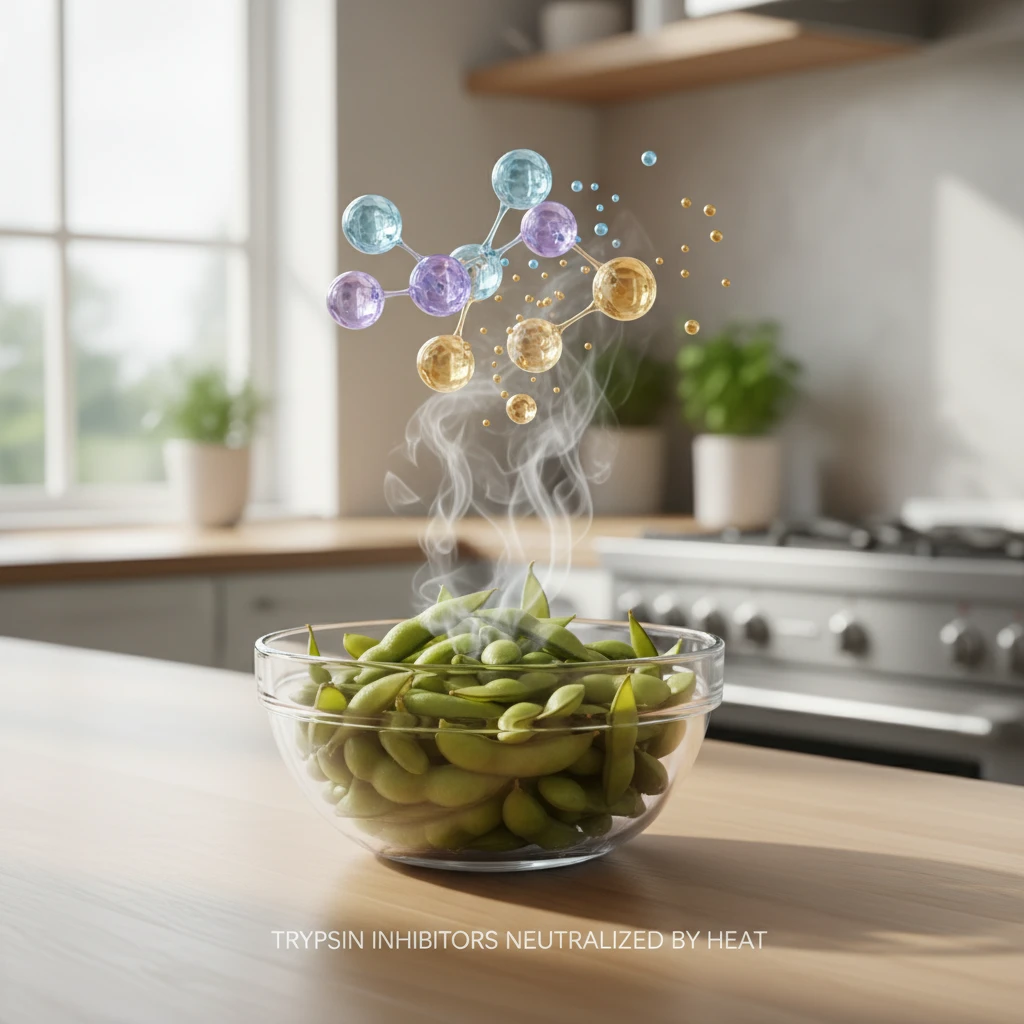
The cornerstone of safe soy consumption is heat treatment. Trypsin inhibitors are proteins, and like all proteins, they denature (unravel) when exposed to heat, losing their ability to bind to enzymes. However, the method of heating matters significantly.
Wet Heat vs. Dry Heat
Moisture is the catalyst for TI destruction. Scientific literature consistently shows that boiling (wet heat) is far more effective than roasting or baking (dry heat) at equivalent temperatures. For example, boiling whole soybeans for 20 minutes can deactivate approximately 80-90% of trypsin inhibitors. Achieving the same reduction via dry roasting might require temperatures that would scorch the bean or damage the protein quality.
Fermentation
Fermentation is a traditional method used for centuries in Asian cultures and is gaining traction in the artisanal NZ food scene. The microorganisms used in fermentation (such as Rhizopus oligosporus for Tempeh or Aspergillus oryzae for Miso) produce their own enzymes that hydrolyze the soy proteins and break down antinutrients. Tempeh and Miso are widely regarded as having very low levels of residual trypsin inhibitors compared to unfermented soy products.
Soaking and Sprouting
Soaking alone has a minimal effect on trypsin inhibitors, removing perhaps 5-10% through leaching. However, soaking is a crucial precursor to cooking because it hydrates the bean, ensuring even heat penetration during boiling. Sprouting (germination) triggers enzyme activity within the seed that begins to degrade defense proteins, reducing TI content over several days, though cooking is still recommended after sprouting.
The New Zealand Context: Safety Standards & Trends
In New Zealand, the Food Standards Code (administered by FSANZ – Food Standards Australia New Zealand) governs the safety of soy products. While there is no specific legal limit for trypsin inhibitor units (TIU) in consumer products, manufacturers are aware of the necessity of heat treatment.
Most soy milk consumed in New Zealand, whether made from imported beans or locally processed, undergoes Ultra-High Temperature (UHT) treatment or pasteurization. These industrial thermal processes are sufficient to reduce TIs to safe, negligible levels. The resurgence of “raw” food diets in NZ poses a minor risk if consumers attempt to make raw soy milk or eat raw soaked beans in smoothies. This practice should be strongly discouraged due to the high concentration of active inhibitors.
Additionally, the NZ agricultural sector utilizes soy meal as livestock feed. In this context, the “toasting” of soy meal is strictly monitored, as high TI levels would depress the growth rates of poultry and pigs, impacting the economic viability of farming.
Practical Preparation Guide for Home Cooks
For the culinary lifestyle enthusiast, preparing legumes from scratch yields better texture and flavor than canned varieties. Here is how to ensure your soy and legumes are safe and nutritious:
- The Long Soak: Always soak dried soybeans for at least 12 hours. Discard the soaking water, as it contains leached antinutrients and flatulence-causing oligosaccharides.
- The Hard Boil: Bring soybeans to a vigorous boil. Simmering is not enough initially. You need 100°C (212°F) to effectively denature the Kunitz inhibitors. Boil for at least 15 to 30 minutes before reducing to a simmer to finish cooking until tender.
- Pressure Cooking: This is the gold standard. The high temperature achieved in a pressure cooker (approx 120°C) destroys trypsin inhibitors much faster than boiling. 20 minutes at high pressure is usually sufficient to render soybeans completely safe and digestible.
- Alkaline Environment: Some traditional methods involve adding a pinch of baking soda during soaking. While this softens the bean, it can degrade certain vitamins (like B vitamins), so use this technique sparingly.
Frequently Asked Questions
1. Is tofu high in trypsin inhibitors?
Generally, no. The process of making tofu involves boiling the soy milk before the coagulant is added. This boiling step, combined with the separation of the curds from the whey (where some inhibitors may remain), significantly reduces TI levels. Tofu is considered safe and highly digestible.
2. Can I eat raw edamame?
No, you should not eat raw edamame. Even though they are fresh and green, they are still soybeans and contain active trypsin inhibitors. They must be blanched or steamed for at least 5-10 minutes to be safe for consumption.
3. Do slow cookers destroy trypsin inhibitors?
Slow cookers can be risky for certain legumes, particularly kidney beans and soybeans, if they do not reach a rolling boil. If the temperature stays around 80°C (176°F), it may not be sufficient to destroy the inhibitors effectively. It is recommended to boil beans for 10 minutes on the stove before transferring them to a slow cooker.
4. Are trypsin inhibitors dangerous for humans?
They are not “toxic” in the sense of a poison that kills instantly, but they are antinutritional. Consuming high amounts regularly can lead to protein deficiency, mineral malabsorption, and significant digestive distress (gas, diarrhea). Occasional consumption of slightly undercooked beans is unlikely to cause long-term harm in healthy adults.
5. Does fermentation remove all trypsin inhibitors?
Fermentation is highly effective but may not remove 100%. However, products like Tempeh and Miso have such low levels that they are considered some of the most digestible forms of soy protein available.
6. Does soy protein isolate powder contain inhibitors?
High-quality soy protein isolates undergo extensive processing, including heat treatment and filtration, which removes the vast majority of trypsin inhibitors. Reputable brands will have negligible levels, making them a safe protein source.
Conclusion
Understanding trypsin inhibitors is essential for anyone embracing a plant-forward diet, particularly within the New Zealand culinary landscape where soy plays a pivotal role. While the term “inhibitor” sounds alarming, it is merely a biological puzzle that humans solved millennia ago through the invention of cooking. By applying heat, moisture, and time—or through the alchemy of fermentation—we transform these defensive plant compounds into harmless proteins, unlocking the full nutritional bounty of the soybean. Whether you are blending soy milk, pressing tofu, or fermenting tempeh, proper preparation is the key to both safety and satiety.